


The organizational attributes of HIV care delivery models in Canada: A cross-sectional study
- PMID: 29924865
- PMCID: PMC6010295
- DOI: 10.1371/journal.pone.0199395
The organizational attributes of HIV care delivery models in Canada: A cross-sectional study
Abstract
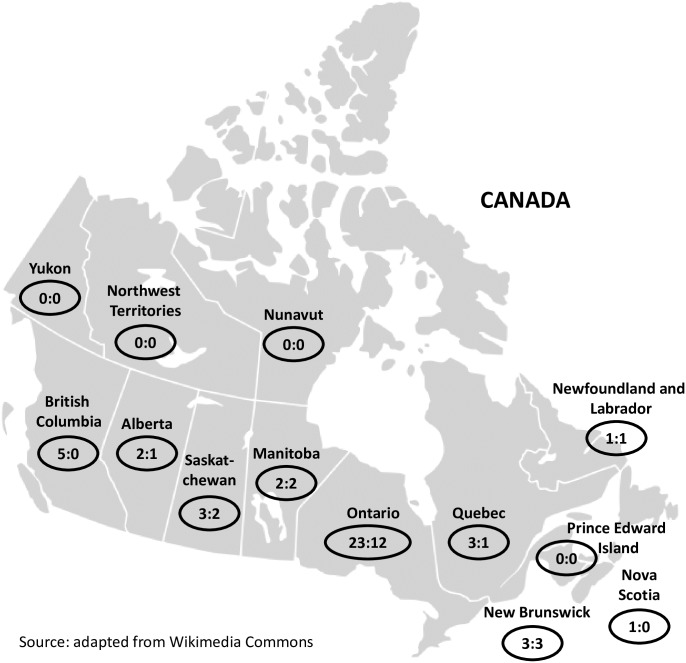
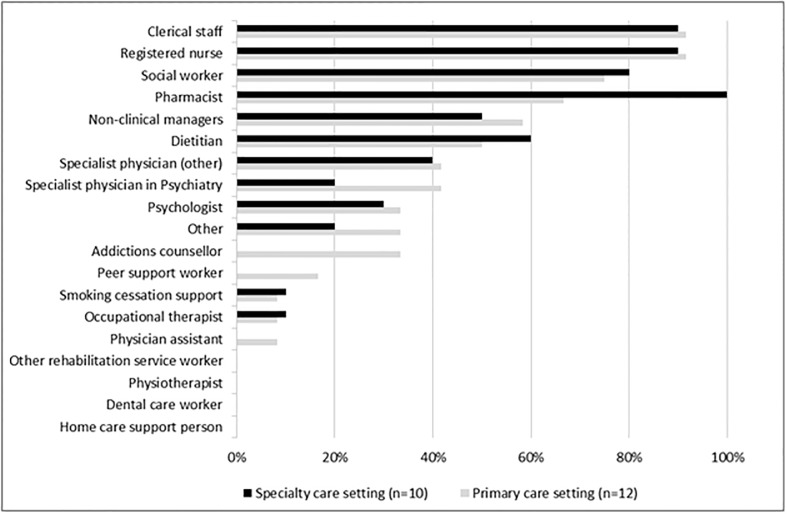
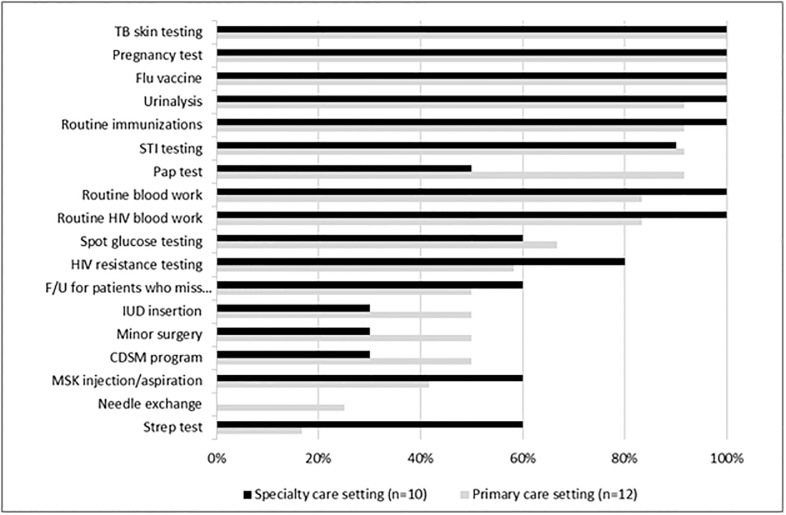
HIV treatment in Canada has rapidly progressed with the advent of new drug therapies and approaches to care. With this evolution, there is increasing interest in Canada in understanding the current delivery of HIV care, specifically where care is delivered, how, and by whom, to inform the design of care models required to meet the evolving needs of the population. We conducted a cross-sectional survey of Canadian care settings identified as delivering HIV care between June 2015 and January 2016. Given known potential differences in delivery approaches, we stratified settings as primary care or specialist settings, and described their structure, geographic location, populations served, health human resources, technological resources, and available clinical services. We received responses from 22 of 43 contacted care settings located in seven Canadian provinces (51.2% response rate). The total number of patients and HIV patients served by the participating settings was 38,060 and 17,678, respectively (mean number of HIV patients in primary care settings = 1,005, mean number of HIV patients in specialist care settings = 562). Settings were urban for 20 of the 22 (90.9%) clinics and 14 (63.6%) were entirely HIV focused. Primary care settings were more likely to offer preventative services (e.g., cervical smear, needle exchange, IUD insertion, chronic disease self-management program) than specialist settings. The study illustrates diversity in Canadian HIV care settings. All settings were team based, but primary care settings offered a broader range of preventative services and comprehensive access to mental health services, including addictions and peer support.
Conflict of interest statement
The authors have declared that no competing interests exist.
Figures
References
-
- Justice AC. HIV and aging: time for a new paradigm. Curr HIV/AIDS Rep. 2010;7: 69–76. doi: 10.1007/s11904-010-0041-9 - DOI - PubMed
-
- Public Health Agency of Canada. Summary: Estimates of HIV Incidence, Prevalence and Proportion Undiagnosed in Canada, 2014. Ottawa, ON; 2015.
-
- Samji H, Cescon A, Hogg RS, Modur SP, Althoff KN, Buchacz K, et al. Closing the gap: Increases in life expectancy among treated HIV-positive individuals in the United States and Canada. PLoS One. 2013;8: 6–13. doi: 10.1371/journal.pone.0081355 - DOI - PMC - PubMed
-
- Mahy M, Autenrieth CS, Stanecki K, Wynd S. Increasing trends in HIV prevalence among people aged 50 years and older: evidence from estimates and survey data. AIDS. Wolters Kluwer Health; 2014;28 Suppl 4: S453–9. doi: 10.1097/QAD.0000000000000479 - DOI - PMC - PubMed
-
- Wong C, Gange SJ, Moore RD, Justice AC, Buchacz K, Abraham G, et al. Multimorbidity Among Persons Living with HIV in the U.S. Clin Infect Dis. 2017;
Publication types
MeSH terms
Grants and funding
LinkOut - more resources
Full Text Sources
Other Literature Sources
Medical
