


Sexual dimorphism in bacterial infections
- PMID: 29925409
- PMCID: PMC6011518
- DOI: 10.1186/s13293-018-0187-5
Sexual dimorphism in bacterial infections
Abstract
Background: Sex differences are important epidemiological factors that impact in the frequency and severity of infectious diseases. A clear sexual dimorphism in bacterial infections has been reported in both humans and animal models. Nevertheless, the molecular mechanisms involved in this gender bias are just starting to be elucidated. In the present article, we aim to review the available data in the literature that report bacterial infections presenting a clear sexual dimorphism, without considering behavioral and social factors.
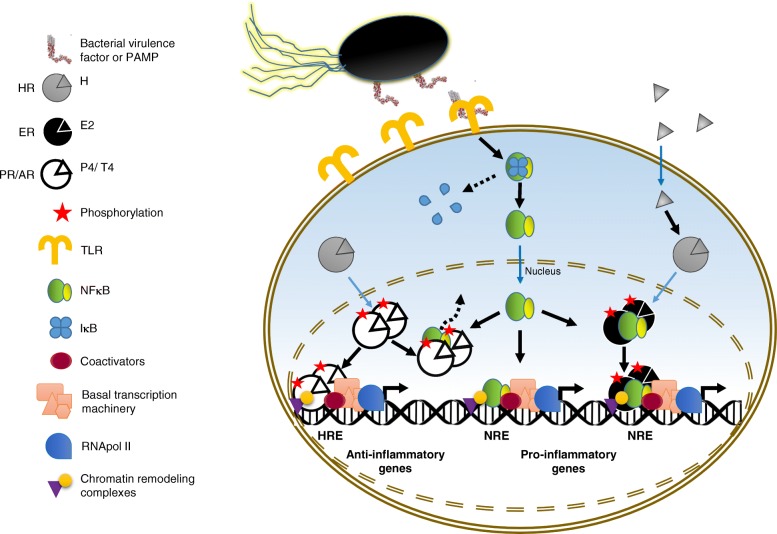
Main body: The sexual dimorphism in bacterial infections has been mainly attributed to the differential levels of sex hormones between males and females, as well as to genetic factors. In general, males are more susceptible to gastrointestinal and respiratory bacterial diseases and sepsis, while females are more susceptible to genitourinary tract bacterial infections. However, these incidences depend on the population evaluated, animal model and the bacterial species. Female protection against bacterial infections and the associated complications is assumed to be due to the pro-inflammatory effect of estradiol, while male susceptibility to those infections is associated with the testosterone-mediated immune suppression, probably via their specific receptors. Recent studies indicate that the protective effect of estradiol depends on the estrogen receptor subtype and the specific tissue compartment involved in the bacterial insult, suggesting that tissue-specific expression of particular sex steroid receptors contributes to the susceptibility to bacterial infections. Furthermore, this gender bias also depends on the effects of sex hormones on specific bacterial species. Finally, since a large number of genes related to immune functions are located on the X chromosome, X-linked mosaicism confers a highly polymorphic gene expression program that allows women to respond with a more expanded immune repertoire as compared with men.
Conclusion: Notwithstanding there is increasing evidence that confirms the sexual dimorphism in certain bacterial infections and the molecular mechanisms associated, further studies are required to clarify conflicting data and to determine the role of specific hormone receptors involved in the gender bias of bacterial infections, as well as their potential as therapeutic targets.
Keywords: Bacterial infection; Estradiol; Progesterone; Sex steroid hormones; Sexual dimorphism; Testosterone.
Conflict of interest statement
Ethics approval and consent to participate
Not applicable.
Consent for publication
Not applicable.
Competing interests
The authors declare that they have no competing interests.
Publisher’s Note
Springer Nature remains neutral with regard to jurisdictional claims in published maps and institutional affiliations.
Figures
References
-
- Rettew JA, Marriot I, Huett YM. Sex differences in innate immune responses to bacterial pathogens. In: Klein SL, Roberts CW, editors. Sex hormones and immunity to infection. Berlin: Springer; 2010. pp. 123–146.
Publication types
MeSH terms
LinkOut - more resources
Full Text Sources
Other Literature Sources
Medical
