


National and regional trends in gastrostomy in very low birth weight infants in the USA: 2000-2012
- PMID: 29925865
- PMCID: PMC6195828
- DOI: 10.1038/s41372-018-0145-4
National and regional trends in gastrostomy in very low birth weight infants in the USA: 2000-2012
Abstract
Objective: To determine rates of gastrostomy (GT) in very low birth weight (VLBW) infants.
Study design: Retrospective, cross-sectional analysis of the Kids' Inpatient Database for the years 2000, 2003, 2006, 2009 and 2012. We identified VLBW births and infants undergoing a GT, with and without fundoplication, using ICD-9-CM codes.
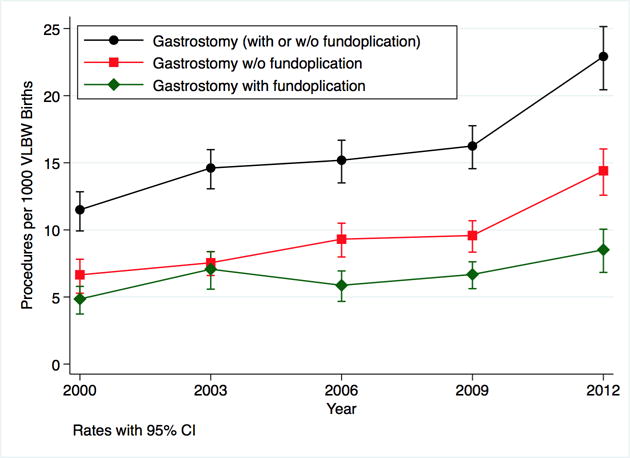
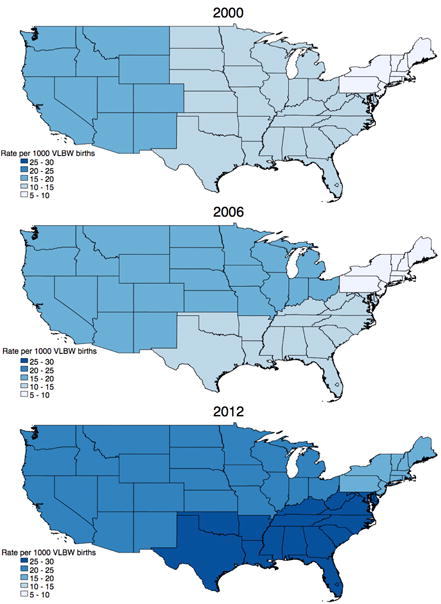
Result: National rates (per 1000 VLBW births) of GT increased from 11.5 GT (95% CI 10-13) in 2000 to 22.9 (95% CI 20-25) in 2012 (p < 0.001). Gastrostomy with and without fundoplication increased during the study period (p < 0.001 in both groups). VLBW survival also increased from 78.5% in 2000 to 81.1% in 2012 (p < 0.001). In all study years, the Northeast census region had the lowest GT rates, while the West had the highest rates in 4 of the 5 study years.
Conclusion: Between 2000 and 2012, the incidence of GT in VLBW infants doubled, associated with improvements in survival in this population.
Conflict of interest statement
Figures
References
-
- Horbar JD, Badger GJ, Carpenter JH, Fanaroff AA, Kilpatrick S, LaCorte M, et al. Trends in mortality and morbidity for very low birth weight infants, 1991-1999. Pediatrics. 2002;110(1 Pt 1):143–151. - PubMed
-
- Horbar JD, Edwards EM, Greenberg LT, Morrow KA, Soll RF, Buus-Frank ME, et al. Variation in Performance of Neonatal Intensive Care Units in the United States. JAMA Pediatr. 2017;171(3):e164396. - PubMed
-
- Mizuno K, Nishida Y, Taki M, Hibino S, Murase M, Sakurai M, et al. Infants with bronchopulmonary dysplasia suckle with weak pressures to maintain breathing during feeding. Pediatrics. 2007;120(4):e1035–1042. - PubMed
Publication types
MeSH terms
Grants and funding
LinkOut - more resources
Full Text Sources
Other Literature Sources
Miscellaneous
