MEDI0382, a GLP-1/glucagon receptor dual agonist, meets safety and tolerability endpoints in a single-dose, healthy-subject, randomized, Phase 1 study
- PMID: 29926478
- PMCID: PMC6138475
- DOI: 10.1111/bcp.13688
MEDI0382, a GLP-1/glucagon receptor dual agonist, meets safety and tolerability endpoints in a single-dose, healthy-subject, randomized, Phase 1 study
Abstract
Aims: MEDI0382 is a balanced glucagon-like peptide-1/glucagon receptor dual agonist under development for the treatment of type 2 diabetes mellitus and non-alcoholic steatohepatitis. The primary objective was to assess the safety of MEDI0382 in healthy subjects.
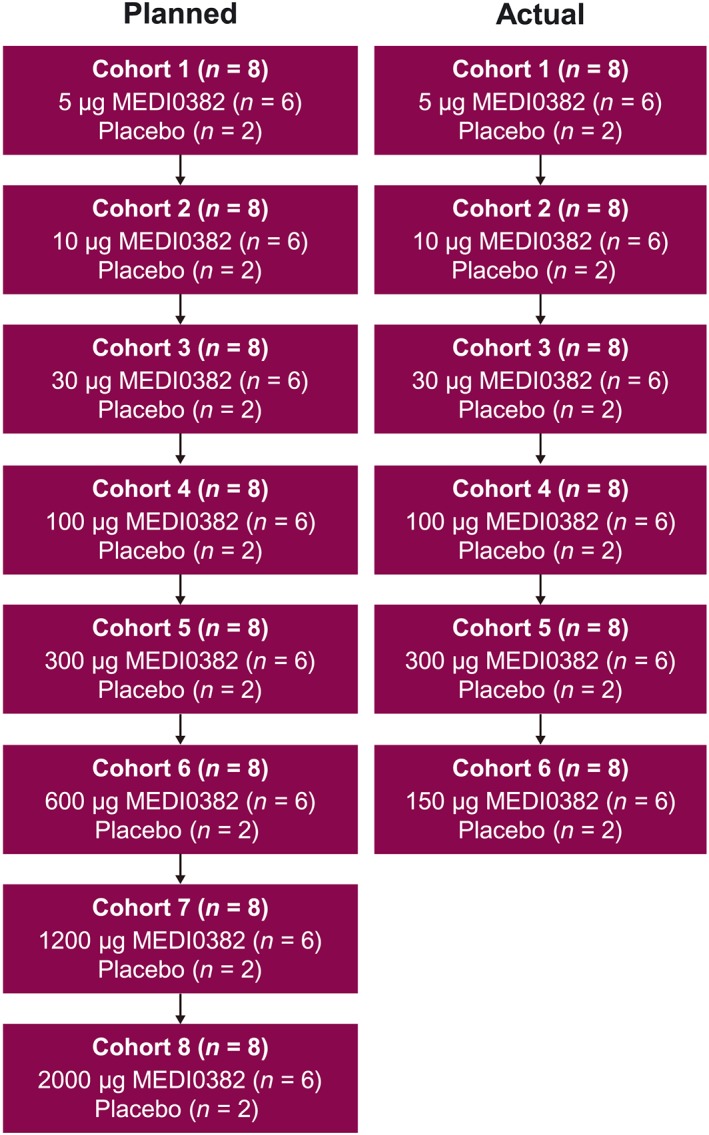
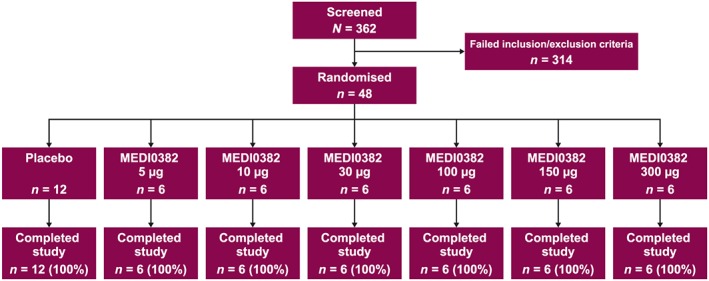
Methods: In this placebo-controlled, double-blind, Phase 1 study, healthy subjects (aged 18-45 years) were randomized (3:1) to receive a single subcutaneous dose of MEDI0382 or placebo after ≥8 h of fasting. The study consisted of six cohorts that received study drug at 5 μg, 10 μg, 30 μg, 100 μg, 150 μg or 300 μg. The primary objective was safety and tolerability. Secondary endpoints included assessments of pharmacokinetics and immunogenicity. All subjects were followed for up to 28 days.
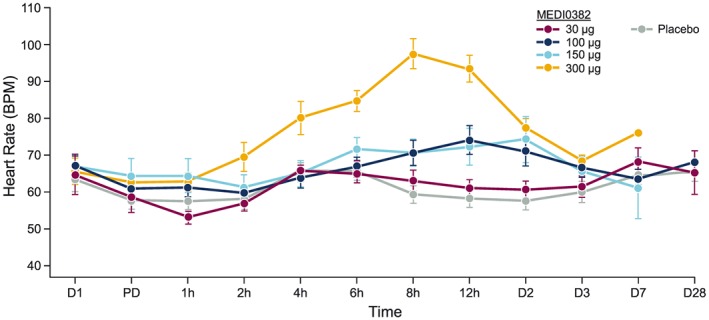
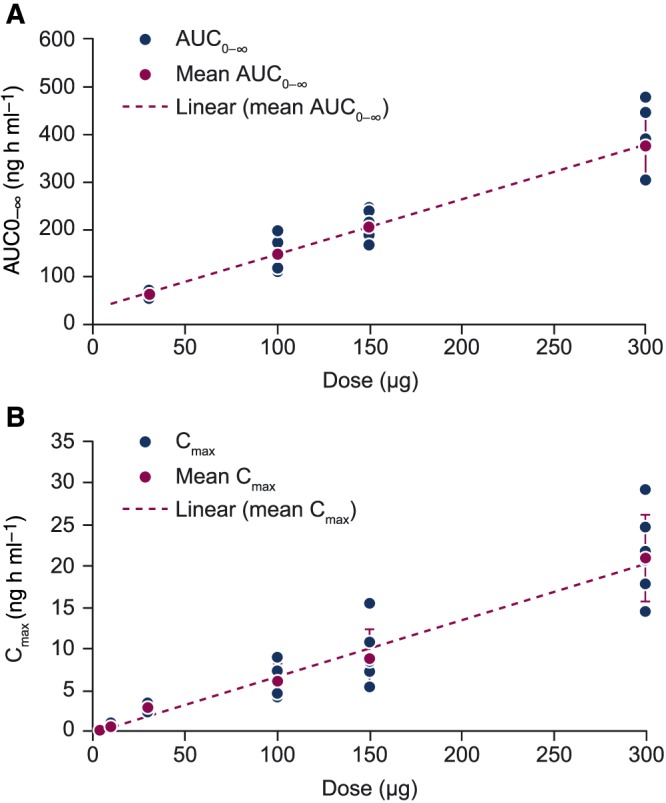
Results: A total of 36 subjects received MEDI0382 (n = 6 per cohort) and 12 subjects received placebo (n = 2 per cohort). Treatment-emergent adverse events (TEAEs) occurred more frequently with MEDI0382 vs. placebo, which was mostly due to an increased occurrence at MEDI0382 doses ≥150 μg. All TEAEs were mild or moderate in severity. The most common TEAEs were vomiting, nausea and dizziness. There appeared to be a dose-dependent increase in heart rate with MEDI0382 treatment. MEDI0382 showed linear pharmacokinetic profile (time to maximum plasma concentration: 4.50-9.00 h; elimination half-life: 9.54-12.07 h). No immunogenicity was observed in the study.
Conclusions: In this single-dose, Phase 1 study in healthy subjects, the safety and pharmacokinetic profiles of MEDI0382 support once-daily dosing and further clinical development of MEDI0382.
Keywords: Phase 1; diabetes; drug safety; pharmacokinetics-pharmacodynamics; randomized controlled trial.
© 2018 The British Pharmacological Society.
Figures
References
-
- Stumvoll M, Goldstein BJ, van Haeften TW. Type 2 diabetes: principles of pathogenesis and therapy. Lancet 2005; 365: 1333–1346. - PubMed
-
- Baretić M, Troskot R. How to fight obesity with antidiabetic drugs: targeting gut or kidney? Minerva Endocrinol 2015; 40: 71–83. - PubMed
-
- Turner RC, Cull CA, Frighi V, Holman RR. Glycemic control with diet, sulfonylurea, metformin, or insulin in patients with type 2 diabetes mellitus: progressive requirement for multiple therapies (UKPDS 49). UK Prospective Diabetes Study (UKPDS) Group. JAMA 1999; 281: 2005–2012. - PubMed
-
- Douek IF, Allen SE, Ewings P, Gale EA, Bingley PJ, Metformin Trial Group . Continuing metformin when starting insulin in patients with type 2 diabetes: a double‐blind randomized placebo‐controlled trial. Diabet Med 2005; 22: 634–640. - PubMed
Publication types
MeSH terms
Substances
LinkOut - more resources
Full Text Sources
Other Literature Sources
Medical