How prescriptive support affects weight loss in weight-loss intervention participants and their untreated spouses
- PMID: 29927273
- PMCID: PMC7384381
- DOI: 10.1037/hea0000630
How prescriptive support affects weight loss in weight-loss intervention participants and their untreated spouses
Abstract
Objective: Controlling or prescriptive support styles (e.g., pressure) often hinder weight loss, but can sometimes be beneficial. This secondary analysis of data from a randomized controlled trial examined persuasion, pressure, and indirect social control among cohabiting couples and the effect of these supports on weight loss.
Methods: Couples (NCouples = 130) were randomized to either Weight Watchers (WW) or a self-guided control condition (SG). Only one member of each couple received the intervention; the other member of the couple was untreated. Couples were weighed and completed study measures at baseline, 3, and 6 months.
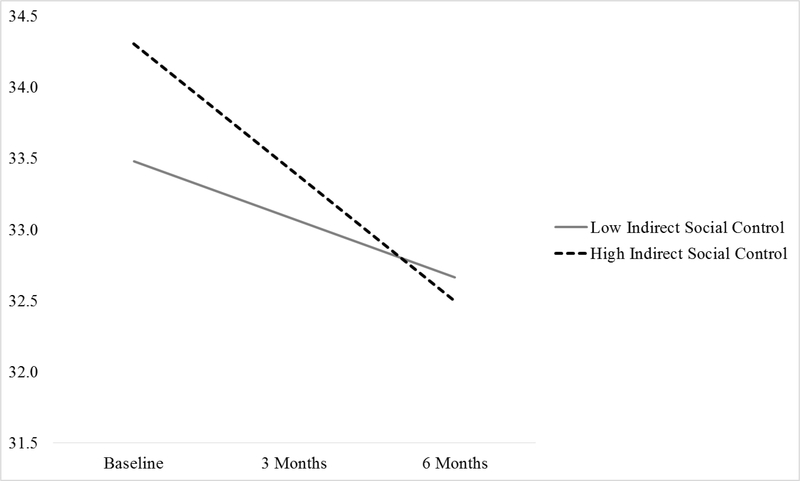
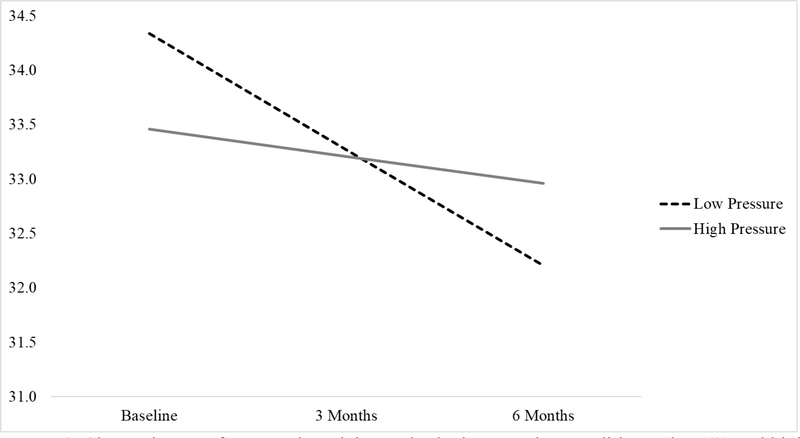
Results: Dyadic multilevel models examined BMI change and differences across role (treated participant/untreated spouse) and condition (WW/SG). Prescriptive support predicted BMI change for treated participants in the WW condition only. For treated WW participants, there was no significant decrease in BMI when pressure was high (+1SD), B = -.25, p = .22, but a significant decrease when pressure was low (0), B = -.96, p < .001. Additionally, high levels of indirect social control (+1SD) predicted greater decreases in BMI compared to low (-1SD) indirect social control, B = -.91, p < .001, and, B = -.41, p < .01.
Conclusions: Considering both the type and context of support for weight management is worthwhile. Intervention participants had access to treatment resources that may have engendered more effective responses to spouses' concerns or a sense of obligation to their spouse (indirect social control), whereas pressures to lose weight-while engaged in treatment-may have undermined behavior-change efforts. (PsycINFO Database Record
(c) 2018 APA, all rights reserved).
Figures
References
-
- Brewis AA (2014). Stigma and the perpetuation of obesity. Social Science & Medicine, 118, 152–158. - PubMed
-
- Brunson JA, Overup CS, Nguyen ML, Novak SA, & Smith V (2014). Good intentions gone awry? Effects of weight-related social control on health and well-being. Body Image, 11(1), 1–10. - PubMed
-
- Christakis NA, & Fowler JH (2007). The spread of obesity in a large social network over 32 years. New England Journal of Medicine, 357(4), 370–379. - PubMed
-
- Deci EL, & Ryan RM (2008). Self-determination theory: A macrotheory of human motivation, development, and health. Canadian Psychology, 49(3), 182–185.
Publication types
MeSH terms
Grants and funding
LinkOut - more resources
Full Text Sources
Other Literature Sources
Medical