


Cardamonin reduces chemotherapy resistance of colon cancer cells via the TSP50/NF-κB pathway in vitro
- PMID: 29928339
- PMCID: PMC6004643
- DOI: 10.3892/ol.2018.8580
Cardamonin reduces chemotherapy resistance of colon cancer cells via the TSP50/NF-κB pathway in vitro
Abstract
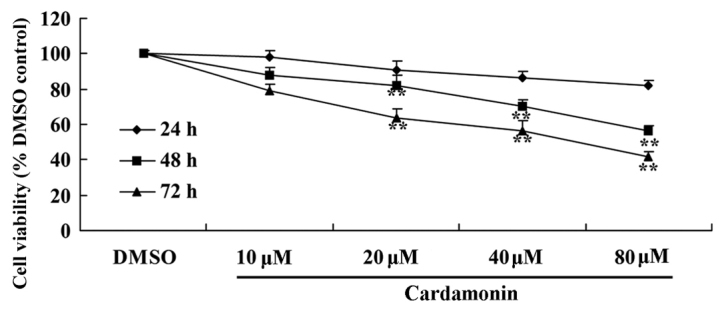
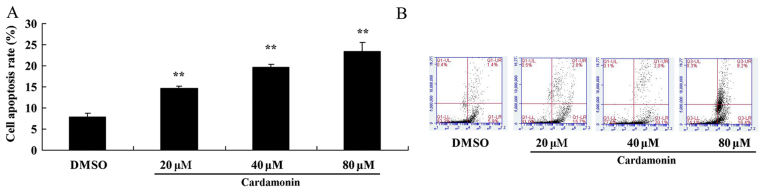
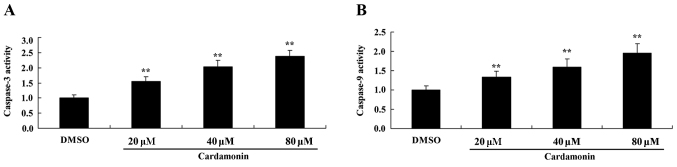
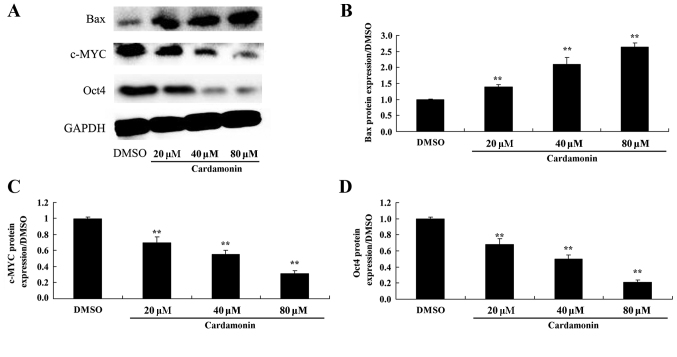
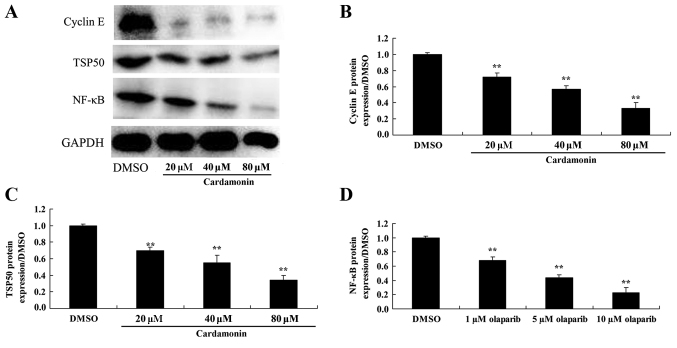
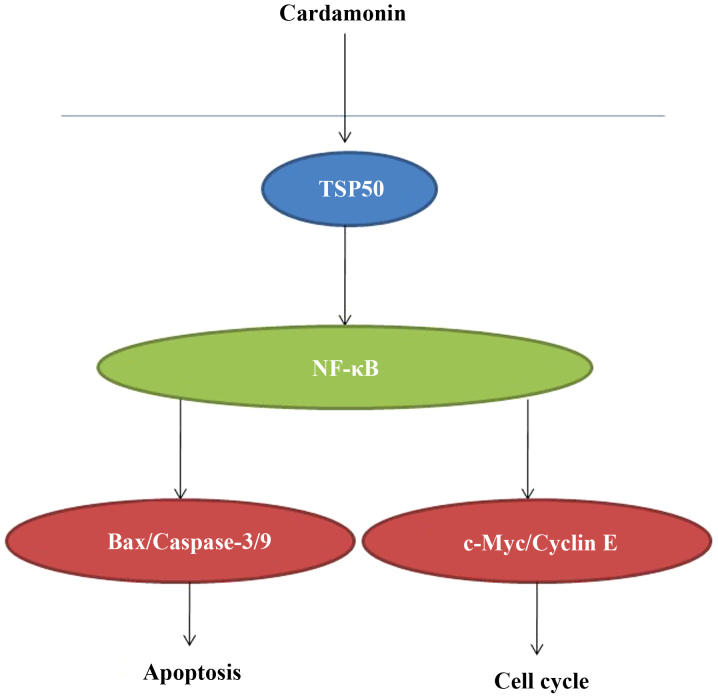
It has previously been reported that cardamonin is able to regulate glycometabolism and vasodilation whilst also exhibiting anti-inflammatory and antitumor properties. The antitumor effect of cardamonin is multifaceted, and so it is necessary to investigate the antitumor mechanisms of cardamonin at the molecular level. Cardamonin alters chemotherapy-resistant colon cancer cell growth; however, the underlying mechanism is unknown. The present study was conducted to investigate the effect of cardamonin on chemotherapy-resistant colon cancer cells and the possible mechanisms of action. Cardamonin significantly suppressed the growth of chemotherapy-resistant colon cancer cells, induced apoptosis and promoted caspase-3/9 activity and Bax protein expression in 5-fluorouracil (5-FU)-resistant HCT-116 cells. Cardamonin significantly suppressed c-MYC, octamer-binding transcription factor 4, cyclin E, testes-specific protease 50 and nuclear factor-κB protein expression in 5-FU-resistant HCT-116 cells. The findings of the present study demonstrate that cardamonin suppresses chemotherapy-colon cancer cell via the NF-κB pathway in vitro.
Keywords: cardamonin; chemotherapy-colon cancer cell; nuclear factor-κB.
Figures
References
-
- Karoui M, Rullier A, Luciani A, Bonnetain F, Auriault ML, Sarran A, Monges G, Trillaud H, Le Malicot K, Leroy K, et al. Neoadjuvant FOLFOX 4 versus FOLFOX 4 with Cetuximab versus immediate surgery for high-risk stage II and III colon cancers: A multicentre randomised controlled phase II trial-the PRODIGE 22-ECKINOXE trial. BMC Cancer. 2015;15:511. doi: 10.1186/s12885-015-1507-3. - DOI - PMC - PubMed
-
- Nuñez-Sánchez MA, García-Villalba R, Monedero-Saiz T, García-Talavera NV, Gómez-Sánchez MB, Sánchez-Álvarez C, García-Albert AM, Rodríguez-Gil FJ, Ruiz-Marín M, Pastor-Quirante FA, et al. Targeted metabolic profiling of pomegranate polyphenols and urolithins in plasma, urine and colon tissues from colorectal cancer patients. Mol Nutr Food Res. 2014;58:1199–1211. doi: 10.1002/mnfr.201300931. - DOI - PubMed
-
- André T, de Gramont A, Vernerey D, Chibaudel B, Bonnetain F, Tijeras-Raballand A, Scriva A, Hickish T, Tabernero J, Van Laethem JL, et al. Adjuvant fluorouracil, leucovorin, and oxaliplatin in stage II to III colon cancer: Updated 10-year survival and outcomes according to BRAF mutation and mismatch repair status of the MOSAIC study. J Clin Oncol. 2015;33:4176–4187. doi: 10.1200/JCO.2015.63.4238. - DOI - PubMed
LinkOut - more resources
Full Text Sources
Other Literature Sources
Research Materials