


Complex toxicity as disruption of adipocyte or osteoblast differentiation in human mesenchymal stem cells under the mixed condition of TBBPA and TCDD
- PMID: 29928592
- PMCID: PMC6008500
- DOI: 10.1016/j.toxrep.2018.06.007
Complex toxicity as disruption of adipocyte or osteoblast differentiation in human mesenchymal stem cells under the mixed condition of TBBPA and TCDD
Erratum in
-
Erratum regarding missing Declaration of Competing Interest statements in previously published articles.Toxicol Rep. 2020 Dec 25;8:60-61. doi: 10.1016/j.toxrep.2020.12.006. eCollection 2021. Toxicol Rep. 2020. PMID: 33391997 Free PMC article.
Abstract
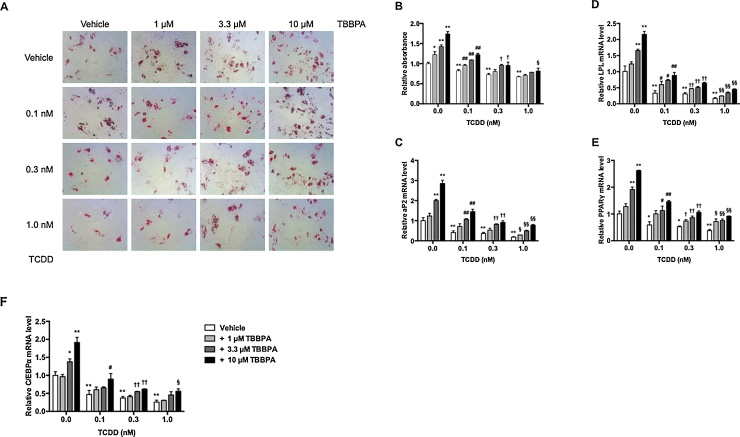
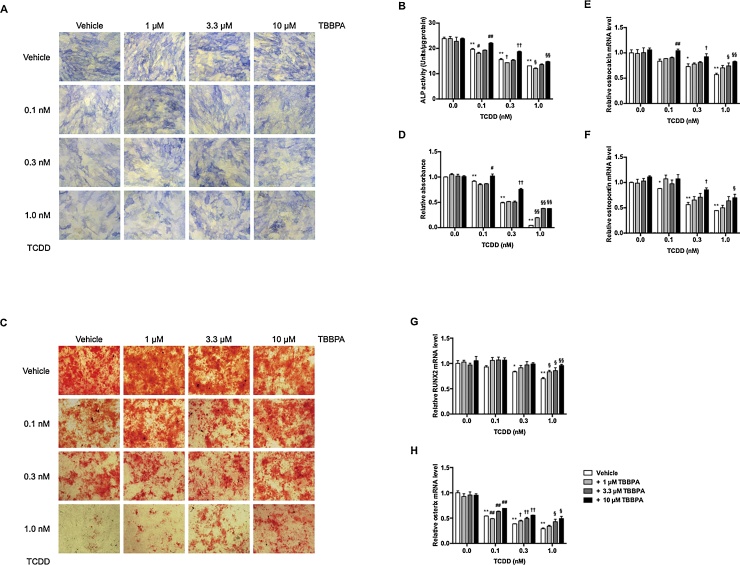
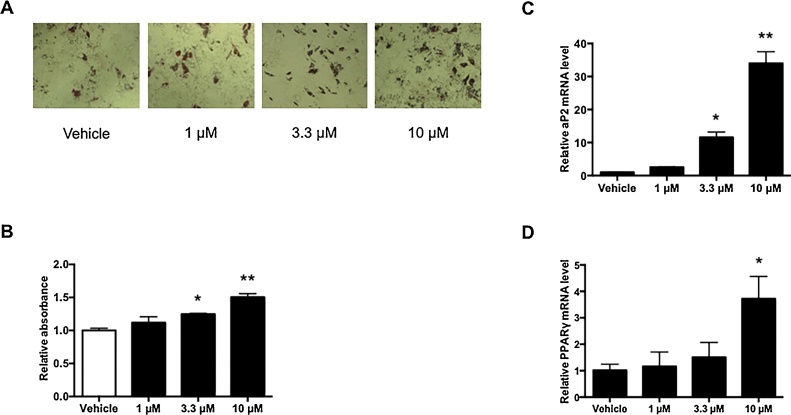
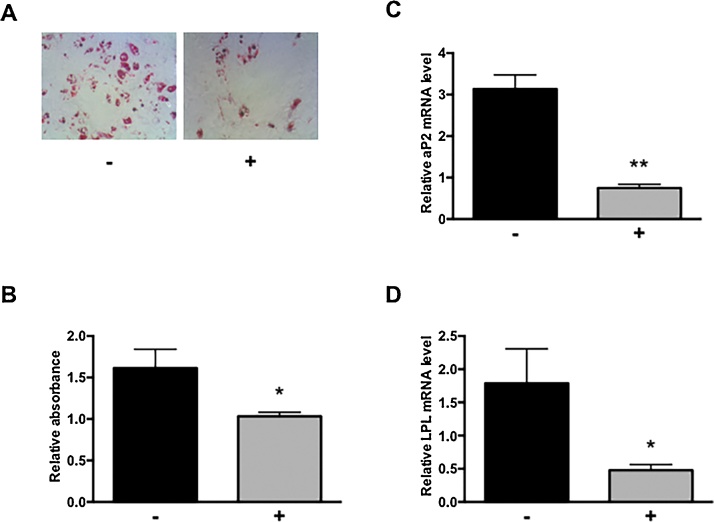
People are frequently and unintentionally exposed to many chemical compounds, such as environmental pollutants and endocrine-disrupting chemicals (EDCs), in food and from the atmosphere. In particular, endocrine-disrupting TBBPA and dioxins are found in human breast milk and in the body. Conventional studies evaluate toxicity by administering a single substance to cells or animals, but evaluation of the toxicity of mixtures of these ingested compounds is essential for "true" toxicological assessment. We evaluated toxic effects in vitro using human mesenchymal stem cells (hMSCs). TBBPA increased the number of lipid droplets, and upregulated the expression of adipocyte-related mRNA, aP2 and LPL, through a PPARγ-dependent mechanism. TCDD suppressed lipid droplets and adipocyte-related mRNA levels. Adipocyte differentiation was stimulated by TBBPA and inhibited by TCDD in a dose-dependent manner. TBBPA did not influence osteoblast differentiation, but TCDD suppressed ALP staining and activity, calcium deposition, and osteoblast-related mRNA levels. In a mixture of TBBPA and TCDD, TBBPA inhibited TCDD suppression of adipocyte and osteoblast differentiation in a dose-dependent manner. Interestingly, we observed lipid droplets in TBBPA-treated cells differentiated into osteoblasts. These results suggest that TBBPA and TCDD disrupted differentiation into adipocytes and osteoblasts and contributes to a more complete toxicological understanding of exposure to these chemical substances.
Keywords: 2,3,7,8-tetrachlorodibenzo-p-dioxin; ALP, alkaline phosphatase; Adipocyte differentiation; BFRs, brominated flame retardants; C/EBPα, CCAAT-enhancer-binding protein alpha; DOHaD, developmental origins of health and disease; EDCs, endocrine-disrupting chemicals; Human mesenchymal stem cell; LPL, lipoprotein lipase; MSC, mesenchymal stem cell; Osteoblast differentiation; PCDDs/DFs, polychlorinated dibenzo-p-dioxins and dibenzofurans; PPARγ, peroxisome proliferator activated receptor gamma; RUNX2, runt-related transcription factor 2; TBBPA, tetrabromobisphenol A; TCDD, 2,3,7,8-tetrachlorodibenzo-p-dioxin; Tetrabromobisphenol A; aP2, adipocyte-specific protein 2.
Figures
References
-
- Buchanan D.L., Sato T., Peterson R.E., Cooke P.S. Antiestrogenic effects of 2,3,7,8-tetrachlorodibenzo-p-dioxin in mouse uterus: critical role of the aryl hydrocarbon receptor in stromal tissue. Toxicol. Sci. 2000;57:302–311. - PubMed
-
- Chamorro-Garcia R., Sahu M., Abbey R.J., Laude J., Pham N., Blumberg B. Transgenerational inheritance of increased fat depot size, stem cell reprogramming, and hepatic steatosis elicited by prenatal exposure to the obesogen tributyltin in mice. Environ. Health Perspect. 2013;121:359–366. - PMC - PubMed
LinkOut - more resources
Full Text Sources
Other Literature Sources
Research Materials
