


Replication and reproducibility issues in the relationship between C-reactive protein and depression: A systematic review and focused meta-analysis
- PMID: 29928963
- PMCID: PMC6800199
- DOI: 10.1016/j.bbi.2018.06.016
Replication and reproducibility issues in the relationship between C-reactive protein and depression: A systematic review and focused meta-analysis
Abstract
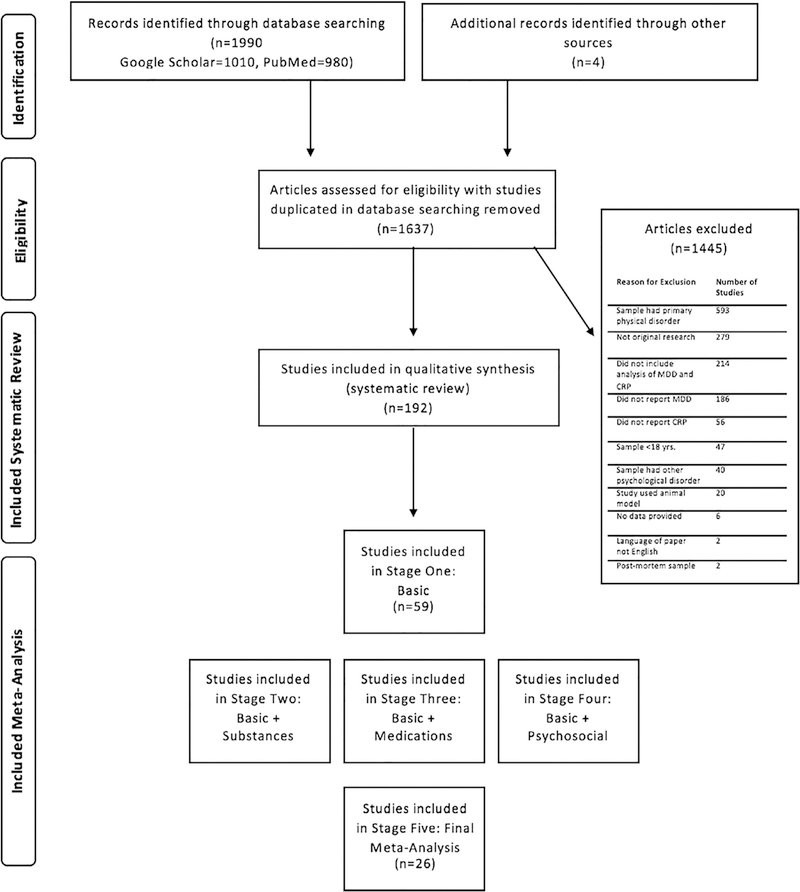
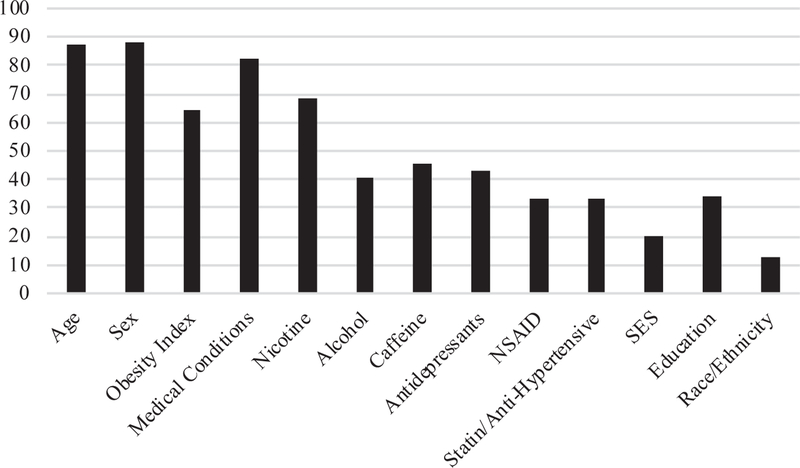
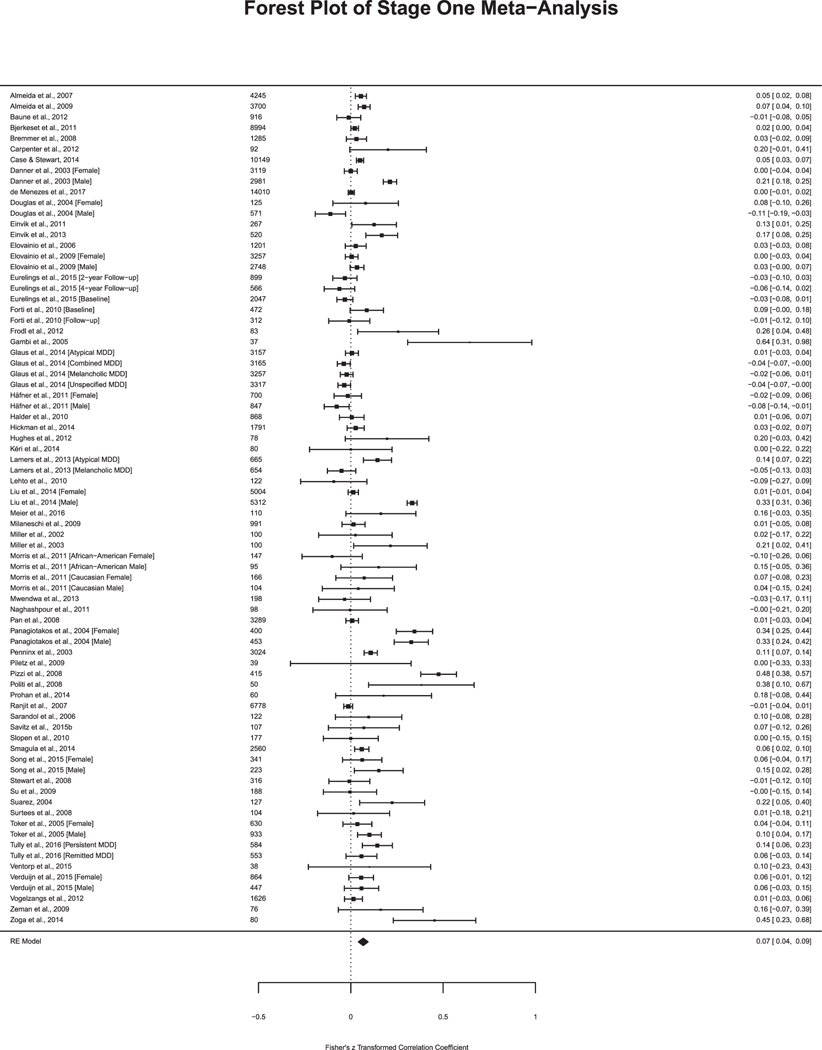
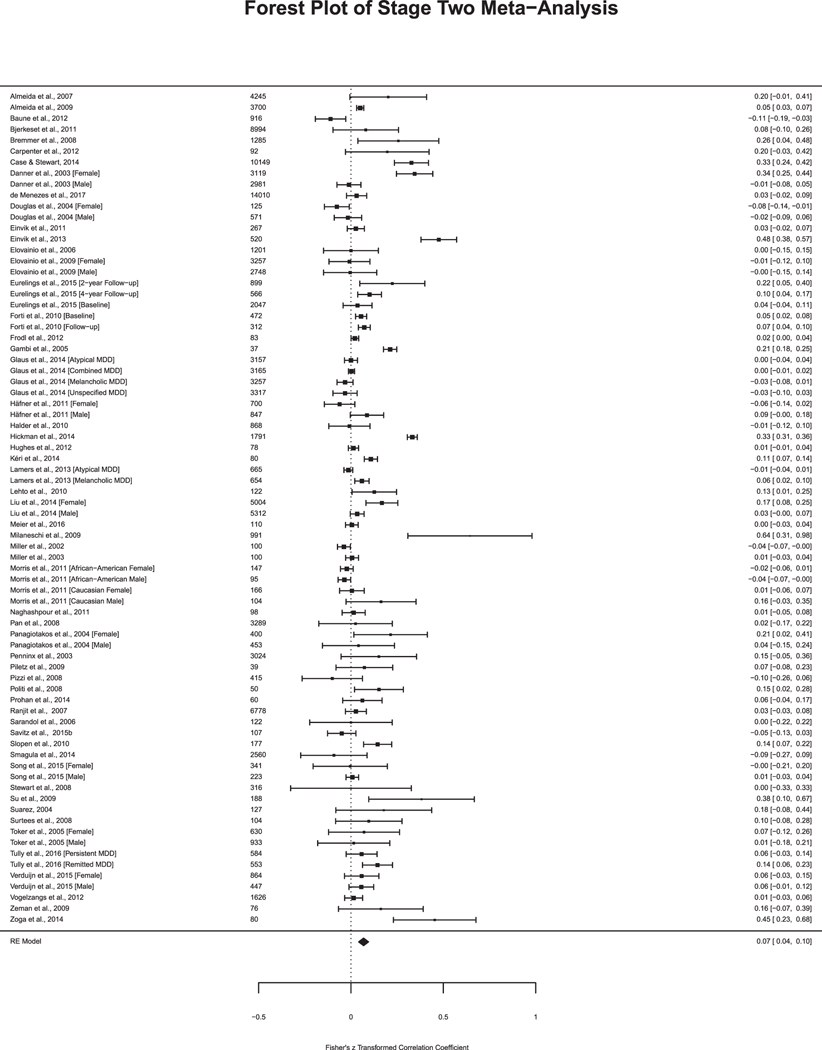
One of the most common inflammatory markers examined in depression is C-reactive protein (CRP). However, the magnitude of the association between CRP and depression when controlling for potentially confounding factors such as age, sex, socio-economic status, body mass index, medication and other substance use, and medical illness, is unclear. Inconsistencies in other methodological practices, such as sample collection, assaying, and data cleaning and transformation, may contribute to variations in results. We aggregate studies that examined the association between CRP and depression in two ways. First, a systematic review summarizes how studies of CRP and depression have reported on methodological issues. Second, a tiered meta-analysis aggregates studies that have adhered to various levels of methodological rigor. Findings from the systematic review indicate a lack of protocol detail provided. The effect between depression and CRP was small, but highly significant across all stages of the meta-analysis (p < 0.01). The effect size in the most methodologically rigorous stage of the meta-analysis, which included studies controlling for age, sex, obesity, medical conditions and substance, medication, or psychosocial factors, was small (r = 0.05). There were also only 26 articles in this stage (13% of studies from the systematic review), suggesting that more studies that consistently account for these confounding factors are needed. Additionally, an a priori quality score of methodological rigor was a significant moderator in this stage of the meta-analysis. The effect size was strikingly attenuated (r = 0.005) and non-significant in studies with higher quality scores. We describe a set of recommended guidelines for future research to consider, including sample collection and assaying procedures, data cleaning and statistical methods, and control variables to assess.
Keywords: C-reactive protein; Depression; Meta-analysis; Reproducibility; Systematic review.
Copyright © 2018 Elsevier Inc. All rights reserved.
Figures
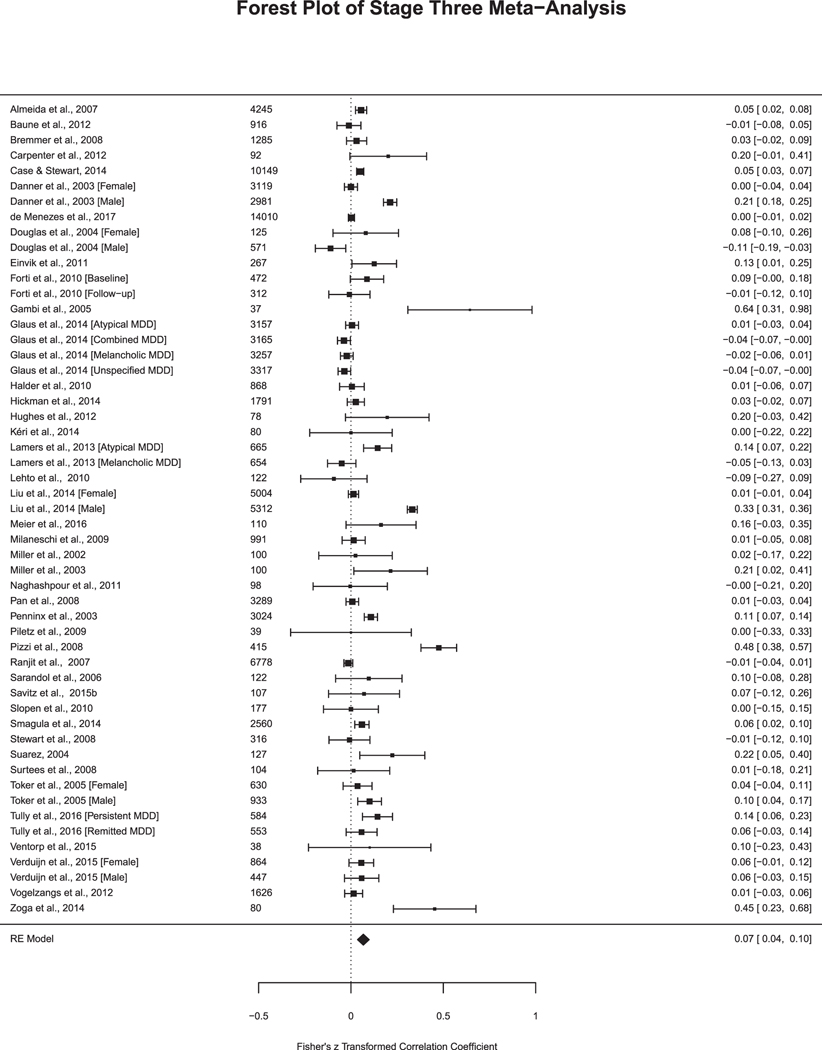
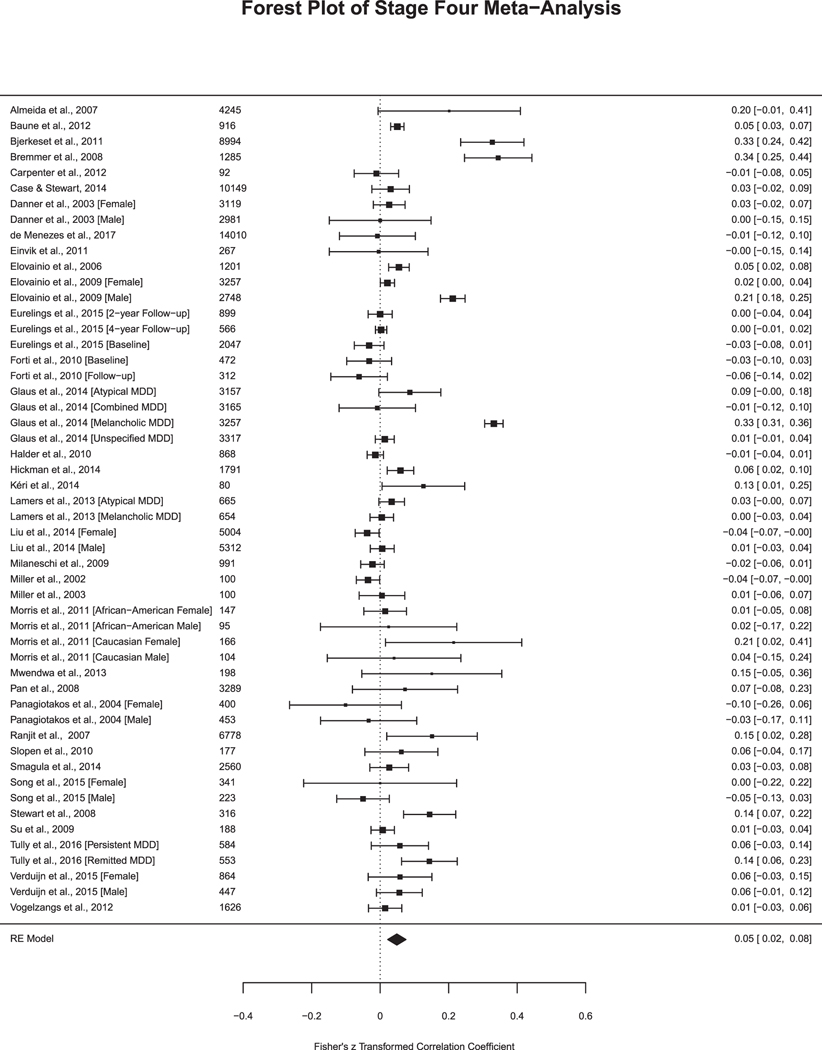
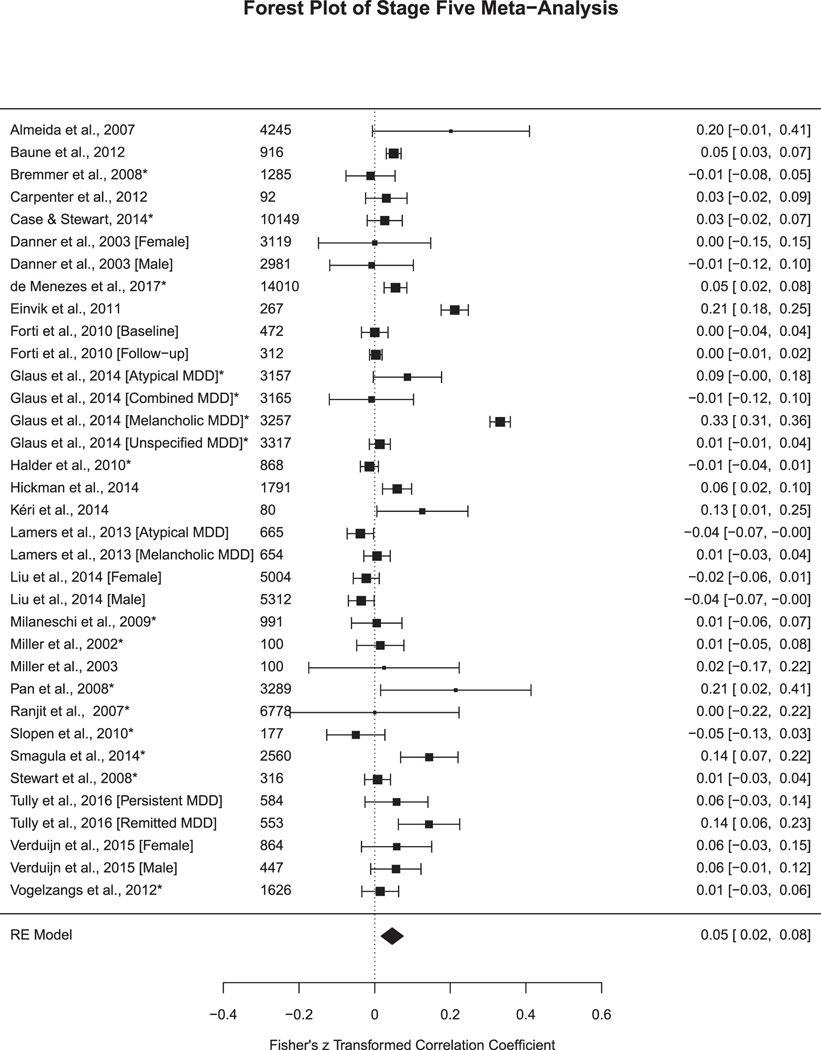
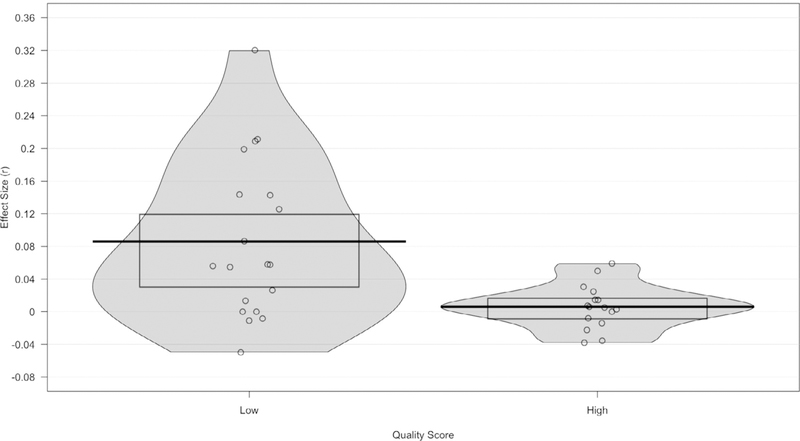
Comment in
-
What's CRP got to do with it? Tackling the complexities of the relationship between CRP and depression.Brain Behav Immun. 2018 Oct;73:163-164. doi: 10.1016/j.bbi.2018.08.003. Epub 2018 Aug 2. Brain Behav Immun. 2018. PMID: 30077590 No abstract available.
References
-
- Abbing-Karahagopian V, Huerta C, Souverein P, De Abajo F, Leufkens H, Slattery J, Alvarez Y, Miret M, Gil M, Oliva B, 2014. Antidepressant prescribing in five European countries: application of common definitions to assess the prevalence, clinical observations, and methodological implications. Eur. J. Clin. Pharmacol 70, 849–857. - PubMed
-
- Albert MA, Glynn RJ, Ridker PM, 2004. Effect of physical activity on serum C-reactive protein. Am. J. Cardiol 93, 221–225. - PubMed
-
- Alley DE, Seeman TE, Kim JK, Karlamangla A, Hu P, Crimmins EM, 2006. Socioeconomic status and C-reactive protein levels in the US population: NHANES IV. Brain Behav. Immun 20, 498–504. - PubMed
-
- Almeida OP, Norman P, Hankey GJ, Jamrozik K, Flicker L, 2007. The association between C-reactive protein concentration and depression in later life is due to poor physical health: results from the Health in Men Study (HIMS). Psychol. Med 37, 1775–1786. - PubMed
Publication types
MeSH terms
Substances
Grants and funding
LinkOut - more resources
Full Text Sources
Other Literature Sources
Medical
Research Materials
Miscellaneous
