


Identification of genetic variants associated with dengue or West Nile virus disease: a systematic review and meta-analysis
- PMID: 29929468
- PMCID: PMC6014009
- DOI: 10.1186/s12879-018-3186-6
Identification of genetic variants associated with dengue or West Nile virus disease: a systematic review and meta-analysis
Abstract
Background: Dengue and West Nile viruses are highly cross-reactive and have numerous parallels in geography, potential vector host (Aedes family of mosquitoes), and initial symptoms of infection. While the vast majority (> 80%) of both dengue and West Nile virus infections result in asymptomatic infections, a minority of individuals experience symptomatic infection and an even smaller proportion develop severe disease. The mechanisms by which these infections lead to severe disease in a subset of infected individuals is incompletely understood, but individual host differences including genetic factors and immune responses have been proposed. We sought to identify genetic risk factors that are associated with more severe disease outcomes for both viruses in order to shed light on possible shared mechanisms of resistance and potential therapeutic interventions.
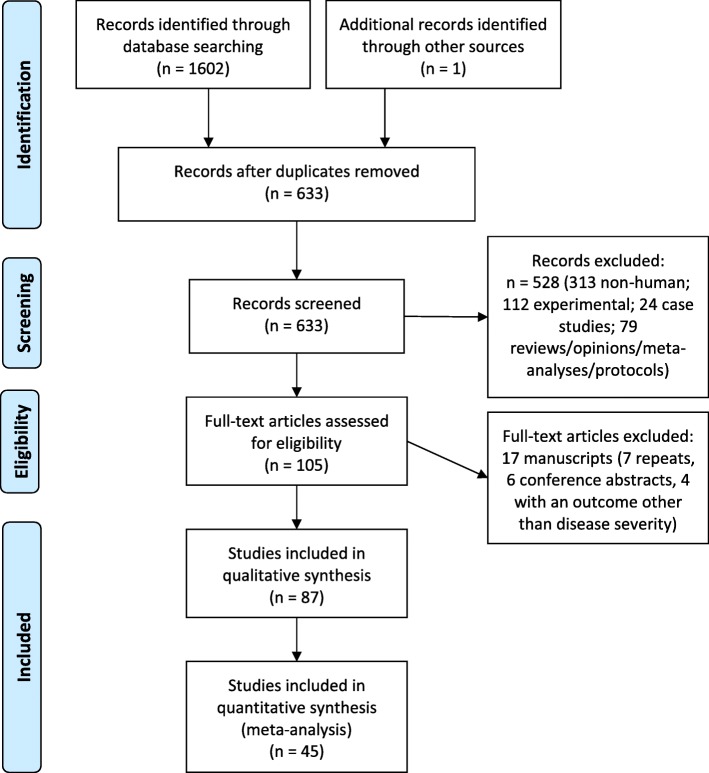
Methods: We applied a search strategy using four major databases (Medline, PubMed, Embase, and Global Health) to find all known genetic associations identified to date with dengue or West Nile virus disease. Here we present a review of our findings and a meta-analysis of genetic variants identified.
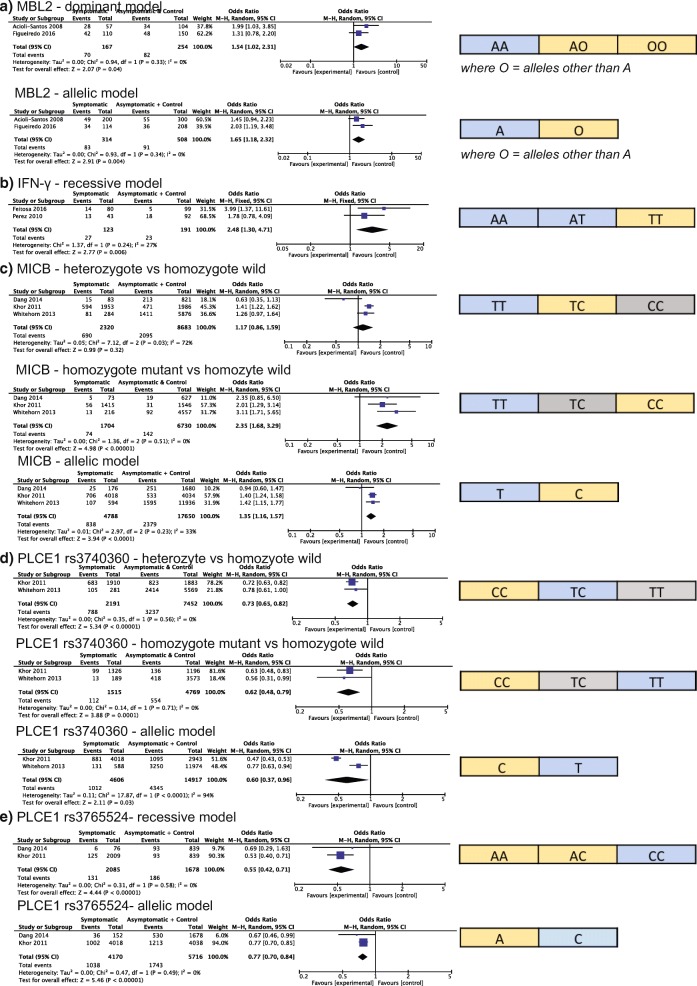
Results: We found genetic variations that are significantly associated with infections of these viruses. In particular we found variation within the OAS1 (meta-OR = 0.83, 95% CI: 0.69-1.00) and CCR5 (meta-OR = 1.29, 95% CI: 1.08-1.53) genes is significantly associated with West Nile virus disease, while variation within MICB (meta-OR = 2.35, 95% CI: 1.68-3.29), PLCE1 (meta-OR = 0.55, 95% CI: 0.42-0.71), MBL2 (meta-OR = 1.54, 95% CI: 1.02-2.31), and IFN-γ (meta-OR = 2.48, 95% CI: 1.30-4.71), is associated with dengue disease.
Conclusions: Despite substantial heterogeneity in populations studied, genes examined, and methodology, significant associations with genetic variants were found across studies within both diseases. These gene associations suggest a key role for immune mechanisms in susceptibility to severe disease. Further research is needed to elucidate the role of these genes in disease pathogenesis and may reveal additional genetic factors associated with disease severity.
Keywords: Dengue virus; Disease severity; Genetic variation; Meta-analysis; Single nucleotide polymorphism; West Nile virus.
Conflict of interest statement
Ethics approval and consent to participate
Not applicable. Data sets were extracted without personal identifiers and organized into literature tables.
Consent for publication
Not applicable.
Competing interests
The authors declare that they have no competing interests.
Publisher’s Note
Springer Nature remains neutral with regard to jurisdictional claims in published maps and institutional affiliations.
Figures

References
-
- Hua RH, Chen NS, Qin CF, Deng YQ, Ge JY, Wang XJ, Qiao ZJ, Chen WY, Wen ZY, Liu WX, et al. Identification and characterization of a virus-specific continuous B-cell epitope on the PrM/M protein of Japanese encephalitis virus: potential application in the detection of antibodies to distinguish Japanese encephalitis virus infection from West Nile virus and dengue virus infections. Virol J. 2010;7:249. doi: 10.1186/1743-422X-7-249. - DOI - PMC - PubMed
Publication types
MeSH terms
Substances
Grants and funding
LinkOut - more resources
Full Text Sources
Other Literature Sources
Medical
Miscellaneous
