


Proximal Pathway Enrichment Analysis for Targeting Comorbid Diseases via Network Endopharmacology
- PMID: 29932108
- PMCID: PMC6160959
- DOI: 10.3390/ph11030061
Proximal Pathway Enrichment Analysis for Targeting Comorbid Diseases via Network Endopharmacology
Abstract
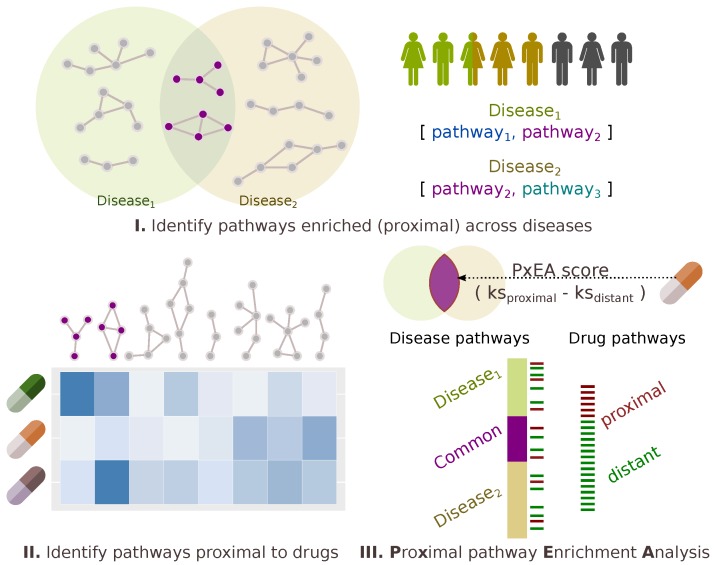
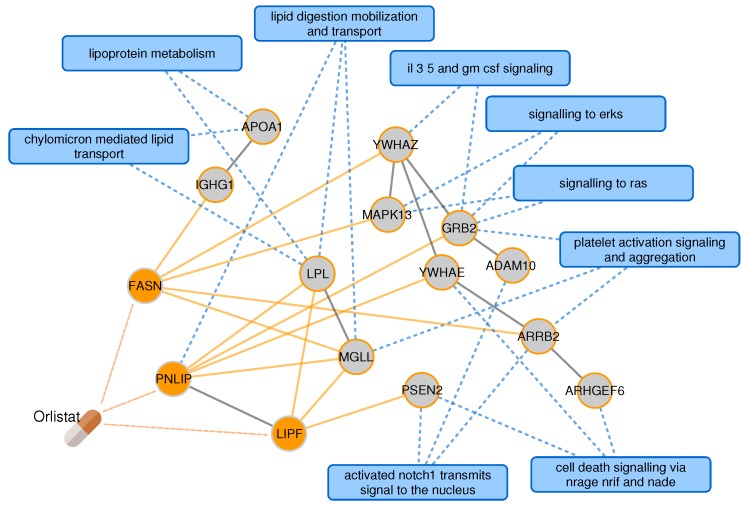
The past decades have witnessed a paradigm shift from the traditional drug discovery shaped around the idea of “one target, one disease” to polypharmacology (multiple targets, one disease). Given the lack of clear-cut boundaries across disease (endo)phenotypes and genetic heterogeneity across patients, a natural extension to the current polypharmacology paradigm is to target common biological pathways involved in diseases via endopharmacology (multiple targets, multiple diseases). In this study, we present proximal pathway enrichment analysis (PxEA) for pinpointing drugs that target common disease pathways towards network endopharmacology. PxEA uses the topology information of the network of interactions between disease genes, pathway genes, drug targets and other proteins to rank drugs by their interactome-based proximity to pathways shared across multiple diseases, providing unprecedented drug repurposing opportunities. Using PxEA, we show that many drugs indicated for autoimmune disorders are not necessarily specific to the condition of interest, but rather target the common biological pathways across these diseases. Finally, we provide high scoring drug repurposing candidates that can target common mechanisms involved in type 2 diabetes and Alzheimer’s disease, two conditions that have recently gained attention due to the increased comorbidity among patients.
Keywords: Alzheimer’s disease; autoimmune disorders; comorbidity; drug repurposing; network endopharmacology; proximal pathway enrichment analysis; systems medicine; type 2 diabetes.
Conflict of interest statement
E.G. has received compensation from Scipher Medicine for scientific consulting. The founding sponsors had no role in the design of the study; in the collection, analyses, or interpretation of data; in the writing of the manuscript, and in the decision to publish the results.
Figures
References
LinkOut - more resources
Full Text Sources
Other Literature Sources
Miscellaneous
