


Experimental Investigation of the Time Course Effects of Acute Exercise on False Episodic Memory
- PMID: 29933563
- PMCID: PMC6069234
- DOI: 10.3390/jcm7070157
Experimental Investigation of the Time Course Effects of Acute Exercise on False Episodic Memory
Abstract
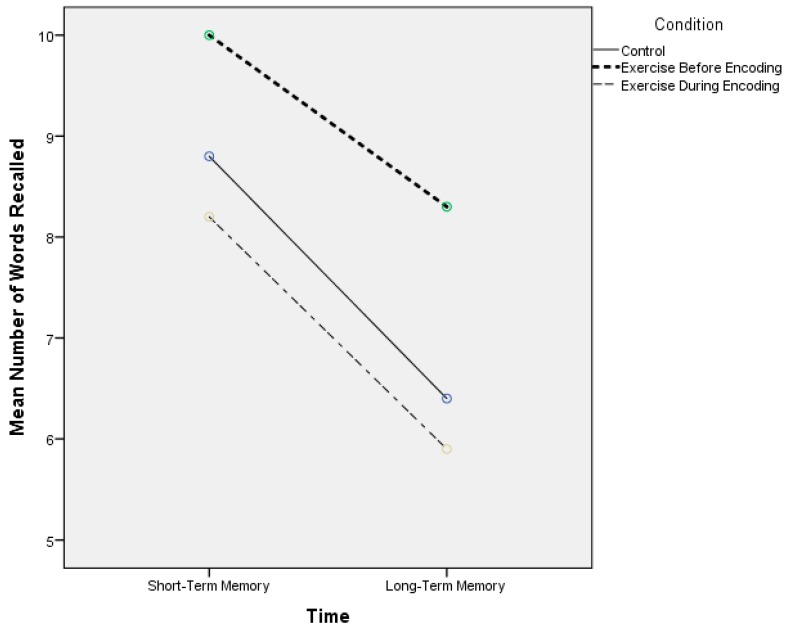
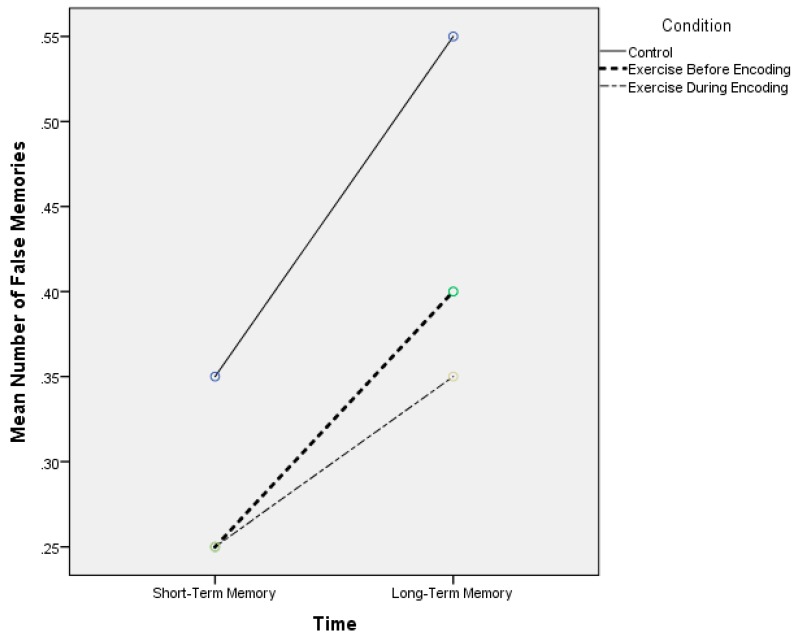
Previous experimental work suggests that acute exercise may positively influence the accurate recall of past episodic events. However, few studies have examined whether acute exercise also reduces the number of false episodic memories. We evaluated this paradigm in conjunction with an examination of the temporal effects of acute exercise, which have previously been shown to play an important role in subserving episodic memory function. Twenty young adults participated in three experimental visits, including a non-exercise control visit, a visit involving an acute bout (20 min) of moderate-intensity exercise occurring prior to the memory task, and a visit involving an acute bout of exercise occurring during the encoding of the memory task. All visits were counterbalanced and occurred at least 24 h apart. The Deese⁻Roediger⁻McDermott (DRM) Paradigm, involving a separate word list trial for each visit, was employed to assess accurate and false episodic memory recall. For each visit, a short-term (immediate recall) and a long-term (25-min delay) memory recall was assessed. For both time points, the visit that involved exercise prior to encoding resulted in better short-term and long-term memory function (F(2) = 11.56, p < 0.001, η²p = 0.38). For both time points, the control visit resulted in a greater number of false memories. These findings suggest that acute moderate-intensity exercise may help to increase the accurate recall of past episodic memories and may help to reduce the rate of false memories.
Keywords: confabulation; exercise; memory; physical activity.
Conflict of interest statement
The authors declare no conflict of interest.
Figures
References
LinkOut - more resources
Full Text Sources
Other Literature Sources
Miscellaneous
