


Norovirus, astrovirus, and sapovirus among immunocompromised patients at a tertiary care research hospital
- PMID: 29934072
- PMCID: PMC11036324
- DOI: 10.1016/j.diagmicrobio.2018.05.017
Norovirus, astrovirus, and sapovirus among immunocompromised patients at a tertiary care research hospital
Abstract
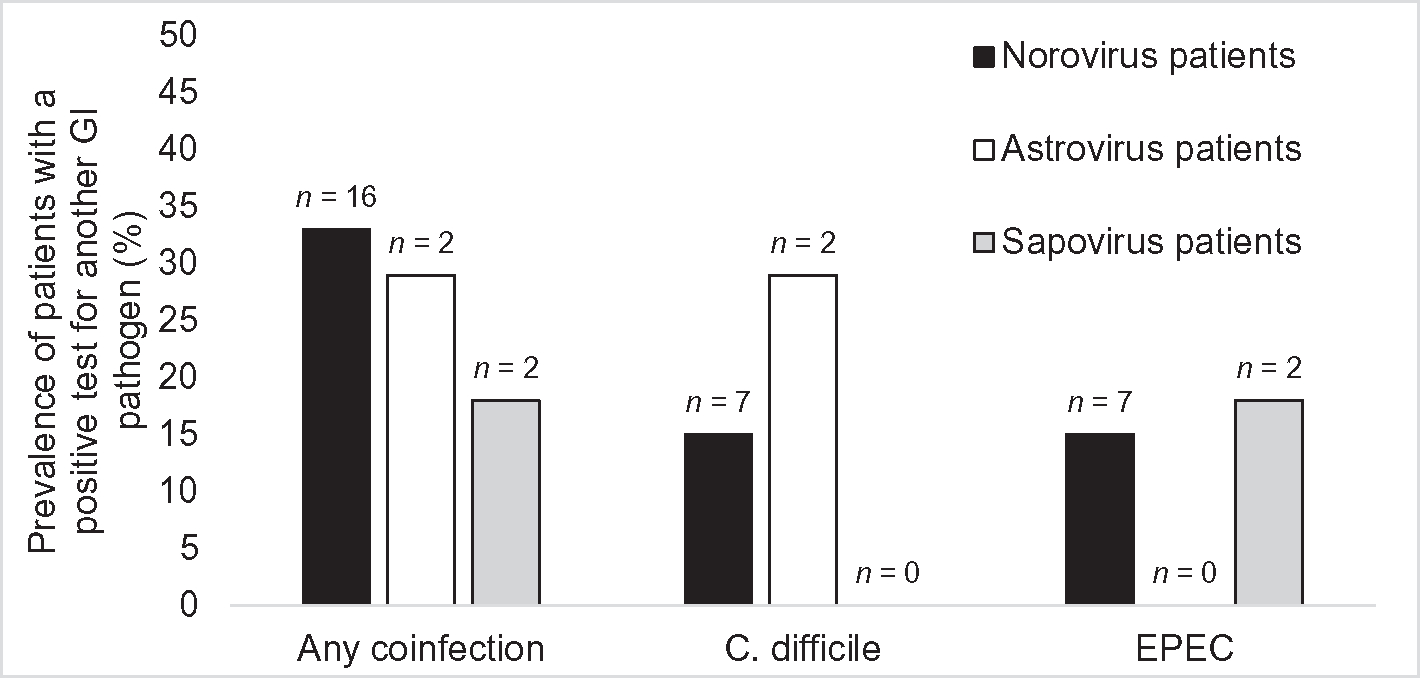
We estimated the prevalence of astrovirus, sapovirus, and norovirus among patients enrolled in research protocols and receiving medical care at the Clinical Center of the National Institutes of Health, Bethesda, MD, a clinical research hospital with a large immunocompromised patient population. We identified patients whose fecal specimens were submitted to the Clinical Center for testing on the Biofire FilmArray Gastrointestinal Panel from September 15, 2015 through November 30, 2016. Among 442 patients with fecal specimens submitted for multiplex testing, 11% had norovirus identified, 2% had astrovirus, and 2% had sapovirus. Like norovirus, astrovirus was detected in multiple sequential samples from a single patient, consistent with chronic infection or the occurrence of multiple reinfections. Coinfection with non-viral gastrointestinal pathogens was detected in 31% of patients with positive results for norovirus, astrovirus, or sapovirus. Norovirus remains common in this immunocompromised patient population, and both sapovirus and astrovirus are present.
Keywords: Astrovirus; Immunocompromised host; Norovirus; Sapovirus.
Copyright © 2018. Published by Elsevier Inc.
Conflict of interest statement
Competing Interests
The authors have no competing interests to declare.
Figures
References
-
- Brown JR, Shah D, Breuer J. Viral gastrointestinal infections and norovirus genotypes in a paediatric UK hospital, 2014–2015. J Clin Virol 2016;84:1–6. - PubMed
MeSH terms
Grants and funding
LinkOut - more resources
Full Text Sources
Other Literature Sources
Medical
