


Social Drinking on Social Media: Content Analysis of the Social Aspects of Alcohol-Related Posts on Facebook and Instagram
- PMID: 29934290
- PMCID: PMC6035352
- DOI: 10.2196/jmir.9355
Social Drinking on Social Media: Content Analysis of the Social Aspects of Alcohol-Related Posts on Facebook and Instagram
Abstract
Background: Alcohol is often consumed in social contexts. An emerging social context in which alcohol is becoming increasingly apparent is social media. More and more young people display alcohol-related posts on social networking sites such as Facebook and Instagram.
Objective: Considering the importance of the social aspects of alcohol consumption and social media use, this study investigated the social content of alcohol posts (ie, the evaluative social context and presence of people) and social processes (ie, the posting of and reactions to posts) involved with alcohol posts on social networking sites.
Methods: Participants (N=192; mean age 20.64, SD 4.68 years, 132 women and 54 men) gave researchers access to their Facebook and/or Instagram profiles, and an extensive content analysis of these profiles was conducted. Coders were trained and then coded all screenshotted timelines in terms of evaluative social context, presence of people, and reactions to post.
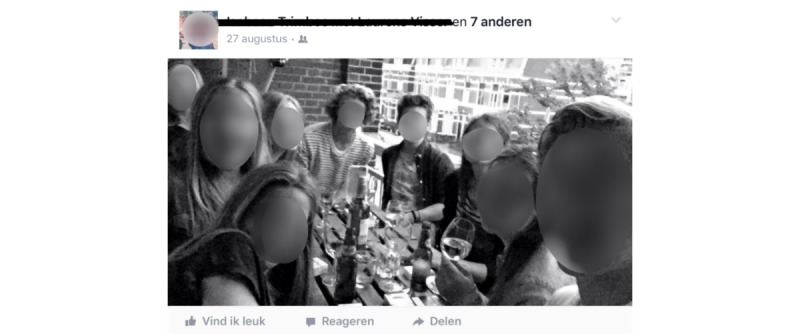
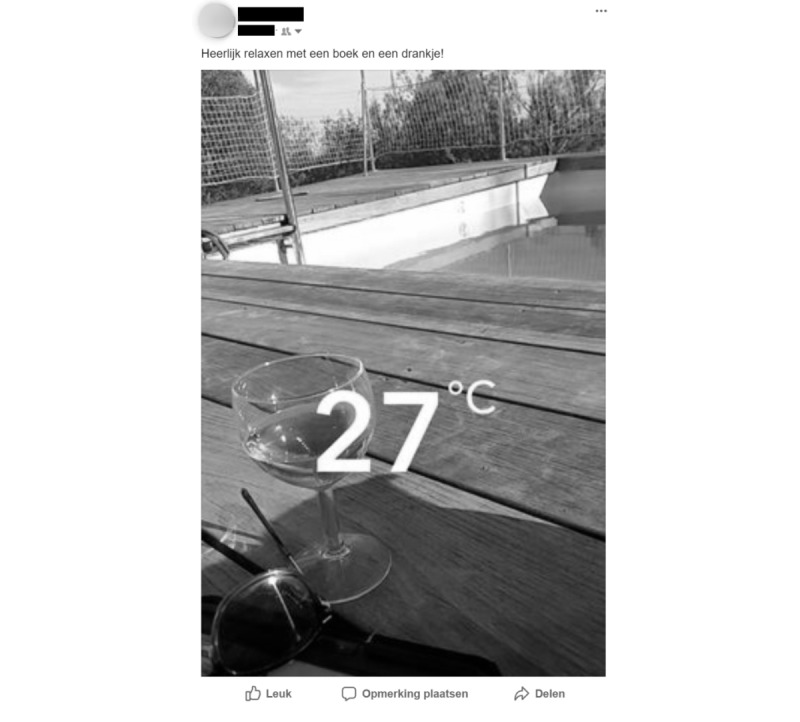
Results: Alcohol posts of youth frequently depict alcohol in a positive social context (425/438, 97.0%) and display people holding drinks (277/412, 67.2%). In addition, alcohol posts were more often placed on participants' timelines by others (tagging; 238/439, 54.2%) than posted by participants themselves (201/439, 45.8%). Furthermore, it was revealed that such social posts received more likes (mean 35.50, SD 26.39) and comments than nonsocial posts (no people visible; mean 10.34, SD 13.19, P<.001).
Conclusions: In terms of content and processes, alcohol posts on social media are social in nature and a part of young people's everyday social lives. Interventions aiming to decrease alcohol posts should therefore focus on the broad social context of individuals in which posting about alcohol takes place. Potential intervention strategies could involve making young people aware that when they post about social gatherings in which alcohol is visible and tag others, it may have unintended negative consequences and should be avoided.
Keywords: alcohol drinking; social interaction; social media.
©Hanneke Hendriks, Bas Van den Putte, Winifred A Gebhardt, Megan A Moreno. Originally published in the Journal of Medical Internet Research (http://www.jmir.org), 22.06.2018.
Conflict of interest statement
Conflicts of Interest: None declared.
Figures
References
-
- Perkins HW. Surveying the damage: a review of research on consequences of alcohol misuse in college populations. J Stud Alcohol Suppl. 2002 Mar;(14):91–100. - PubMed
-
- Rehm J, Room R, Graham K, Monteiro M, Gmel G, Sempos CT. The relationship of average volume of alcohol consumption and patterns of drinking to burden of disease: an overview. Addiction. 2003 Sep;98(9):1209–1228.467 - PubMed
-
- Naimi TS, Brewer RD, Mokdad A, Denny C, Serdula MK, Marks JS. Binge drinking among US adults. JAMA. 2003 Jan 1;289(1):70–75.joc21082 - PubMed
Publication types
MeSH terms
LinkOut - more resources
Full Text Sources
Other Literature Sources
Medical
