


Brain Network Connectivity and Executive Function in Long-Term Survivors of Childhood Acute Lymphoblastic Leukemia
- PMID: 29936880
- PMCID: PMC6103246
- DOI: 10.1089/brain.2017.0574
Brain Network Connectivity and Executive Function in Long-Term Survivors of Childhood Acute Lymphoblastic Leukemia
Abstract
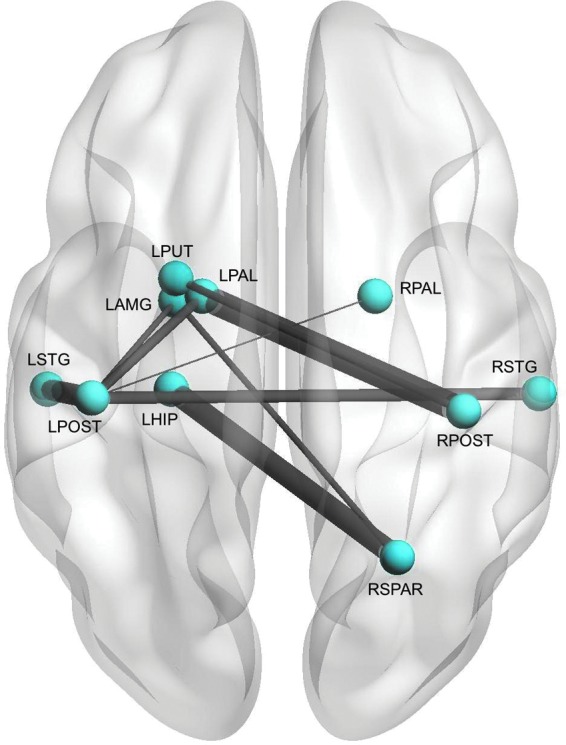
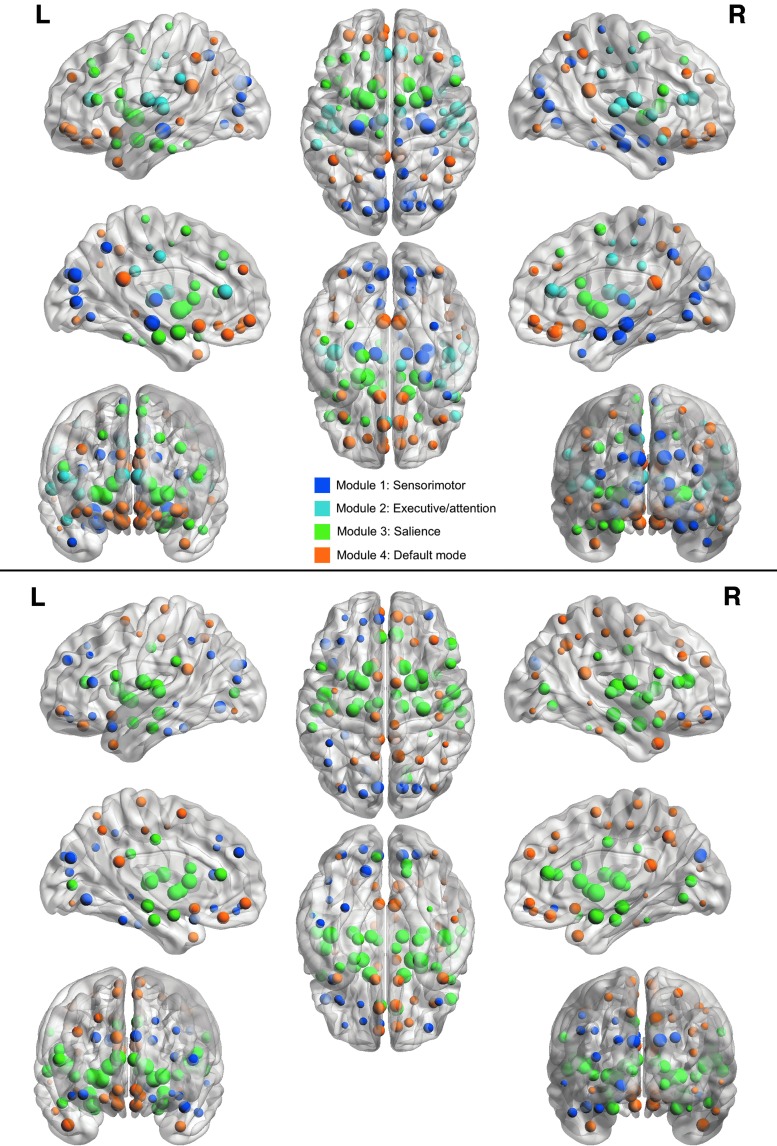
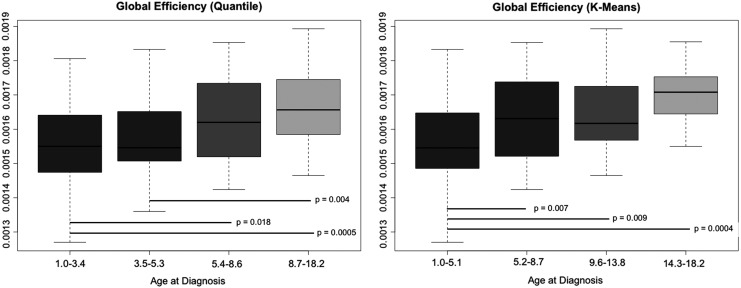
Chemotherapeutic agents used to treat acute lymphoblastic leukemia (ALL), the most common cancer affecting young children, have been associated with long-term cognitive impairments that reduce quality of life. Executive dysfunction is one of the most consistently observed deficits and can have substantial and pervasive effects on academic success, occupational achievement, psychosocial function, and psychiatric status. We examined the neural mechanisms of executive dysfunction by measuring structural and functional connectomes in 161 long-term survivors of pediatric ALL, age 8-21 years, who were treated on a single contemporary chemotherapy-only protocol for standard/high- or low-risk disease. Lower global efficiency, a measure of information exchange and network integration, of both structural and functional connectomes was found in survivors with executive dysfunction compared with those without dysfunction (p < 0.046). Patients with standard/high- versus low-risk disease and those who received greater number of intrathecal treatments containing methotrexate had the lowest network efficiencies. Patients with executive dysfunction also showed hyperconnectivity in sensorimotor, visual, and auditory-processing regions (p = 0.037) and poor separation between sensorimotor, executive/attention, salience, and default mode networks (p < 0.0001). Connectome disruption was consistent with a pattern of delayed neurodevelopment that may be associated with reduced resilience, adaptability, and flexibility of the brain network. These findings highlight the need for interventions that will prevent or manage cognitive impairment in survivors of pediatric acute lymphoblastic leukemia.
Keywords: DTI; chemotherapy; connectome; executive function; leukemia; resting state fMRI.
Conflict of interest statement
No competing financial interests exist.
Figures
References
-
- Andellini M, Cannata V, Gazzellini S, Bernardi B, Napolitano A. 2015. Test-retest reliability of graph metrics of resting state MRI functional brain networks: a review. J Neurosci Methods 253:183–192 - PubMed
-
- Bassett DS, Brown JA, Deshpande V, Carlson JM, Grafton ST. 2011. Conserved and variable architecture of human white matter connectivity. Neuroimage 54:1262–1279 - PubMed
-
- Benjamini Y, Yekutieli D. 2001. The control of the false discovery rate in multiple testing under dependency. Ann Stat 29:1165–1188
Publication types
MeSH terms
Substances
Grants and funding
LinkOut - more resources
Full Text Sources
Other Literature Sources
Medical
