


Measuring beverage consumption in US children and adolescents: a systematic review
- PMID: 29938891
- PMCID: PMC6103833
- DOI: 10.1111/obr.12692
Measuring beverage consumption in US children and adolescents: a systematic review
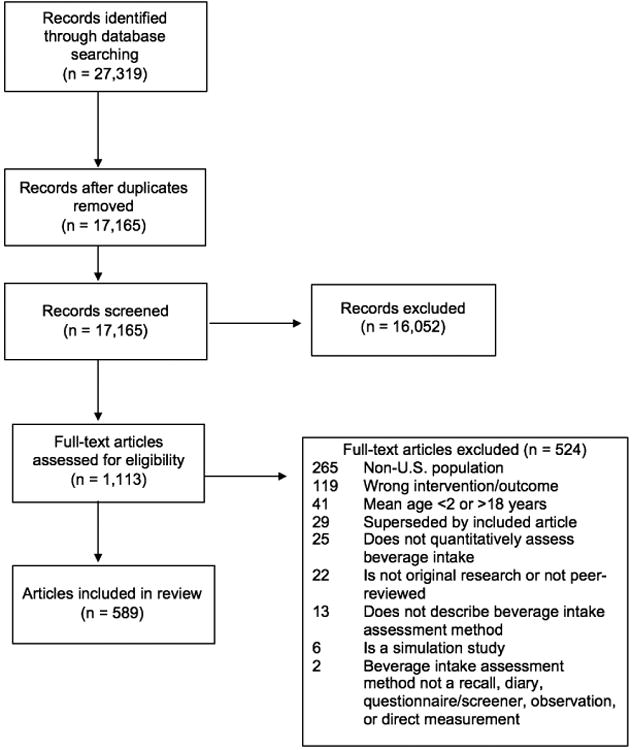
Abstract
Beverage consumption habits are associated with weight outcomes for children and adolescents. Many studies have examined youth's beverage consumption, but little is known about what methods are commonly used to assess youth beverage consumption and whether these strategies are valid and reliable. This study aimed to systematically review articles assessing beverage consumption among children and adolescents. We searched PubMed and Scopus for English-language articles published between February 2007 and February 2017 that measured and reported on American youth's (ages 2-18 years) beverage consumption. Searches yielded 17,165 articles, of which 589 articles describing 615 measures were extracted. We examined the types of assessment methods used, characteristics of these methods (e.g. validity, reliability, and literacy level), characteristics of study samples, and beverages assessed. The most common assessment methods were questionnaires/screeners (used by 65.4% of articles) and recalls (24.4%). About three-quarters of articles did not address validity (70.5%) or reliability (79.5%) of any measures used. Study populations were diverse: 54.7% of articles included low-income children, and 90.2% included non-White children. The most commonly assessed beverage category was sugar-sweetened beverages. Findings suggest that improved measurement techniques and reporting are both needed to track progress towards a goal of ensuring all youth have healthy beverage consumption.
Keywords: Adolescents; beverage consumption; children; measurement.
© 2018 World Obesity Federation.
References
-
- de Ruyter JC, Olthof MR, Seidell JC, et al. A trial of sugar-free or sugar-sweetened beverages and body weight in children. N Engl J Med. 2012;367:1397–1406. - PubMed
-
- Dennison BA, Rockwell HL, Baker SL. Excess fruit juice consumption by preschool-aged children is associated with short stature and obesity. Pediatrics. 1997;99:15. - PubMed
Publication types
MeSH terms
Grants and funding
LinkOut - more resources
Full Text Sources
Other Literature Sources
