


Contemporaneous effects of diabetes mellitus and hypothyroidism on spermatogenesis and immunolocalization of Claudin-11 inside the seminiferous tubules of mice
- PMID: 29940839
- PMCID: PMC6019809
- DOI: 10.1186/s12861-018-0174-4
Contemporaneous effects of diabetes mellitus and hypothyroidism on spermatogenesis and immunolocalization of Claudin-11 inside the seminiferous tubules of mice
Abstract
Background: Diabetes and hypothyroidism produce adverse effects on body weight and sexual maturity by inhibiting body growth and metabolism. The occurrence of diabetes is always accompanied with thyroid dysfunction. Thus, it is important to take hypo- or hyper-thyroidism into consideration when exploring the adverse effects caused by diabetes. Previous reports have found hypothyroidism inhibits testicular growth by delaying Sertoli cell differentiation and proliferation. Hence, by establishing a mouse model of diabetes combined with hypothyroidism, we provided evidence that poly glandular autoimmune syndrome affected testicular development and spermatogenesis.
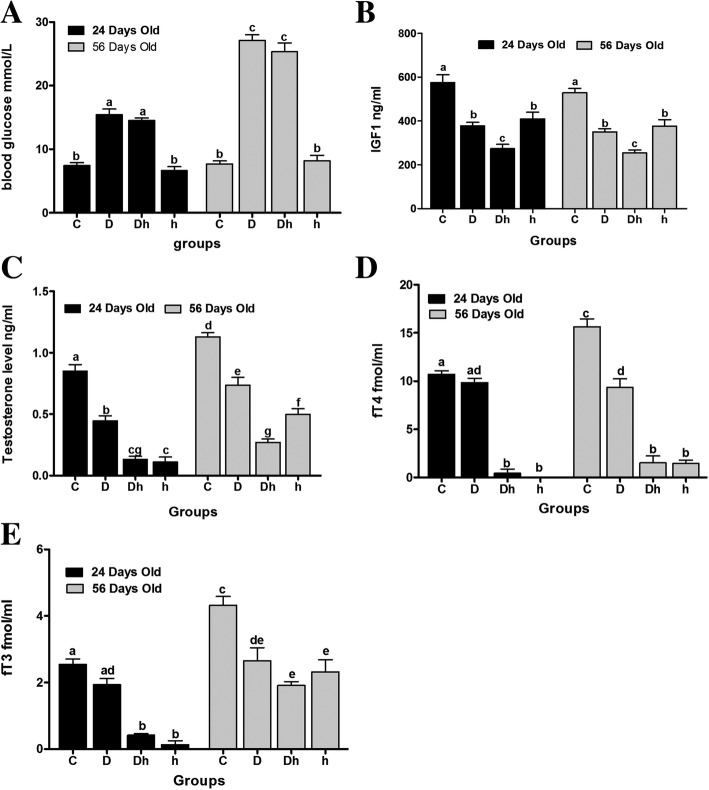
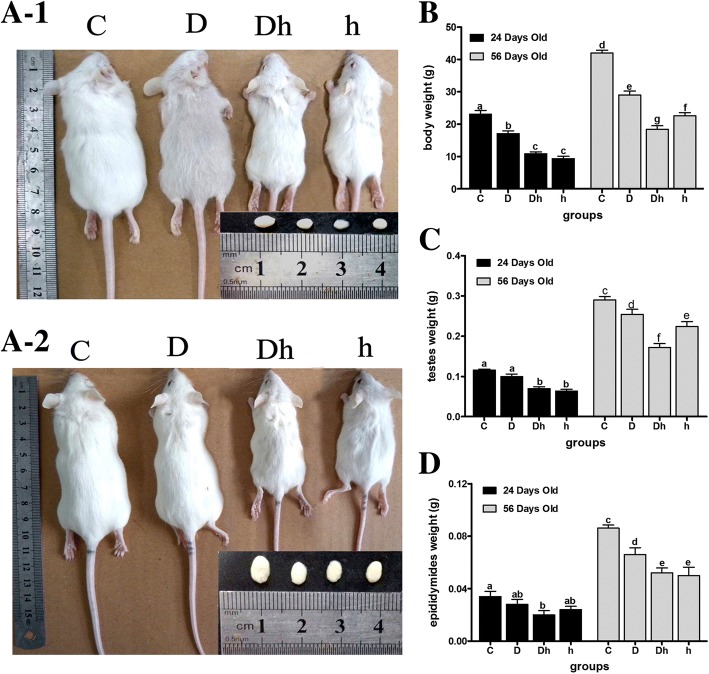
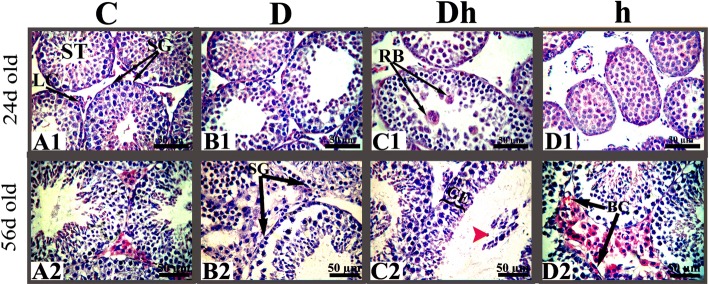
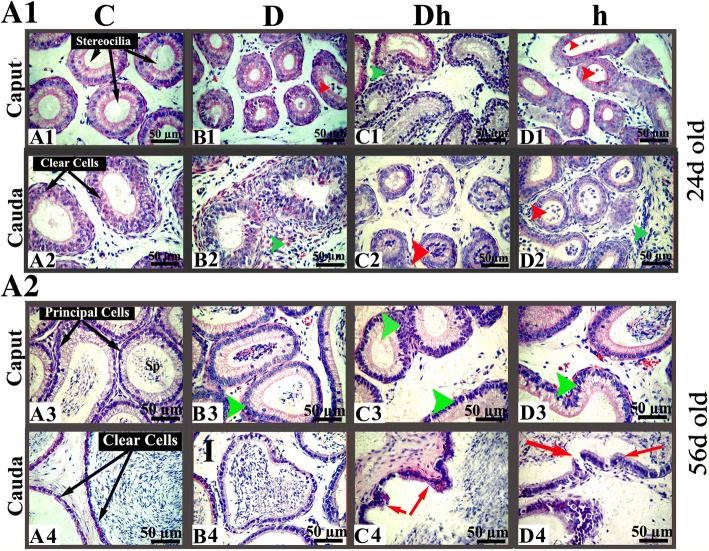
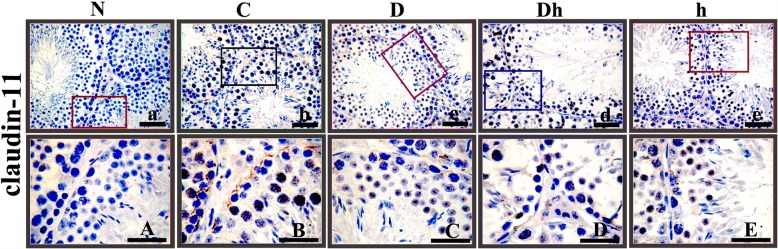
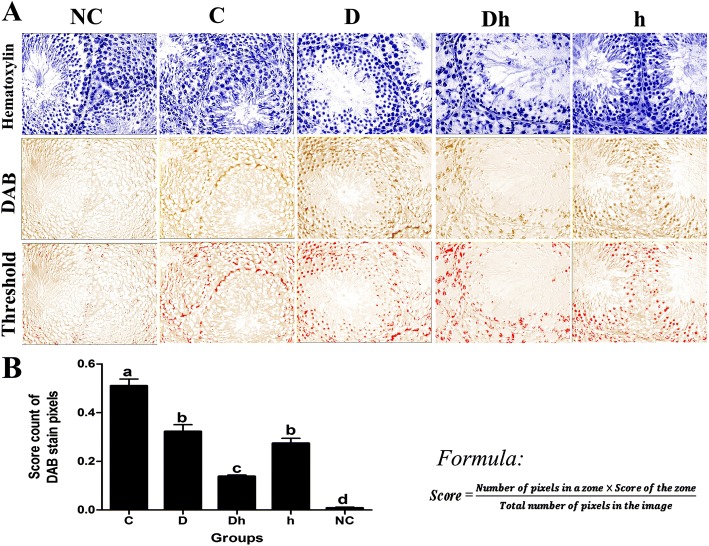
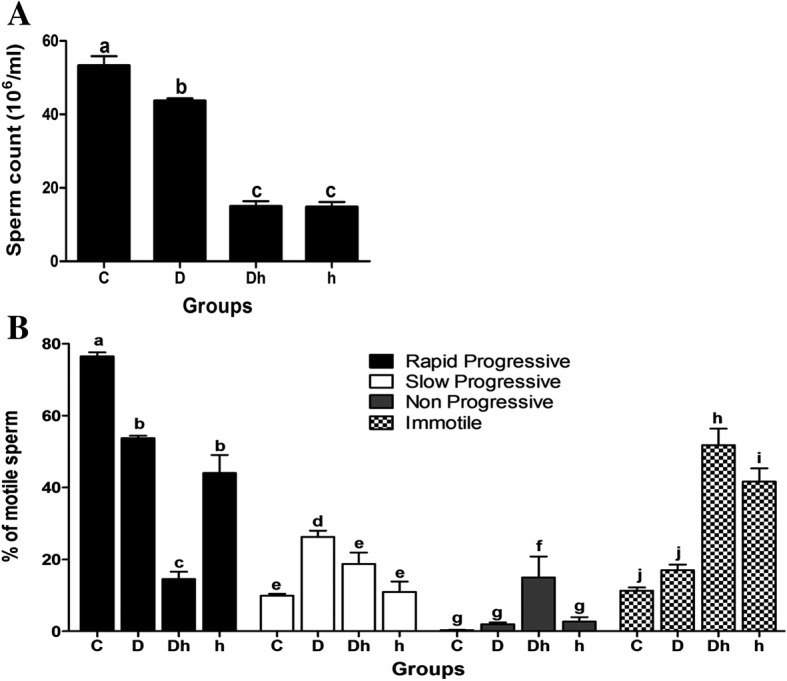
Results: we mimicked polyglandular deficiency syndrome in both immature and prepubertal mice by induction of diabetes and hypothyroidism, which caused decreases in serum concentrations of testosterone and insulin like growth factor 1 (IGF-1). Such reduction of growth factor resulted in inhibition of testicular and epididymal development. Moreover, expressions of Claudin-11 were observed between Sertoli cells and disrupted in the testes of syndrome group mice. We also found reduced sperm count and motility in prepubertal mice.
Conclusions: This mimicry of the diabetes and thyroid dysfunction, will be helpful to better understand the reasons for male infertility in diabetic-cum-hypothyroid patients.
Keywords: Claudin-11; Diabetes; Epididymis; Hypothyroidism; Spermatogenesis; Testis.
Conflict of interest statement
Ethics approval
The experimental protocols involving mice were conducted in accordance with the Guide for the Care and Use of Laboratory Animals prepared by the Institutional Animal Care and Use Committee of Nanjing Agricultural University, China. Permission use of laboratory animals in our university was certificated by No. SYXK (Su)2017–0007 and the ethics approval number of this project was NAU2015018 from our university ethics committee.
Consent for publication
Not applicable.
Competing interests
The authors declare that they have no competing interests.
Publisher’s Note
Springer Nature remains neutral with regard to jurisdictional claims in published maps and institutional affiliations.
Figures
References
Publication types
MeSH terms
Substances
Grants and funding
LinkOut - more resources
Full Text Sources
Other Literature Sources
Medical
Molecular Biology Databases
Miscellaneous
