


The roles of gender and profession on gender role expectations of pain in health care professionals
- PMID: 29942147
- PMCID: PMC6007196
- DOI: 10.2147/JPR.S162123
The roles of gender and profession on gender role expectations of pain in health care professionals
Abstract
Introduction: Gender-related stereotypes of pain may account for some assessment and treatment disparities among patients. Among health care providers, demographic factors including gender and profession may influence the use of gender cues in pain management decision-making. The Gender Role Expectations of Pain Questionnaire was developed to assess gender-related stereotypic attributions of pain regarding sensitivity, endurance, and willingness to report pain, and has not yet been used in a sample of health care providers. The purpose of this study was to examine the presence of gender role expectation of pain among health care providers. It was hypothesized that health care providers of both genders would endorse gender stereotypic views of pain and physicians would be more likely than dentists to endorse these views.
Methods: One-hundred and sixty-nine providers (89 dentists, 80 physicians; 40% women) were recruited as part of a larger study examining providers' use of demographic cues in making pain management decisions. Participants completed the Gender Role Expectations of Pain Questionnaire to assess the participant's views of gender differences in pain sensitivity, pain endurance, and willingness to report pain.
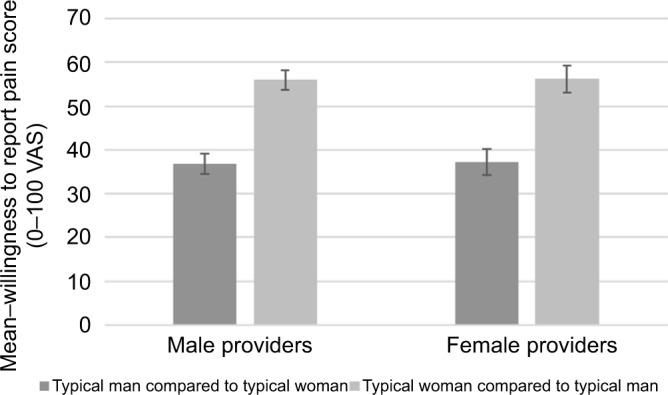
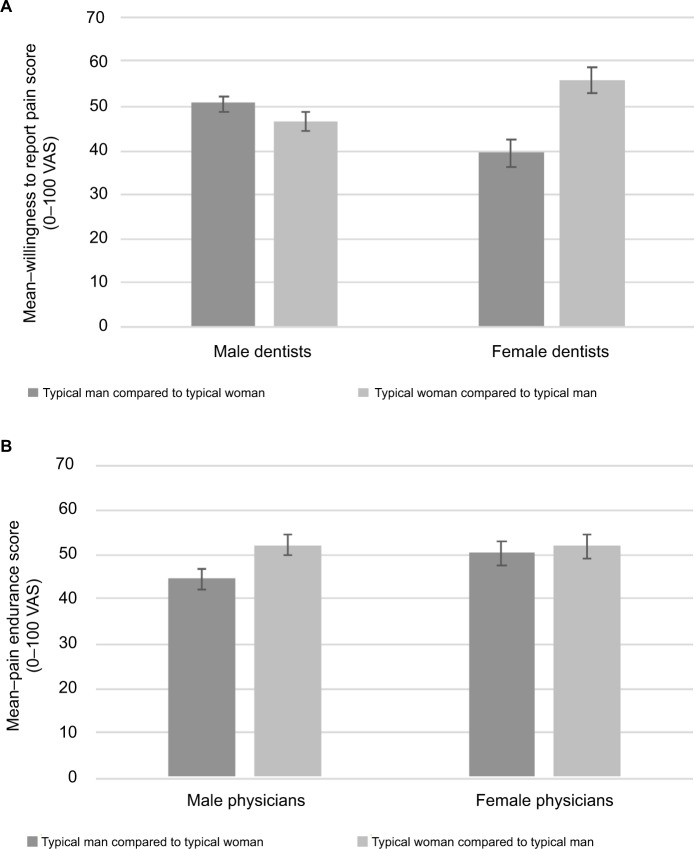
Results: Results of repeated measures analysis of variance revealed that health care providers of both genders endorsed stereotypic views of pain regarding willingness to report pain (F(1,165)=34.241, P<0.001; d=0.479). Furthermore, female dentists rated men as having less endurance than women (F(1,165)=4.654, P=0.032; d=0.333).
Conclusion: These findings affirm the presence of some gender-related stereotypic views among health care providers and suggest the presence of a view among health care providers that men are underreporting their pain in comparison to women. Future work can refine the effects of social learning history and other psychosocial factors that contribute to gender and provider differences in pain management decisions.
Keywords: dentists; expectations; gender; pain; physicians.
Conflict of interest statement
Disclosure The authors report no conflicts of interest in this work.
Figures
References
-
- Tait RC, Chibnall JT, Kalauokalani D. Provider judgments of patients in pain: seeking symptom certainty. Pain Med. 2009;10(1):11–34. - PubMed
-
- Schafer G, Prkachin KM, Kaseweter KA, Williams AC. Health care providers’ judgments in chronic pain: the influence of gender and trustworthiness. Pain. 2016;157(8):1618–1625. - PubMed
-
- Safdar B, Heins A, Homel P, et al. Impact of physician and patient gender on pain management in the emergency department – a multicenter study. Pain Med. 2009;10(2):364–372. - PubMed
-
- Chen EH, Shofer FS, Dean AJ, et al. Gender disparity in analgesic treatment of emergency department patients with acute abdominal pain. Acad Emerg Med. 2008;15(5):414–418. - PubMed
Grants and funding
LinkOut - more resources
Full Text Sources
Other Literature Sources
