


The effects of transcranial alternating current stimulation (tACS) at individual alpha peak frequency (iAPF) on motor cortex excitability in young and elderly adults
- PMID: 29943239
- PMCID: PMC6153871
- DOI: 10.1007/s00221-018-5314-3
The effects of transcranial alternating current stimulation (tACS) at individual alpha peak frequency (iAPF) on motor cortex excitability in young and elderly adults
Abstract
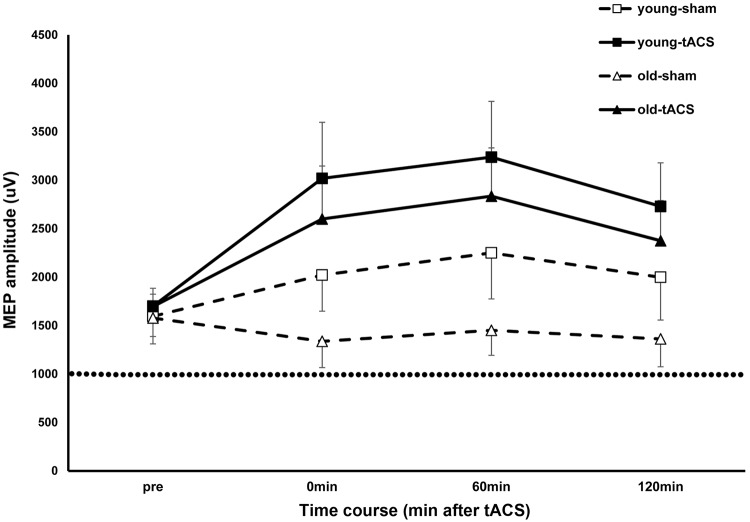
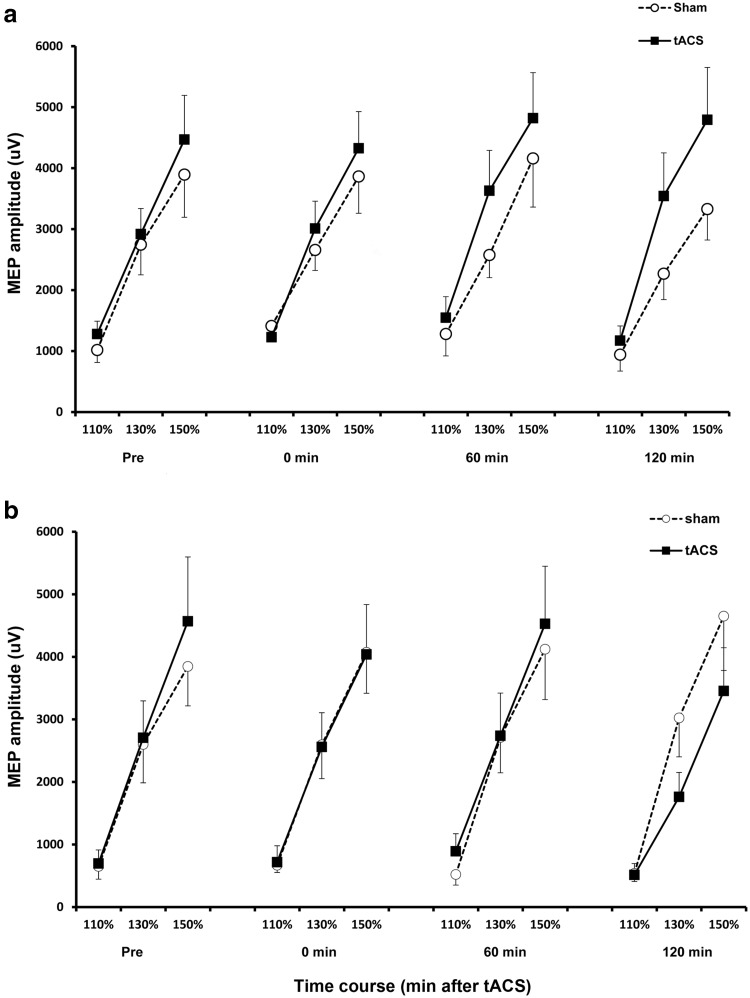
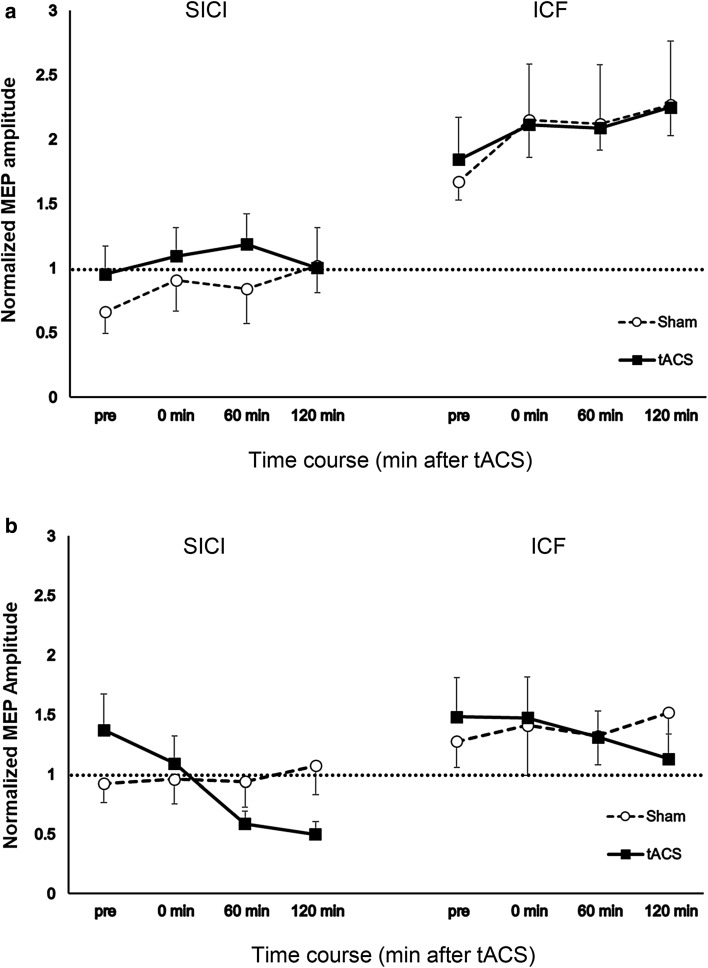
Transcranial alternating current stimulation (tACS) can modulate brain oscillations, cortical excitability and behaviour. In aging, the decrease in EEG alpha activity (8-12 Hz) in the parieto-occipital and mu rhythm in the motor cortex are correlated with the decline in cognitive and motor functions, respectively. Increasing alpha activity using tACS might therefore improve cognitive and motor function in the elderly. The present study explored the influence of tACS on cortical excitability in young and old healthy adults. We applied tACS at individual alpha peak frequency for 10 min (1.5 mA) to the left motor cortex. Transcranial magnetic stimulation was used to assess the changes in cortical excitability as measured by motor-evoked potentials at rest, before and after stimulation. TACS increased cortical excitability in both groups. However, our results also suggest that the mechanism behind the effects was different, as we observed an increase and decrease in intracortical inhibition in the old group and young group, respectively. Our results indicate that both groups profited similarly from the stimulation. There was no indication that tACS was more effective in conditions of low alpha power, that is, in the elderly.
Keywords: Aging; Alpha oscillation; Electroencephalogram; Neuronal entrainment; Transcranial alternating current stimulation; Transcranial magnetic stimulation.
Conflict of interest statement
The authors declare that they have no conflict of interest.
Figures

References
-
- Awiszus F. Chap. 2 TMS and threshold hunting. In: Paulus WFTMANJGRUZ, Hallett M, editors. Supplements to clinical neurophysiology. Oxfrod: Elsevier; 2003. pp. 13–23. - PubMed
Publication types
MeSH terms
LinkOut - more resources
Full Text Sources
Other Literature Sources
Medical
Research Materials
