


Protection of Kidney Function with Human Antioxidation Protein α1-Microglobulin in a Mouse 177Lu-DOTATATE Radiation Therapy Model
- PMID: 29943622
- PMCID: PMC6477591
- DOI: 10.1089/ars.2018.7517
Protection of Kidney Function with Human Antioxidation Protein α1-Microglobulin in a Mouse 177Lu-DOTATATE Radiation Therapy Model
Erratum in
-
Correction to: Protection of Kidney Function with Human Antioxidation Protein α1-Microglobulin in a Mouse 177Lu-DOTATATE Radiation Therapy Model by Kristiansson A, Ahlstedt J, Holmqvist B, Brinte A, Tran TA, Forssell-Aronsson E, Strand S-E, Gram M, and Åkerström B. Antioxidants & Redox Signaling 30: 1746-1759, 2019. DOI: 10.1089/ars.2018.7517.Antioxid Redox Signal. 2020 Mar 20;32(9):657. doi: 10.1089/ars.2018.7517.correx. Antioxid Redox Signal. 2020. PMID: 32069101 Free PMC article. No abstract available.
Abstract
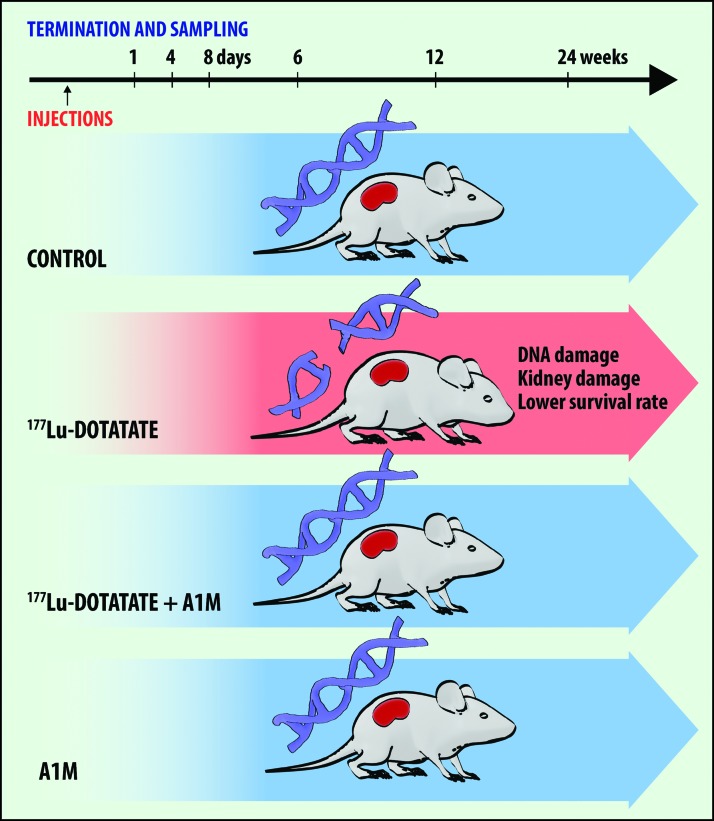
Aims: Peptide receptor radionuclide therapy (PRRT) is in clinical use today to treat metastatic neuroendocrine tumors. Infused, radiolabeled, somatostatin analog peptides target tumors that are killed by irradiation damage. The peptides, however, are also retained in kidneys due to glomerular filtration, and the administered doses must be limited to avoid kidney damage. The human radical scavenger and antioxidant, α1-microglobulin (A1M), has previously been shown to protect bystander tissue against irradiation damage and has pharmacokinetic and biodistribution properties similar to somatostatin analogs. In this study, we have investigated if A1M can be used as a renal protective agent in PRRT.
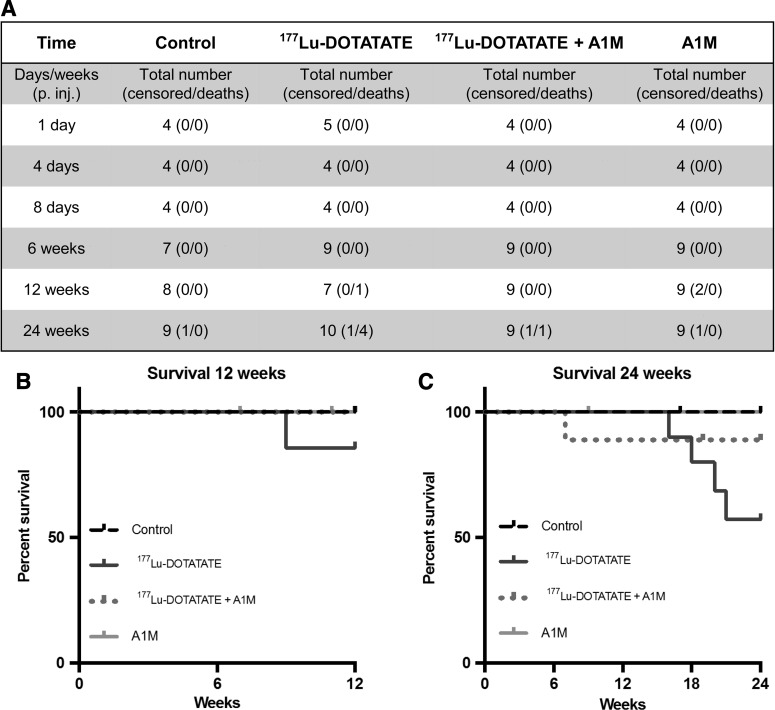
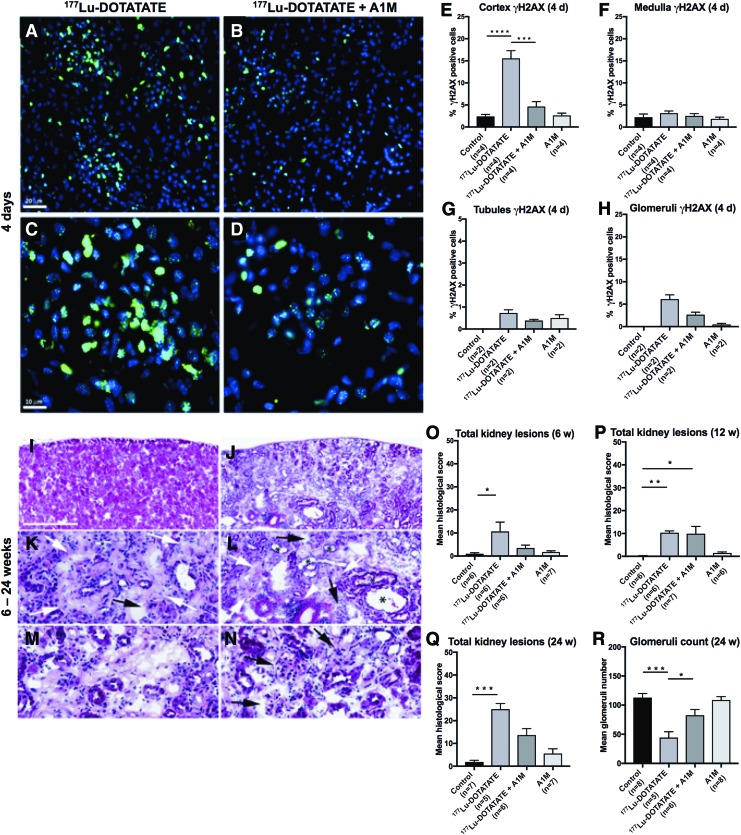
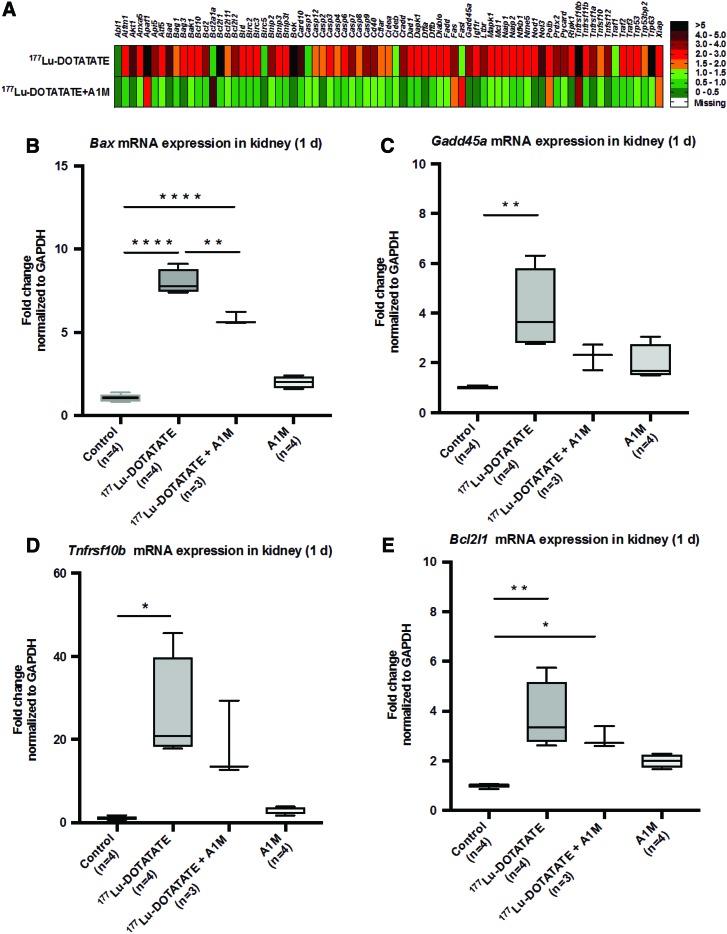
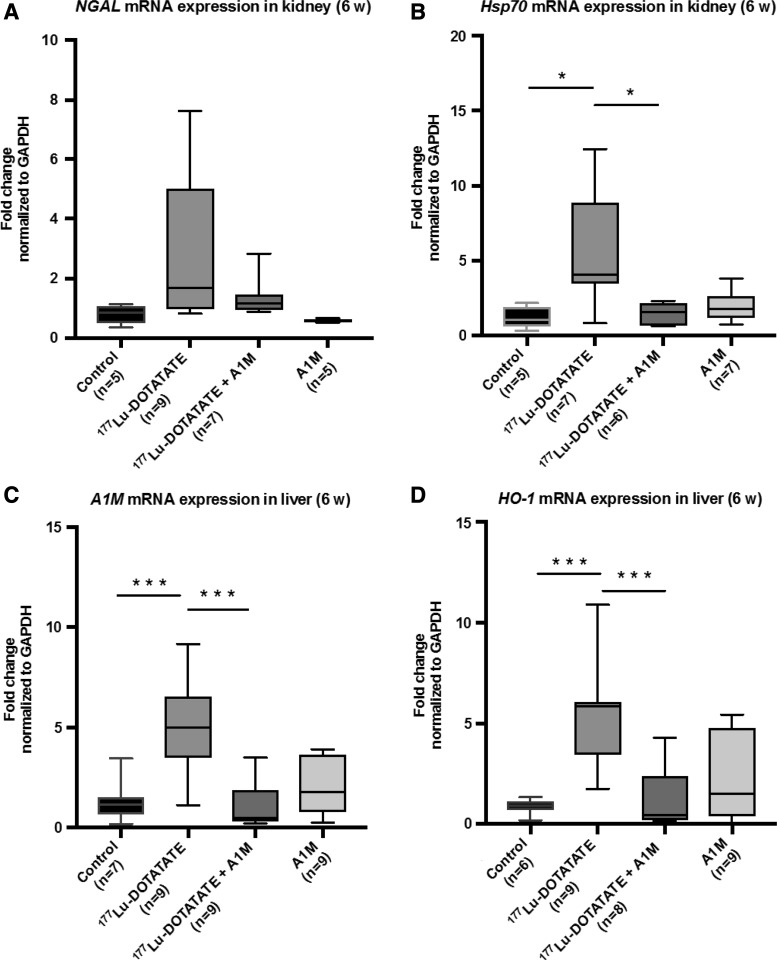
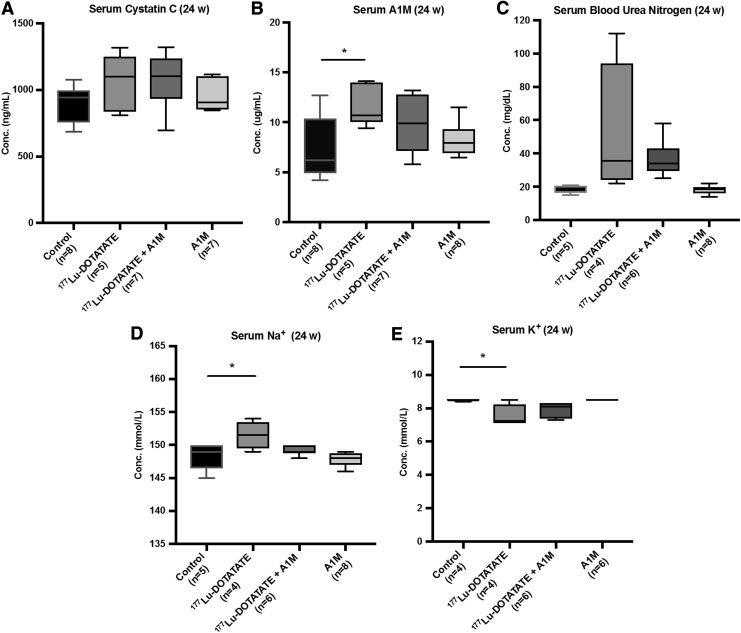
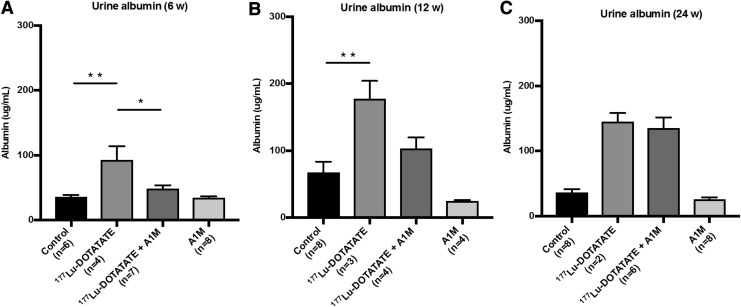
Results: We describe nephroprotective effects of human recombinant A1M on the short- and long-term renal damage observed following lutetium 177 (177Lu)-DOTATATE (150 MBq) exposure in BALB/c mice. After 1, 4, and 8 days (short term), 177Lu-DOTATATE injections resulted in increased formation of DNA double-strand breaks in the renal cortex, upregulated expression of apoptosis and stress response-related genes, and proteinuria (albumin in urine), all of which were significantly suppressed by coadministration of A1M (7 mg/kg). After 6, 12, and 24 weeks (long term), 177Lu-DOTATATE injections resulted in increased animal death, kidney lesions, glomerular loss, upregulation of stress genes, proteinuria, and plasma markers of reduced kidney function, all of which were suppressed by coadministration of A1M. Innovation and Conclusion: This study demonstrates that A1M effectively inhibits radiation-induced renal damage. The findings suggest that A1M may be used as a radioprotector during clinical PRRT, potentially facilitating improved tumor control and enabling more patients to receive treatment.
Keywords: Lu-DOTATATE; PRRT; cancer; radionuclide therapy; renal protection; α-microglobulin.
Conflict of interest statement
B.Å. and M.G. are founders, share holders, and board members of A1M Pharma AB, which holds patent rights on medical uses of A1M. S.E.S. is a share holder of A1M Pharma.
Figures
References
-
- Åkerström B. and Gram M. A1M, an extravascular tissue cleaning and housekeeping protein. Free Radic Biol Med 74: 274–282, 2014 - PubMed
-
- Åkerström B, Maghzal GJ, Winterbourn CC, and Kettle AJ. The lipocalin α1-microglobulin has radical-scavenger activity. J Biol Chem 282: 31493–31503, 2007 - PubMed
-
- Allhorn M, Klapyta A, and Åkerström B. Redox properties of the lipocalin α1-microglobulin: reduction of cytochrome c, hemoglobin and free iron. Free Rad Biol Med 38: 557–567, 2005 - PubMed
Publication types
MeSH terms
Substances
LinkOut - more resources
Full Text Sources
Other Literature Sources
Medical
Miscellaneous
