


Effect of different planting areas on the chemical compositions and hypoglycemic and antioxidant activities of mulberry leaf extracts in Southern China
- PMID: 29944667
- PMCID: PMC6019398
- DOI: 10.1371/journal.pone.0198072
Effect of different planting areas on the chemical compositions and hypoglycemic and antioxidant activities of mulberry leaf extracts in Southern China
Abstract
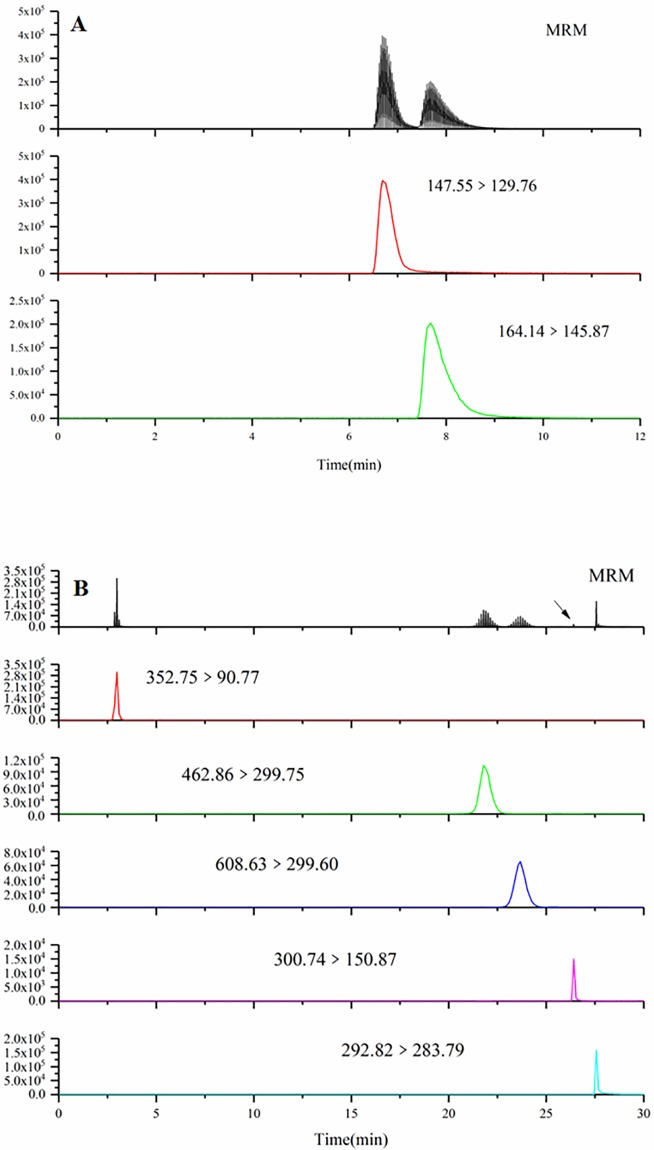
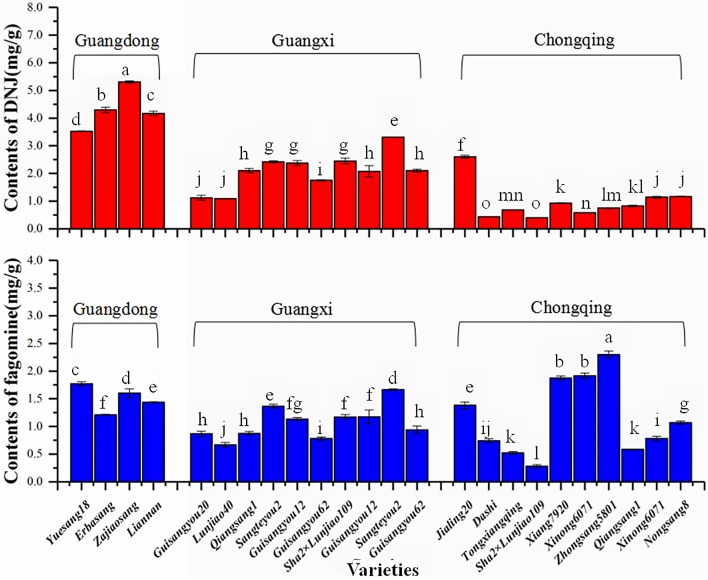
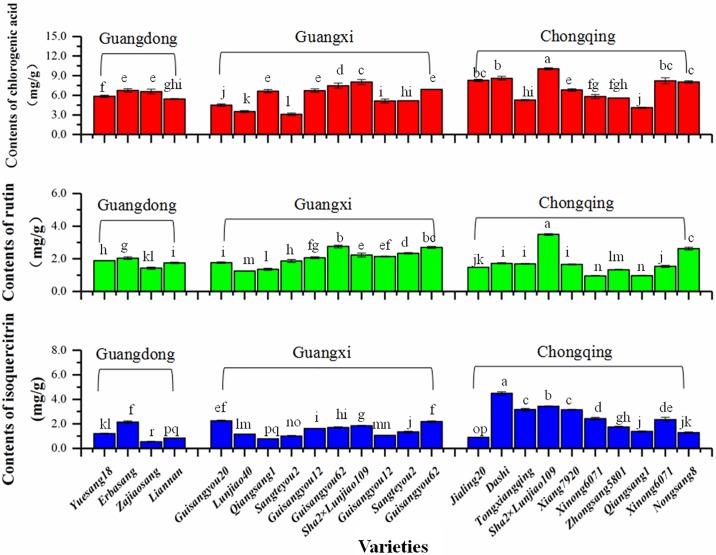
Guangdong, Guangxi and Chongqing are emerging sericulture areas in China where the production of mulberry leaves is huge. In order to identity high quality mulberry leaves that are suitable for healthy products to expand planting, 24 samples from three regions (Guangdong, Guangxi, Chongqing) in the south of China were quantified for two alkaloids (1-deoxynojirimycin and fagomine) and five phenols (chlorogenic acid, rutin, isoquercitrin, etc.) using high-performance liquid chromatography tandem mass spectrometry (HPLC-MS/MS). Additionally, the total phenolic and total flavonoid contents, antioxidant and glycosidase inhibitory activities (hypoglycemic activity) were tested using different assays (DPPH, ABTS, FRAP) to comprehensively evaluate the quality of the mulberry leaves. The contents of DNJ and fagomine ranged from 0.401±0.003 to 5.309±0.036 mg/g and from 0.279±0.031 to 2.300±0.060 mg/g, respectively. The main phenolic constituents were chlorogenic acid, rutin and isoquercitrin, with chlorogenic acid present in the highest concentrations, ranging from 3.104±0.191 to 10.050±0.143 mg/g. The antioxidant activity exhibited a tendency as follows: Guangxi > Guangdong > Chongqing, except for two samples from Chongqing, which showed the highest antioxidant activity. Based on our study, mulberry leaves from Guangdong and Guangxi could be future sources of natural hypoglycemic and antioxidant products.
Conflict of interest statement
The authors have declared that no competing interests exist.
Figures
References
-
- Sugiyama M, Katsube T, Koyama A, Itamura H. Effect of solar radiation on the functional components of mulberry (Morus alba L.) leaves. J. Sci. Food Agr. 2016; 96(11): 3915–3921. - PubMed
-
- Andallu B, Shankaran M, Ullagaddi R, Iyer S. In vitro free radical scavenging and in vivo antioxidant potential of mulberry (Morus indica L.) leaves. J. Herb. Med. 2014; 4(1): 10–17.
-
- Shin SO, Seo HJ, Park H, Song HJ. Effects of mulberry leaf extract on blood glucose and serum lipid profiles in patients with type 2 diabetes mellitus: A systematic review. Eur. J. Integr. Med.2016; 8(5): 602–608.
-
- Sánchezsalcedo EM, Amorós A, Hernández F, Martínez JJ. Phytochemical properties of white (Morus alba) and black (Morus nigra) mulberry leaves, a new food supplement. J. Food Nutr. Res. 2017; 5(4): 253–261.
-
- Liu C, Xiang W, Yu Y, Shi ZQ, Huang XZ, Xu L. Comparative analysis of 1-deoxynojirimycin contribution degree to α-glucosidase inhibitory activity and physiological distribution in Morus alba L. Ind. Crop Prod. 2015; 70: 309–315.
Publication types
MeSH terms
Substances
LinkOut - more resources
Full Text Sources
Other Literature Sources
Medical
Miscellaneous
