


Effect of Accelerated Infliximab Induction on Short- and Long-term Outcomes of Acute Severe Ulcerative Colitis: A Retrospective Multicenter Study and Meta-analysis
- PMID: 29944926
- PMCID: PMC6309670
- DOI: 10.1016/j.cgh.2018.06.031
Effect of Accelerated Infliximab Induction on Short- and Long-term Outcomes of Acute Severe Ulcerative Colitis: A Retrospective Multicenter Study and Meta-analysis
Abstract
Background & aims: In patients with acute severe ulcerative colitis (ASUC), standard infliximab induction therapy has modest efficacy. There are limited data on the short-term or long-term efficacy of accelerated infliximab induction therapy for these patients.
Methods: In a retrospective study, we collected data from 213 patients with steroid refractory ASUC who received infliximab rescue therapy at 3 centers, from 2005 through 2017. Patients were classified that received standard therapy (5mg/kg infliximab at weeks 0, 2, and 6) or accelerated therapy (>5mg/kg infliximab at shorter intervals). The primary outcome was colectomy in-hospital and at 3, 6, 12, and 24 months. Multivariable regression models were adjusted for relevant confounders. We also performed a meta-analysis of published effects of standard vs accelerated infliximab treatment of ASUC.
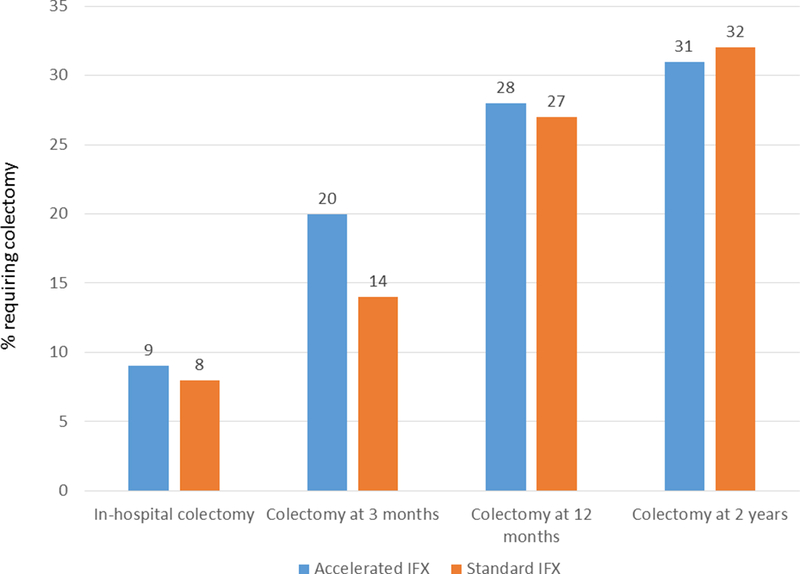
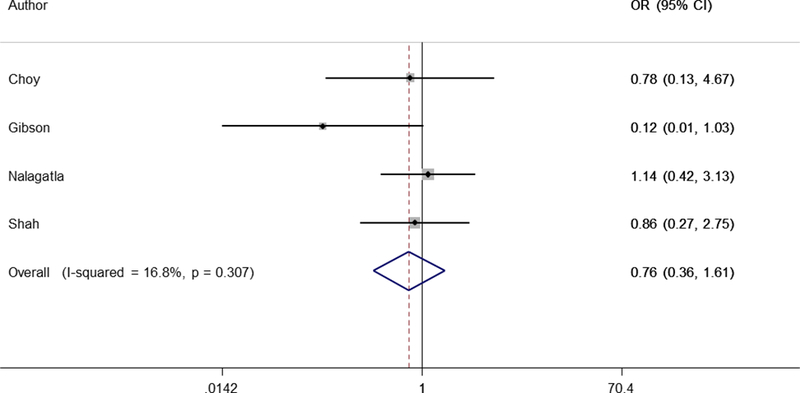
Results: In the retrospective analysis, 81 patients received accelerated infliximab therapy and 132 received standard infliximab therapy. There were no differences in characteristics between the groups, including levels of C-reactive protein or albumin. Similar proportions of patients in each group underwent in-hospital colectomy (9% receiving accelerated therapy vs 8% receiving standard therapy; adjusted odds ratio, 1.35; 95% CI, 0.38-4.82). There was no significant difference between groups in proportions that underwent colectomy at 3, 6, 12, or 24 months (P > .20 for all comparisons). Among those in the accelerated group, an initial dose of 10 mg/kg was associated with a lower rate of colectomy compared to patients who initially received 5 mg/kg followed by subsequent doses of 5mg/kg or higher. Our systematic review identified 7 studies (181 patients receiving accelerated infliximab and 436 receiving standard infliximab) and found no significant differences in short- or long-term outcomes.
Conclusion: In a retrospective study and meta-analysis, we found no association between accelerated infliximab induction therapy and lower rates of colectomy in patients with ASUC, compared to standard induction therapy. However, confounding by disease severity cannot be excluded. Randomized trials are warranted to compare these treatment strategies.
Keywords: Acute Severe Ulcerative Colitis; Colectomy; Hospitalization; IBD Treatment; Infliximab; Multicenter; Patient Management; Surgery; TNF Antagonist.
Copyright © 2019 AGA Institute. Published by Elsevier Inc. All rights reserved.
Conflict of interest statement
Figures
Comment in
-
Effect of Accelerated Infliximab Induction on Outcomes of Acute Severe Ulcerative Colitis.Clin Gastroenterol Hepatol. 2019 Aug;17(9):1918-1919. doi: 10.1016/j.cgh.2019.03.034. Epub 2019 Mar 27. Clin Gastroenterol Hepatol. 2019. PMID: 30928451 No abstract available.
-
Reply.Clin Gastroenterol Hepatol. 2019 Aug;17(9):1919. doi: 10.1016/j.cgh.2019.04.007. Epub 2019 Apr 6. Clin Gastroenterol Hepatol. 2019. PMID: 30965106 Free PMC article. No abstract available.
References
-
- Bernstein CN, Ng SC, Lakatos PL, et al. A review of mortality and surgery in ulcerative colitis: milestones of the seriousness of the disease. Inflamm Bowel Dis 2013;19:2001–10. - PubMed
-
- Caprilli R, Viscido A, Latella G. Current management of severe ulcerative colitis. Nat Clin Pract Gastroenterol Hepatol 2007;4:92–101. - PubMed
-
- Seah D, De Cruz P. Review article: the practical management of acute severe ulcerative colitis. Aliment Pharmacol Ther 2016;43:482–513. - PubMed
Publication types
MeSH terms
Substances
Grants and funding
LinkOut - more resources
Full Text Sources
Other Literature Sources
Medical
Research Materials
