


Comparison of the effectiveness between transcutaneous electrical nerve stimulation, manual acupuncture, and electroacupuncture on tinnitus: study protocol for a randomized controlled trial
- PMID: 29945669
- PMCID: PMC6020312
- DOI: 10.1186/s13063-018-2738-9
Comparison of the effectiveness between transcutaneous electrical nerve stimulation, manual acupuncture, and electroacupuncture on tinnitus: study protocol for a randomized controlled trial
Abstract
Background: Transcutaneous electrical nerve stimulation (TENS) involves a neuromodulatory effect using electrical stimulation and has been widely used due to its safety and convenience. It has been used for treating tinnitus for decades. Acupuncture has also been used for tinnitus and several research studies have shown that acupuncture can improve a certain kind of tinnitus by stimulating the somatosensory system. Moreover, several studies have shown the efficacy of electroacupuncture, which is a combination of acupuncture and electrical stimulation, for tinnitus. However, the comparative effectiveness of TENS, manual acupuncture, and electroacupuncture for the treatment of tinnitus has not been determined previously. Herein, we design a randomized, non-blind clinical trial to investigate and compare the effects and safety of TENS, manual acupuncture, and electroacupuncture for tinnitus.
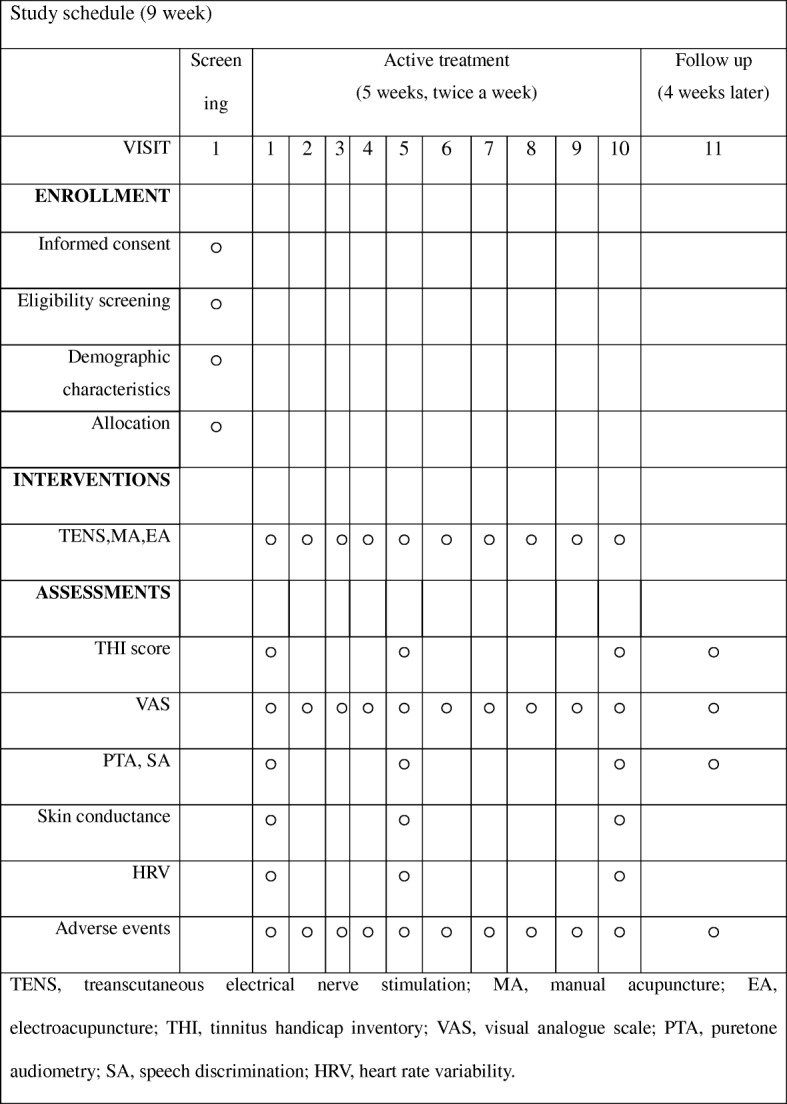
Methods: After screening, 45 patients are randomly assigned to three groups: (1) patients in the TENS group are treated at four sites (tender points of masseter and the sternocleidomastoid muscle, in front of tragus, and mastoid process); (2) the manual acupuncture group patients are treated at 11 acupoints (TE21, SI19, GB2, TE22, ST7, TE17, GB20 of tinnitus affected side, and GB20, TE05, KI3 of both sides); (3) electroacupuncture group patients are treated by using acupuncture as in the manual acupuncture group and electrical stimulation at TE21, SI19, TE17, and GB20. Patients are treated for ten sessions, twice a week. The primary outcome measurement is the change of Tinnitus Handicap Inventory (THI) score between visit 1 and visit 10. The secondary outcome measurements are the response rate of THI, change in visual analogue scale associated with the loudness and annoyance of tinnitus, pure-tone audiometry and speech discrimination, and changes in parameters of heart rate variability.
Discussion: The purpose of this study is to compare the effect of TENS, manual acupuncture, and electroacupuncture in the auricular area on tinnitus. If the specific treatment shows a significant effect compared to other treatments, it could have potential for use in clinical practice as a primary treatment.
Trial registration: Clinical Research Information Service (CRIS), KCT0002117 . Registered October 21, 2016. Retrospectively registered.
Keywords: Electroacupuncture; Manual acupuncture; Tinnitus; Transcutaneous nerve stimulation (TENS).
Conflict of interest statement
Ethics approval and consent to participate
This study protocol has been approved by the Institutional Review Board of Kyung Hee University Korean Medicine Hospital (KOMCIRB-160321-HR-012). At the screening visit, written informed consent will be obtained from the participants.
Consent for publication
Participants are notified about replaceable treatments, responsibilities during the study, and the potential advantages and dangers associated with this research.
All participants confirm and agree in writing that all of their records, including photographs, could be published.
Competing interests
The authors declare that they have no competing interests.
Publisher’s Note
Springer Nature remains neutral with regard to jurisdictional claims in published maps and institutional affiliations.
Figures


References
Publication types
MeSH terms
LinkOut - more resources
Full Text Sources
Other Literature Sources
Medical
