Oxytocin receptor signaling contributes to olfactory avoidance behavior induced by an unpleasant odorant
- PMID: 29945877
- PMCID: PMC6176940
- DOI: 10.1242/bio.029140
Oxytocin receptor signaling contributes to olfactory avoidance behavior induced by an unpleasant odorant
Abstract
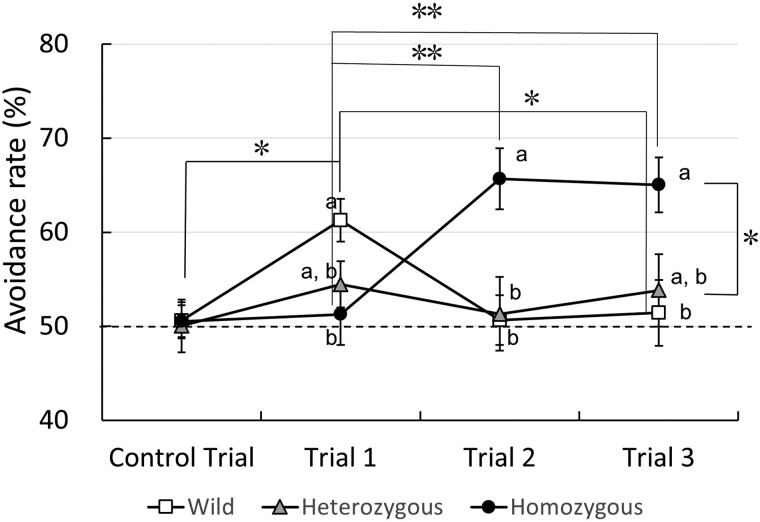
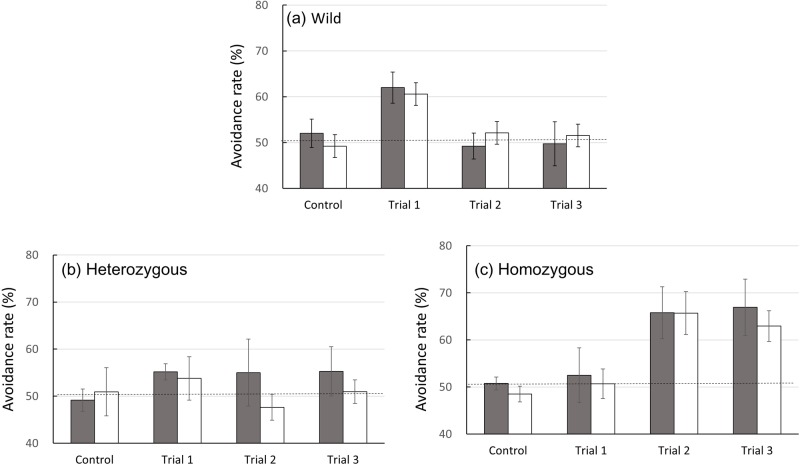
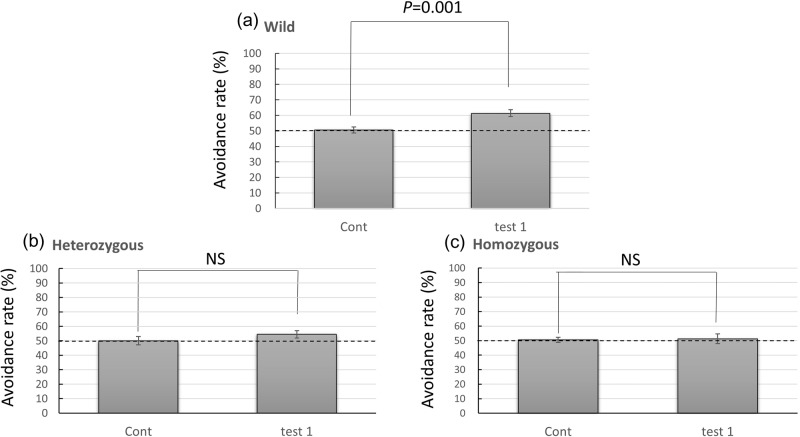
Oxytocin (OXT) and its receptor (OXTR) regulate reproductive physiology (i.e. parturition and lactation), sociosexual behavior, learned patterns of behavior and olfactory behavior in social contexts. To characterize the function of OXTR in basic olfactory behavior, the present study compared the behavioral responses of homozygous, heterozygous and wild-type mice when these mice were confronted with an unpleasant odorant (butyric acid) in a custom-made Y-maze in the absence of a social context. Wild-type mice avoided the first encounter with the butyric acid odorant, whereas homozygous and heterozygous mice did not. However, both heterozygous and wild-type mice habituated when confronted with the butyric odorant again on the following 2 days. By contrast, homozygous mice failed to habituate and instead avoided the location of the odorant for at least 3 days. These data suggest that homozygous and heterozygous mice display abnormal olfactory responses to the presentation of an unpleasant odorant. Our studies demonstrate that OXTR plays a critical role in regulating olfactory behavior in the absence of a social context.
Keywords: Avoidance; Butyric acid; Olfactory behavior; Oxytocin receptor; Y-maze.
© 2018. Published by The Company of Biologists Ltd.
Conflict of interest statement
Competing interestsThe authors declare no competing or financial interests.
Figures
Similar articles
-
Vasopressin receptor 1a, oxytocin receptor, and oxytocin knockout male and female mice display normal perceptual abilities towards non-social odorants.Horm Behav. 2023 Feb;148:105302. doi: 10.1016/j.yhbeh.2022.105302. Epub 2023 Jan 9. Horm Behav. 2023. PMID: 36628861 Free PMC article.
-
Repeated exposure to kairomone-containing coffee odor improves abnormal olfactory behaviors in heterozygous oxytocin receptor knock-in mice.Front Behav Neurosci. 2023 Feb 1;16:983421. doi: 10.3389/fnbeh.2022.983421. eCollection 2022. Front Behav Neurosci. 2023. PMID: 36817409 Free PMC article.
-
Pervasive social deficits, but normal parturition, in oxytocin receptor-deficient mice.Proc Natl Acad Sci U S A. 2005 Nov 1;102(44):16096-101. doi: 10.1073/pnas.0505312102. Epub 2005 Oct 25. Proc Natl Acad Sci U S A. 2005. PMID: 16249339 Free PMC article.
-
Oxytocin signal and social behaviour: comparison among adult and infant oxytocin, oxytocin receptor and CD38 gene knockout mice.J Neuroendocrinol. 2010 May;22(5):373-9. doi: 10.1111/j.1365-2826.2010.01976.x. Epub 2010 Jan 5. J Neuroendocrinol. 2010. PMID: 20141571 Review.
-
CD38 and its role in oxytocin secretion and social behavior.Horm Behav. 2012 Mar;61(3):351-8. doi: 10.1016/j.yhbeh.2011.12.011. Epub 2011 Dec 23. Horm Behav. 2012. PMID: 22227279 Review.
Cited by
-
Sensory perception drives food avoidance through excitatory basal forebrain circuits.Elife. 2019 May 10;8:e44548. doi: 10.7554/eLife.44548. Elife. 2019. PMID: 31074744 Free PMC article.
-
Genetic influences of autism candidate genes on circuit wiring and olfactory decoding.Cell Tissue Res. 2021 Jan;383(1):581-595. doi: 10.1007/s00441-020-03390-8. Epub 2021 Jan 30. Cell Tissue Res. 2021. PMID: 33515293 Free PMC article. Review.
-
Vasopressin receptor 1a, oxytocin receptor, and oxytocin knockout male and female mice display normal perceptual abilities towards non-social odorants.Horm Behav. 2023 Feb;148:105302. doi: 10.1016/j.yhbeh.2022.105302. Epub 2023 Jan 9. Horm Behav. 2023. PMID: 36628861 Free PMC article.
-
Repeated exposure to kairomone-containing coffee odor improves abnormal olfactory behaviors in heterozygous oxytocin receptor knock-in mice.Front Behav Neurosci. 2023 Feb 1;16:983421. doi: 10.3389/fnbeh.2022.983421. eCollection 2022. Front Behav Neurosci. 2023. PMID: 36817409 Free PMC article.
References
-
- American Psychiatric Association (2013). Diagnostic and Statistical Manual of Mental Disorders, 5th edn. pp. 50-59. Wasington, DC: American Psychiatric Publishing.
LinkOut - more resources
Full Text Sources
Other Literature Sources