Oxytocin receptor signaling contributes to olfactory avoidance behavior induced by an unpleasant odorant
- PMID: 29945877
- PMCID: PMC6176940
- DOI: 10.1242/bio.029140
Oxytocin receptor signaling contributes to olfactory avoidance behavior induced by an unpleasant odorant
Abstract
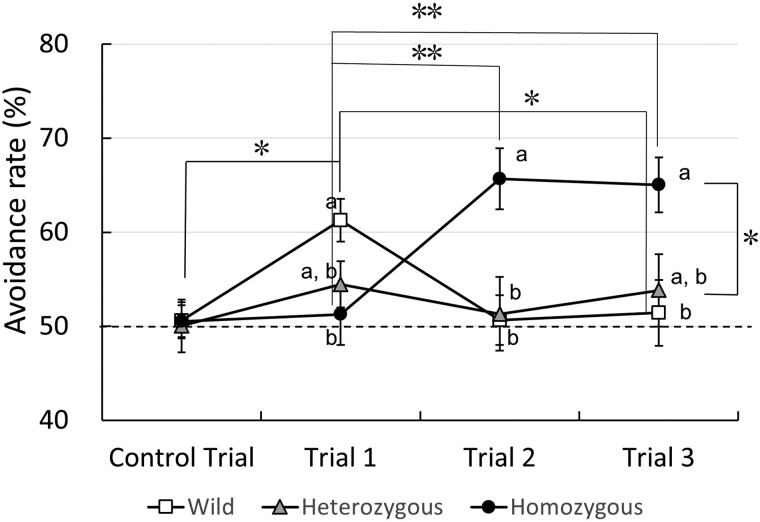
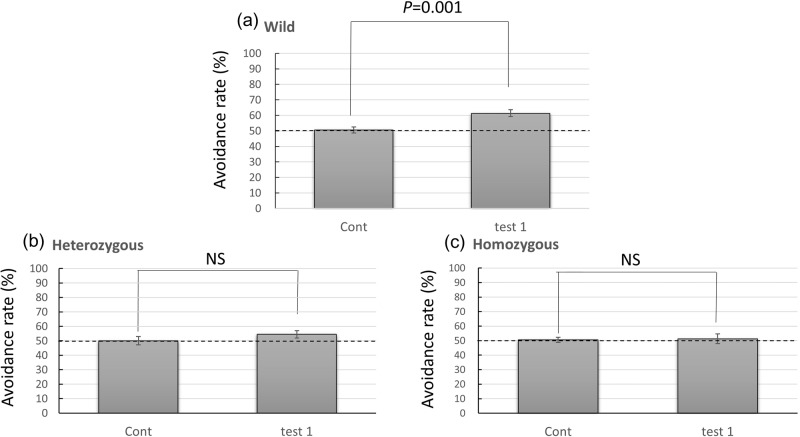
Oxytocin (OXT) and its receptor (OXTR) regulate reproductive physiology (i.e. parturition and lactation), sociosexual behavior, learned patterns of behavior and olfactory behavior in social contexts. To characterize the function of OXTR in basic olfactory behavior, the present study compared the behavioral responses of homozygous, heterozygous and wild-type mice when these mice were confronted with an unpleasant odorant (butyric acid) in a custom-made Y-maze in the absence of a social context. Wild-type mice avoided the first encounter with the butyric acid odorant, whereas homozygous and heterozygous mice did not. However, both heterozygous and wild-type mice habituated when confronted with the butyric odorant again on the following 2 days. By contrast, homozygous mice failed to habituate and instead avoided the location of the odorant for at least 3 days. These data suggest that homozygous and heterozygous mice display abnormal olfactory responses to the presentation of an unpleasant odorant. Our studies demonstrate that OXTR plays a critical role in regulating olfactory behavior in the absence of a social context.
Keywords: Avoidance; Butyric acid; Olfactory behavior; Oxytocin receptor; Y-maze.
© 2018. Published by The Company of Biologists Ltd.
Conflict of interest statement
Competing interestsThe authors declare no competing or financial interests.
Figures
References
-
- American Psychiatric Association (2013). Diagnostic and Statistical Manual of Mental Disorders, 5th edn. pp. 50-59. Wasington, DC: American Psychiatric Publishing.
LinkOut - more resources
Full Text Sources
Other Literature Sources