Anaerobic bacteria cultured from cystic fibrosis airways correlate to milder disease: a multisite study
- PMID: 29946004
- PMCID: PMC6376871
- DOI: 10.1183/13993003.00242-2018
Anaerobic bacteria cultured from cystic fibrosis airways correlate to milder disease: a multisite study
Abstract
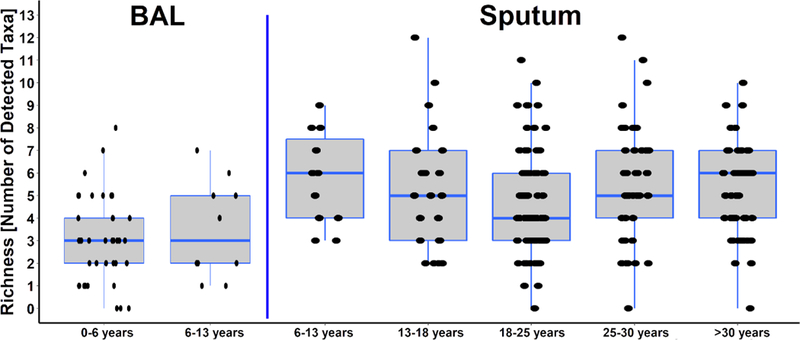
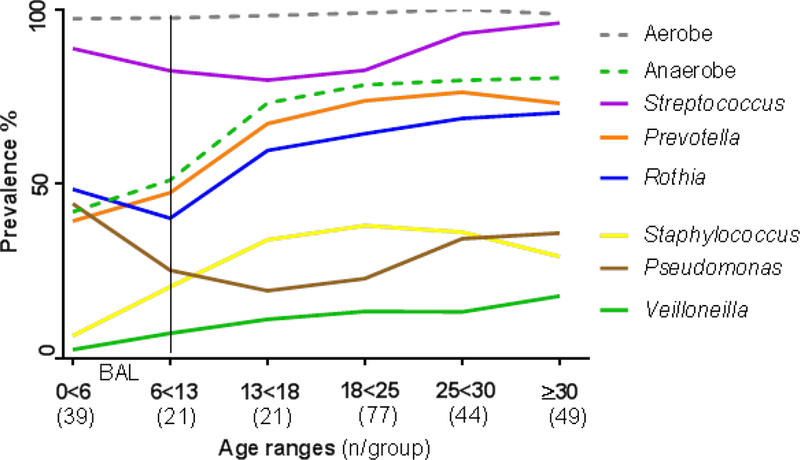
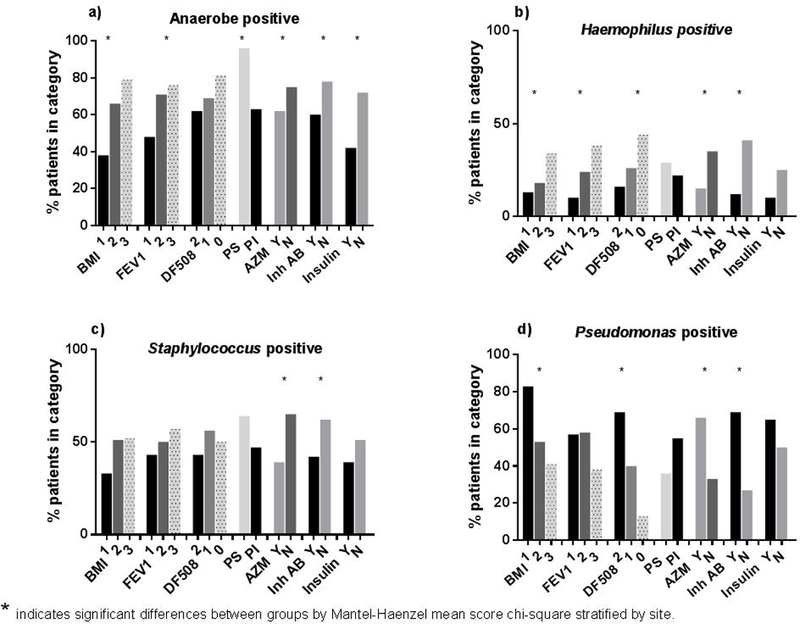
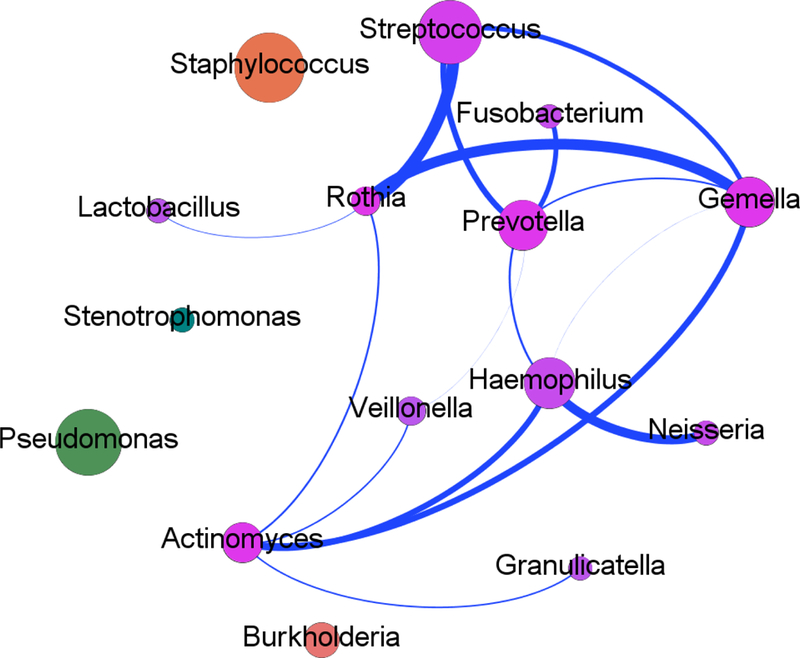
Anaerobic and aerobic bacteria were quantitated in respiratory samples across three cystic fibrosis (CF) centres using extended culture methods. Subjects aged 1-69 years who were clinically stable provided sputum (n=200) or bronchoalveolar lavage (n=55). 18 anaerobic and 39 aerobic genera were cultured from 59% and 95% of samples, respectively; 16 out of 57 genera had a ≥5% prevalence across centres.Analyses of microbial communities using co-occurrence networks in sputum samples showed groupings of oral, including anaerobic, bacteria, whereas typical CF pathogens formed distinct entities. Pseudomonas was associated with worse nutrition and F508del genotype, whereas anaerobe prevalence was positively associated with pancreatic sufficiency, better nutrition and better lung function. A higher total anaerobe/total aerobe CFU ratio was associated with pancreatic sufficiency and better nutrition. Subjects grouped by factor analysis who had relative dominance of anaerobes over aerobes had milder disease compared with a Pseudomonas-dominated group with similar proportions of subjects that were homozygous for F508del.In summary, anaerobic bacteria occurred at an early age. In sputum-producing subjects anaerobic bacteria were associated with milder disease, suggesting that targeted eradication of anaerobes may not be warranted in sputum-producing CF subjects.
Copyright ©ERS 2018.
Conflict of interest statement
Conflict of interest: G.G. Einarsson's work is supported by a grant from IMI (iABC; Inhaled Antibiotics in Bronchiectasis and Cystic Fibrosis). N. Gotman reports grants from AECF, during the conduct of the study. S. Davis Thomas reports grants from the National Institutes of Health (NIH), during the conduct of the study. P.H. Gilligan reports grants from the NIH, during the conduct of the study. M.C. Wolfgang reports grants from the NIH, during the conduct of the study. J.S. Elborn reports grants from Northern Ireland Research and Development, during the conduct of the study. R.C. Boucher is Chairman of the Board of Parion Sciences, a privately held UNC spin-out company focused on developing therapies for CF, and has received monetary compensation for this role. M.M. Tunney reports grants from Health and Social Care Research and Development Division, Public Health Agency, Northern Ireland, during the conduct of the study; and grants from Alaxia, outside the submitted work.
Figures
Comment in
-
Good cop, bad cop: anaerobes in cystic fibrosis airways.Eur Respir J. 2018 Jul 11;52(1):1801146. doi: 10.1183/13993003.01146-2018. Print 2018 Jul. Eur Respir J. 2018. PMID: 29997183 No abstract available.
References
-
- Sherrard LJ, Tunney MM, Elborn JS. Antimicrobial resistance in the respiratory microbiota of people with cystic fibrosis. Lancet 2014: 384(9944): 703–713. - PubMed
-
- Worlitzsch D, Rintelen C, Bohm K, et al. Antibiotic-resistant obligate anaerobes during exacerbations of cystic fibrosis patients. Clinical microbiology and infection : the official publication of the European Society of Clinical Microbiology and Infectious Diseases 2009: 15(5): 454–460. - PubMed
Publication types
MeSH terms
Substances
Grants and funding
LinkOut - more resources
Full Text Sources
Other Literature Sources
Medical