


Facts and myths pertaining to fibromyalgia
- PMID: 29946212
- PMCID: PMC6016048
- DOI: 10.31887/DCNS.2018.20.1/whauser
Facts and myths pertaining to fibromyalgia
Abstract
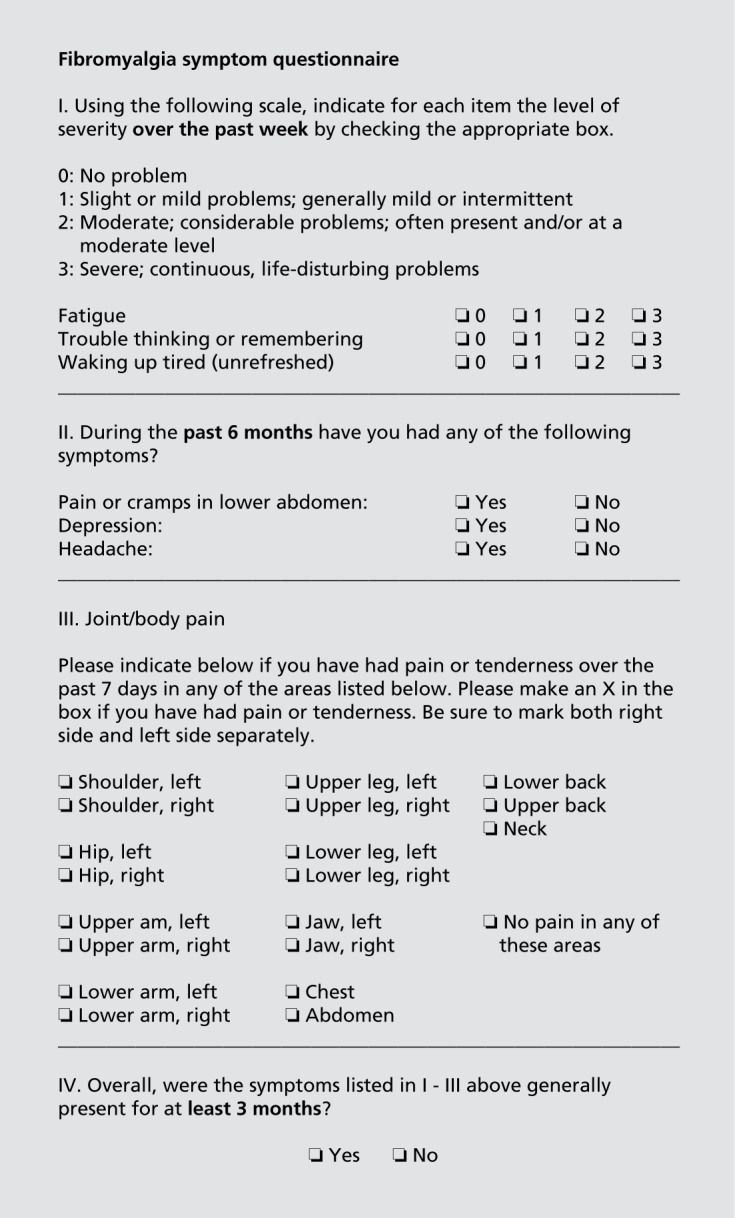
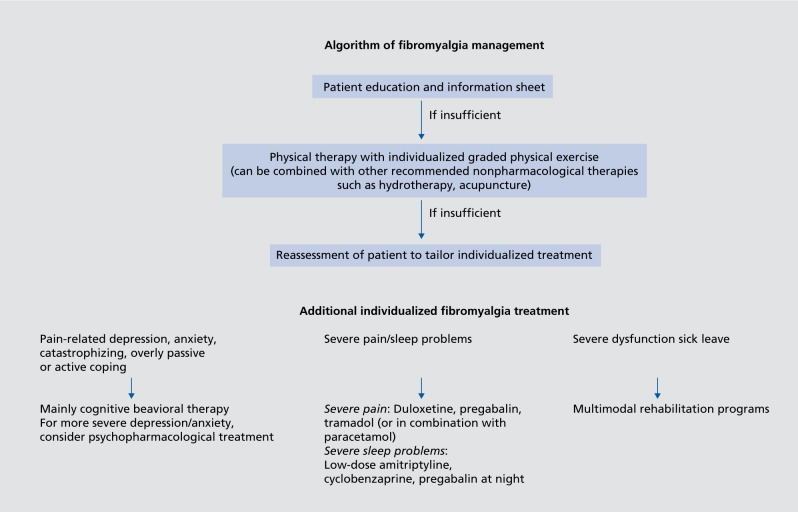
Fibromyalgia (FM) is characterized by chronic widespread pain, unrefreshing sleep, physical exhaustion, and cognitive difficulties. It occurs in all populations throughout the world, with prevalence between 2% and 4% in general populations. Definition, pathogenesis, diagnosis, and treatment of FM remain points of contention, with some even contesting its existence. The various classification systems according to pain medicine, psychiatry, and neurology (pain disease; persistent somatoform pain disorder; masked depression; somatic symptom disorder; small fiber neuropathy; brain disease) mostly capture only some components of this complex and heterogeneous disorder. The diagnosis can be established in most cases by a general practitioner when the symptoms meet recognized criteria and a somatic disease sufficiently explaining the symptoms is excluded. Evidence-based interdisciplinary guidelines give a strong recommendation for aerobic exercise and cognitive behavioral therapies. Drug therapy is not mandatory. Only a minority of patients experience substantial symptom relief with duloxetine, milnacipran, and pregabalin.
La fibromialgia (FM) se caracteriza por dolor crónico generalizado, sueño no reparador, agotamiento físico y dificultades cognitivas. Ella se presenta en todas las poblaciones a través del mundo, con una prevalencia entre el 2% y el 4% en la población general. La definición, la patogénesis, el diagnóstico y el tratamiento de la FM constituyen puntos de discusión, con algunos autores que incluso dudan de su existencia. Los diversos sistemas de clasificación de acuerdo con la medicina, la psiquiatría y la neurología del dolor (patología dolorosa, trastorno de dolor somatomorfo persistente, depresión enmascarada, trastorno de síntoma somático, neuropatía de fibra pequeña, enfermedad cerebral) en su mayoría incorporan sólo algunos componentes de este complejo y heterogéneo trastorno. En la mayoría de los casos un médico general puede establecer el diagnóstico, cuando los síntomas reúnen criterios reconocidos y se excluye una enfermedad somática que pueda explicar suficientemente dichos síntomas. Las guías interdisciplinarias basadas en la evidencia entregan una sólida recomendación respecto al ejercicio aeróbico y las terapias cognitivo conductuales. La terapia farmacológica no es obligatoria. Sólo una minoría de los pacientes presenta un alivio sintomático significativo con duloxetina, milnacipran y pregabalina.
La fibromyalgie (FM) se caractérise par des douleurs chroniques généralisées, un sommeil non réparateur, un épuisement physique et des difficultés cognitives. Elle survient dans toutes les populations du monde, avec une prévalence entre 2 % et 4 % de la population générale. La définition, la pathogenèse, le diagnostic et le traitement de la FM restent un point de discorde, quelques-uns contestant même son existence. Les systèmes de classification variés selon la médecine, la psychiatrie et la neurologie de la douleur, (pathologie douloureuse ; trouble douloureux somatoforme persistant ; dépression masquée ; trouble à symptomatologie somatique ; neuropathie des petites fibres ; maladie cérébrale) n'appréhendent principalement que quelques composantes de ce trouble complexe et hétérogène. Le diagnostic peut être établi dans la plupart des cas par un généraliste quand les symptômes rencontrés remplissent les critères et quand une maladie somatique capable d'expliquer les symptômes est exclue. Des recommandations interdisciplinaires fondées sur des éléments probants recommandent fortement les exercices aérobiques et les thérapies cognitivo-comportementales. Le traitement médicamenteux n'est pas obligatoire. Seule une minorité de patients sont soulagés par la duloxétine, le milnacipran et la prégabaline.
Keywords: depression; fibromyalgia; small fiber neuropathy; somatic symptom disorder; somatoform disorder.
Figures
References
-
- Rahman A., Underwood M., Carnes D. Fibromyalgia. BMJ. 2014;348:g1224. - PubMed
-
- Wolfe F. Fibromyalgia wars. J Rheumatol. 2009;36(4):671–678. - PubMed
-
- Shir Y., Fitzcharles MA. Should rheumatologists retain ownership of fibromyalgia? J Rheumatol. 2009;36(4):667–670. - PubMed
-
- Hâuser W., Ablin J., Fitzcharles MA., et al. Fibromyalgia. Nat Rev Dis Primers. 2015;1:15022. - PubMed
Publication types
MeSH terms
LinkOut - more resources
Full Text Sources
Medical
