


O3-Induced Leaf Senescence in Tomato Plants Is Ethylene Signaling-Dependent and Enhances the Population Abundance of Bemisia tabaci
- PMID: 29946327
- PMCID: PMC6005859
- DOI: 10.3389/fpls.2018.00764
O3-Induced Leaf Senescence in Tomato Plants Is Ethylene Signaling-Dependent and Enhances the Population Abundance of Bemisia tabaci
Erratum in
-
Corrigendum: O3-Induced Leaf Senescence in Tomato Plants Is Ethylene Signaling-Dependent and Enhances the Population Abundance of Bemisia tabaci.Front Plant Sci. 2018 Jul 19;9:1080. doi: 10.3389/fpls.2018.01080. eCollection 2018. Front Plant Sci. 2018. PMID: 30065748 Free PMC article.
Abstract
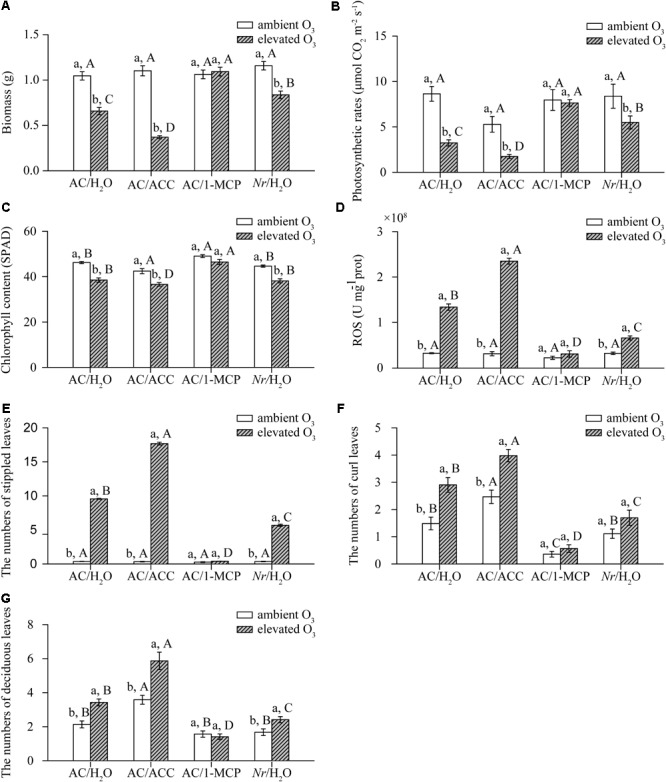
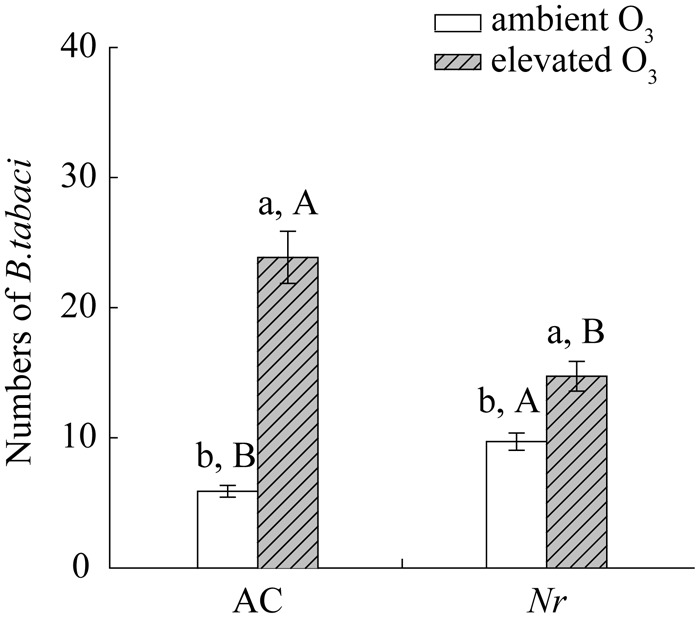
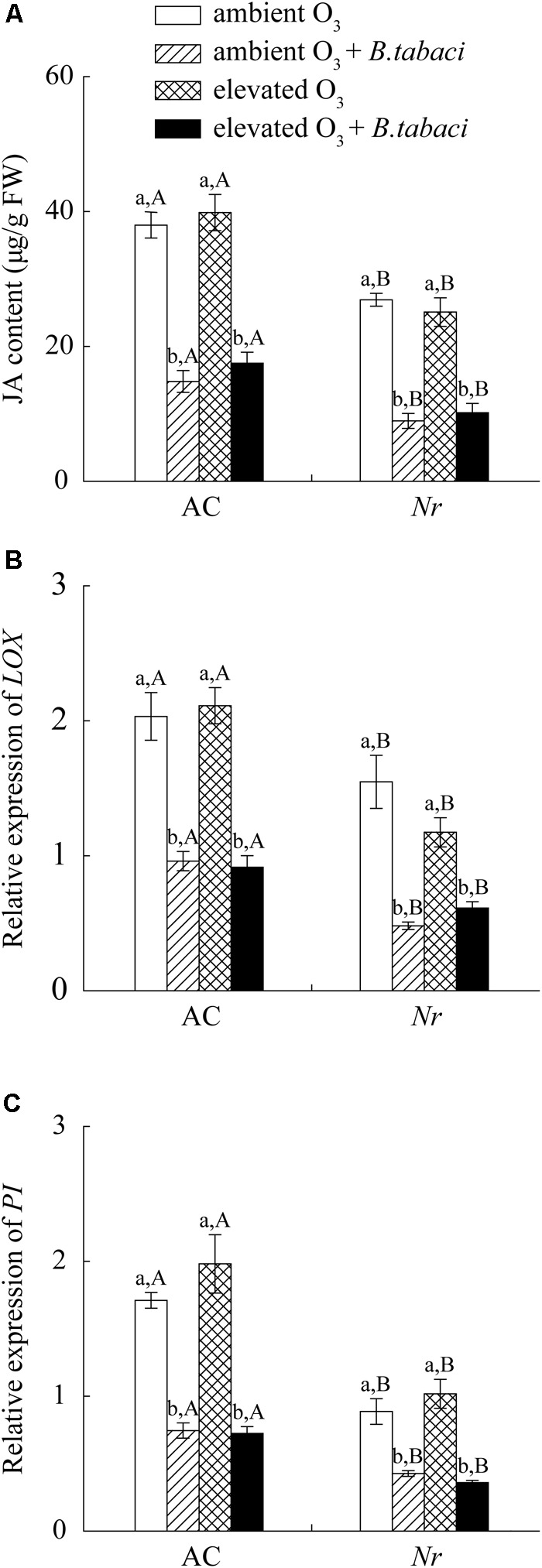
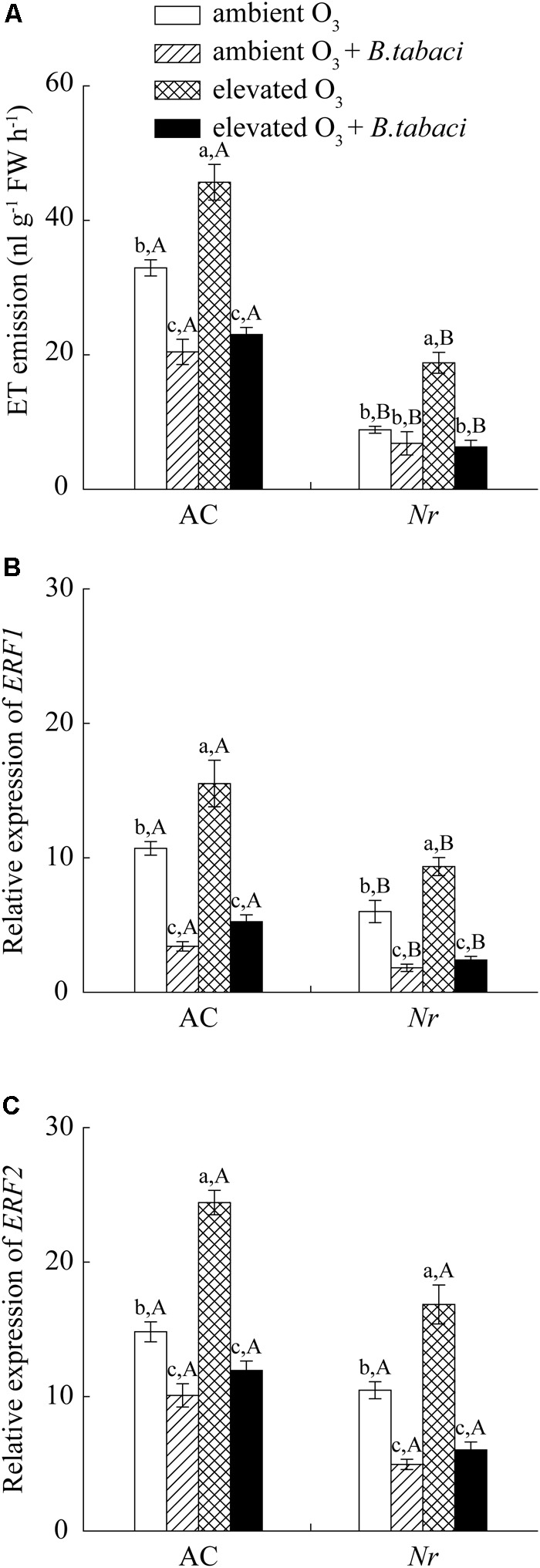
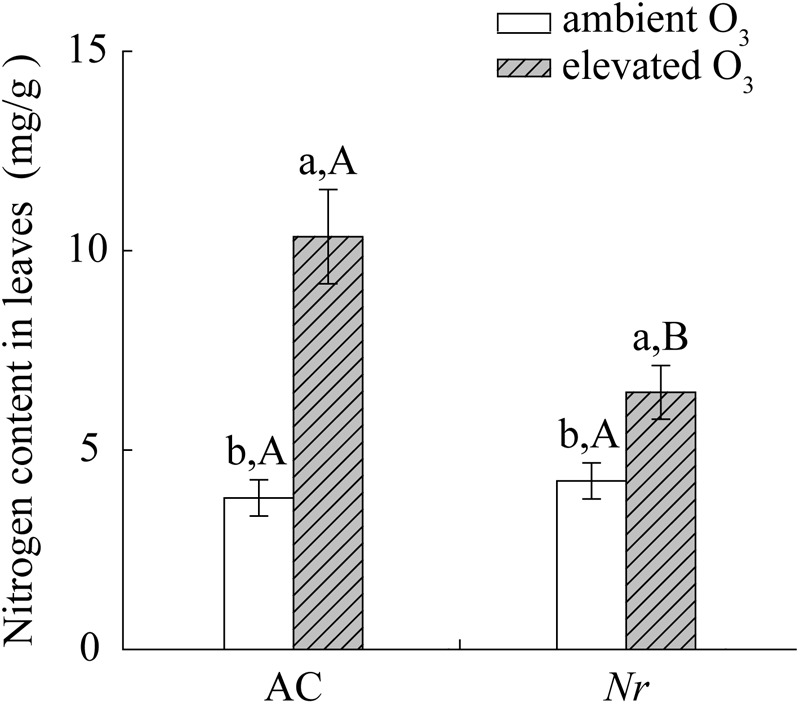
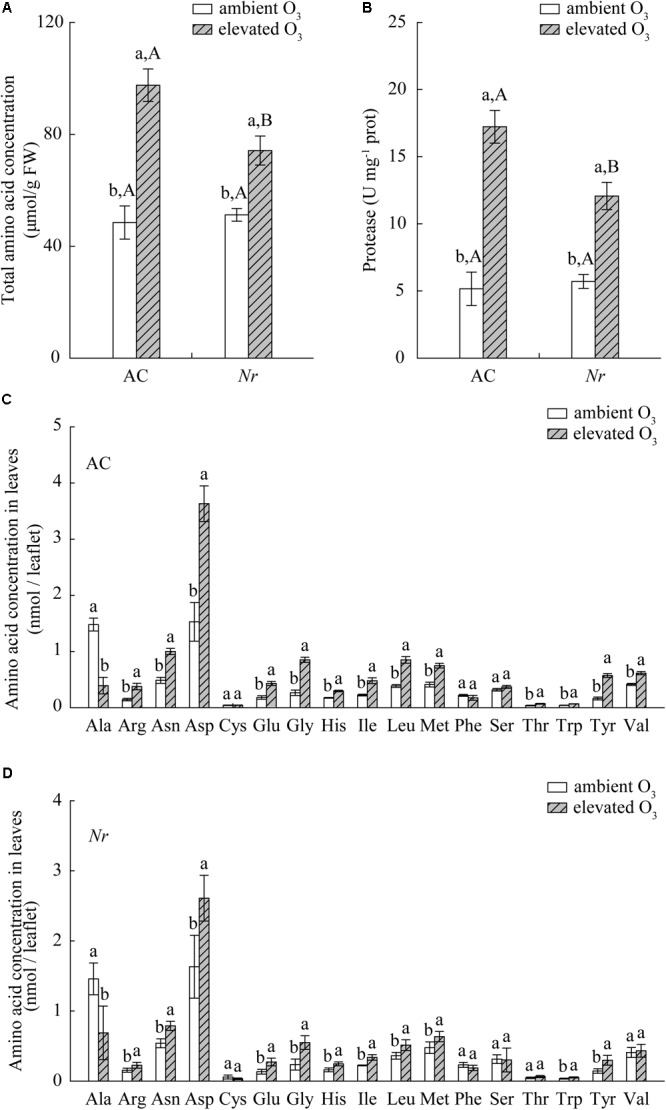
Elevated ozone (O3) can alter the phenotypes of host plants particularly in induction of leaf senescence, but few reports examine the involvement of phytohormone in O3-induced changes in host phenotypes that influence the foraging quality for insects. Here, we used an ethylene (ET) receptor mutant Nr and its wild-type to determine the function of the ET signaling pathway in O3-induced leaf senescence, and bottom-up effects on the performance of Bemisia tabaci in field open-top chambers (OTCs). Our results showed that elevated O3 reduced photosynthetic efficiency and chlorophyll content and induced leaf senescence of plant regardless of plant genotype. Leaf senescence in Nr plants was alleviated relative to wild-type under elevated O3. Further analyses of foliar quality showed that elevated O3 had little effect on phytohormone-mediated defenses, but significantly increased the concentration of amino acids in two plant genotypes. Furthermore, Nr plants had lower amino acid content relative to wild-type under elevated O3. These results provided an explanation of O3-induced increase in abundance of B. tabaci. We concluded that O3-induced senescence of plant was ET signal-dependent, and positive effects of O3-induced leaf senescence on the performance of B. tabaci largely resulted from changes of nutritional quality of host plants.
Keywords: Bemisia tabaci; amino acid; elevated O3; ethylene; hormone-dependent defense; leaf senescence.
Figures
References
-
- Archetti M. R., Leather S. (2005). A test of the coevolution theory of autumn colours: colour preference of Rhopalosiphum padi on Prunus padus. Oikos 110 339–343. 10.1111/j.0030-1299.2005.13656.x - DOI
-
- Ashmore M. R. (2005). Assessing the future global impacts of ozone on vegetation. Plant Cell Environ. 28 949–964. 10.1111/j.1365-3040.2005.01341.x - DOI
-
- Castagna A., Ederli L., Pasqualini S., Mensuali-Sodi A., Baldan B., Donnini S., et al. (2007). The tomato ethylene receptor LE-ETR3 (NR) is not involved in mediating ozone sensitivity: causal relationships among ethylene emission, oxidative burst and tissue damage. New Phytol. 174 342–356. 10.1111/j.1469-8137.2007.02010.x - DOI - PubMed
LinkOut - more resources
Full Text Sources
Other Literature Sources
