


Trends in paediatric inpatient antibiotic therapy in a secondary care setting
- PMID: 29948254
- PMCID: PMC6061058
- DOI: 10.1007/s00431-018-3185-z
Trends in paediatric inpatient antibiotic therapy in a secondary care setting
Abstract
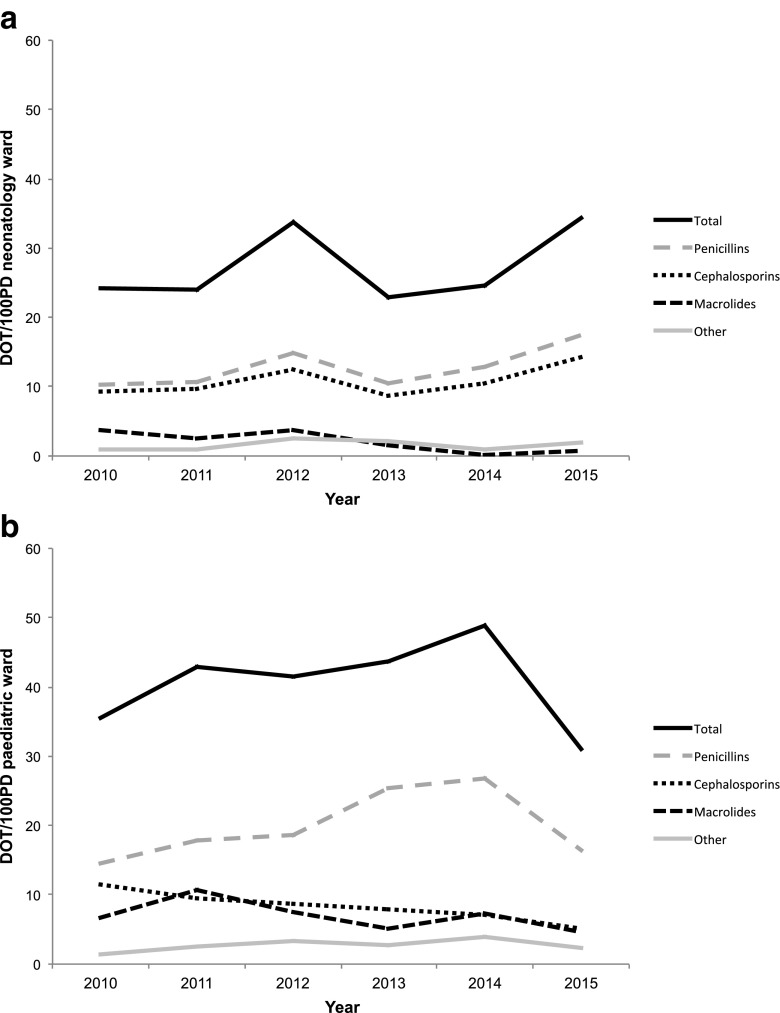
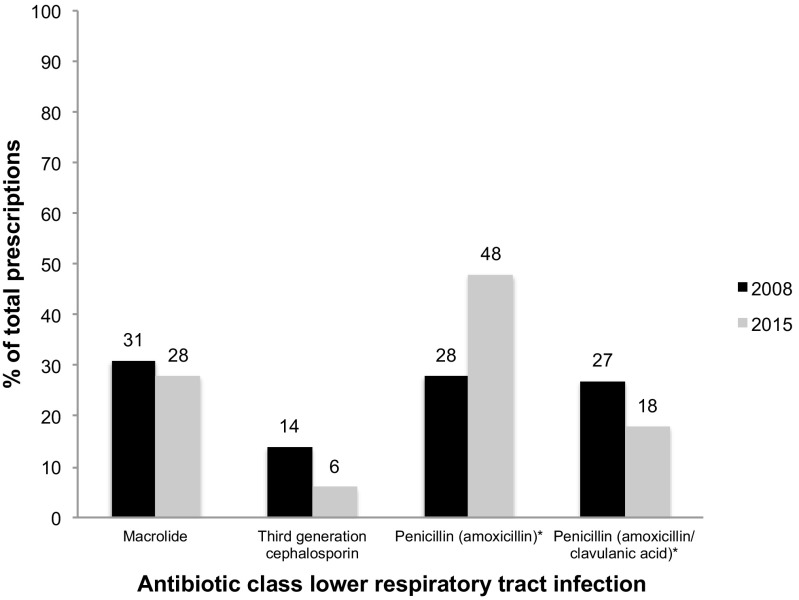
There is growing attention for antimicrobial stewardship in paediatrics. Currently, little is known about secondary care antibiotic practice. We analysed trends in time with respect to inpatient antibiotic use in a secondary paediatric care setting. Total inpatient antibiotic consumption per year (2010-2015) and antibiotic prescriptions for urinary tract infection (UTI) and lower respiratory tract infection (LRTI) were analysed. Variables were total, antibiotic-specific, and intravenous days of therapy (DOT/100PD) and for UTI/LRTI treatment type, route and duration. Third-generation cephalosporin use decreased (DOT/100PD 11.6 in 2011 vs. 5.1 in 2015; p < 0.001); intravenous antibiotics were prescribed less often (p = 0.06). These findings were confirmed for the specific diseases: third-generation cephalosporin use decreased for both UTI (93% vs. 45%; p = 0.002) and LRTI (14% vs. 6%; p = 0.18); the duration of intravenous therapy decreased (UTI p = 0.02; LRTI p < 0.001). Median LRTI treatment duration was 9.2 days in 2008 and 6.6 in 2015 (p < 0.001); penicillin prescriptions were more narrow in spectrum (p = 0.02).
Conclusion: A decrease in third-generation cephalosporin use and intravenous route was identified. LRTI treatment was significantly shorter and more narrow in spectrum. This could be explained by awareness and interventions in the context of antimicrobial stewardship. A decrease in antibiotic use is also feasible and important in non-tertiary paediatric wards. What is Known: • Antimicrobial stewardship programmes are effective in reduction of total and broad-spectrum antibiotic use in tertiary paediatric hospitals • The majority of hospitalised paediatric patients are admitted at general, secondary care wards, often for infectious diseases What is New: • Antimicrobial stewardship interventions in secondary care are also effective in establishing a reduction in broad-spectrum antibiotic use, intravenous route and days on antibiotic therapy.
Keywords: Antibiotic stewardship; Antimicrobial therapy; Secondary care hospital; Third-generation cephalosporins.
Conflict of interest statement
Conflict of interest
The authors declare that they have no conflicts of interest.
Figures

References
-
- Antimicrobial stewardship definition (2017). http://www.idsociety.org/Stewardship_Policy/. Retrieved 15 Dec 2017.
-
- Davey P, Brown E, Charani E, Fenelon L, Gould IM, Holmes A, et al. Interventions to improve antibiotic prescribing practices for hospital inpatients. Cochrane Database Syst Rev. 2013;4:CD003543. - PubMed
-
- Dellit TH, Owens RC, McGowan JE, Jr, Gerding DN, Weinstein RA, Burke JP, et al. Infectious Diseases Society of America and the Society for Healthcare Epidemiology of America guidelines for developing an institutional program to enhance antimicrobial stewardship. Clin Infect Dis. 2007;44:159–177. doi: 10.1086/510393. - DOI - PubMed
MeSH terms
Substances
LinkOut - more resources
Full Text Sources
Other Literature Sources
Medical
