. 2018 Jun 26;9(7):320.
doi: 10.3390/genes9070320.

NF-kappaB Regulates Redox Status in Breast Cancer Subtypes

Affiliations

NF-kappaB Regulates Redox Status in Breast Cancer Subtypes

Bruno R B Pires et al. Genes (Basel). .

Abstract

Oxidative stress (OS) is an indispensable condition to ensure genomic instability in cancer cells. In breast cancer (BC), redox alterations have been widely characterized, but since this process results from a chain of inflammatory events, the causal molecular triggers remain to be identified. In this context, we used a microarray approach to investigate the role of the main pro-oxidant transcription factor, nuclear factor-kappa B (NF-κB), in gene profiles of BC subtypes. Our results showed that NF-κB knockdown in distinct BC subtypes led to differential expression of relevant factors involved in glutathione metabolism, prostaglandins, cytochrome P450 and cyclooxygenase, suggesting a relationship between the redox balance and NF-κB in such cells. In addition, we performed biochemical analyses to validate the microarray dataset focusing on OS and correlated these parameters with normal expression or NF-κB inhibition. Our data showed a distinct oxidative status pattern for each of the three studied BC subtype models, consistent with the intrinsic characteristics of each BC subtype. Thus, our findings suggest that NF-κB may represent an additional mechanism related to OS maintenance in BC, operating in various forms to mediate other important predominant signaling components of each BC subtype.

Keywords: NFkappaB; breast cancer; gene expression; microarray; oxidative stress; redox; subtypes.


Conflict of interest statement

The authors declare no conflict of interest.

Figures
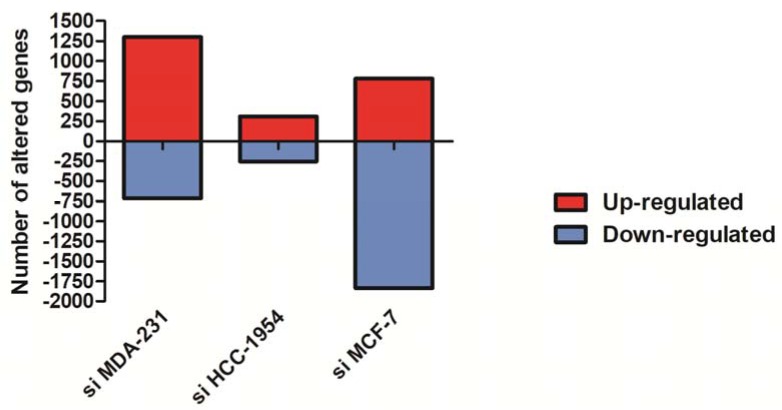
Figure 1
Figure 1
Differentially expressed genes identified by the chip array assay showing increased and decreased genes in breast cancer cells with silenced nuclear factor-kappa B (NF-κB)/p65 compared with their scramble counterparts. Positive values (red columns) correspond to the number of up-regulated genes, and negative values (blue columns) correspond to the number of down-regulated genes.
Figure 2
Figure 2
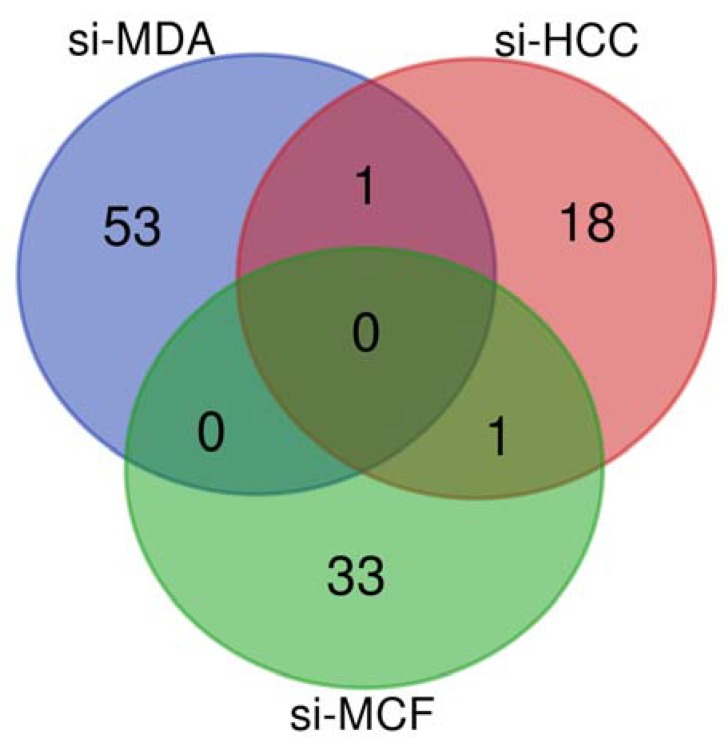
Venn diagram based on the lists of altered genes related to redox metabolism found in breast cancer models silenced for NF-κB/p65 compared with their scramble counterparts. Si-MDA: NF-κB/p65-silenced MDA-MB-231; si-HCC: NF-κB/p65-silenced HCC-1954; and si-MCF: NF-κB/p65-silenced MCF-7.
Figure 3
Figure 3
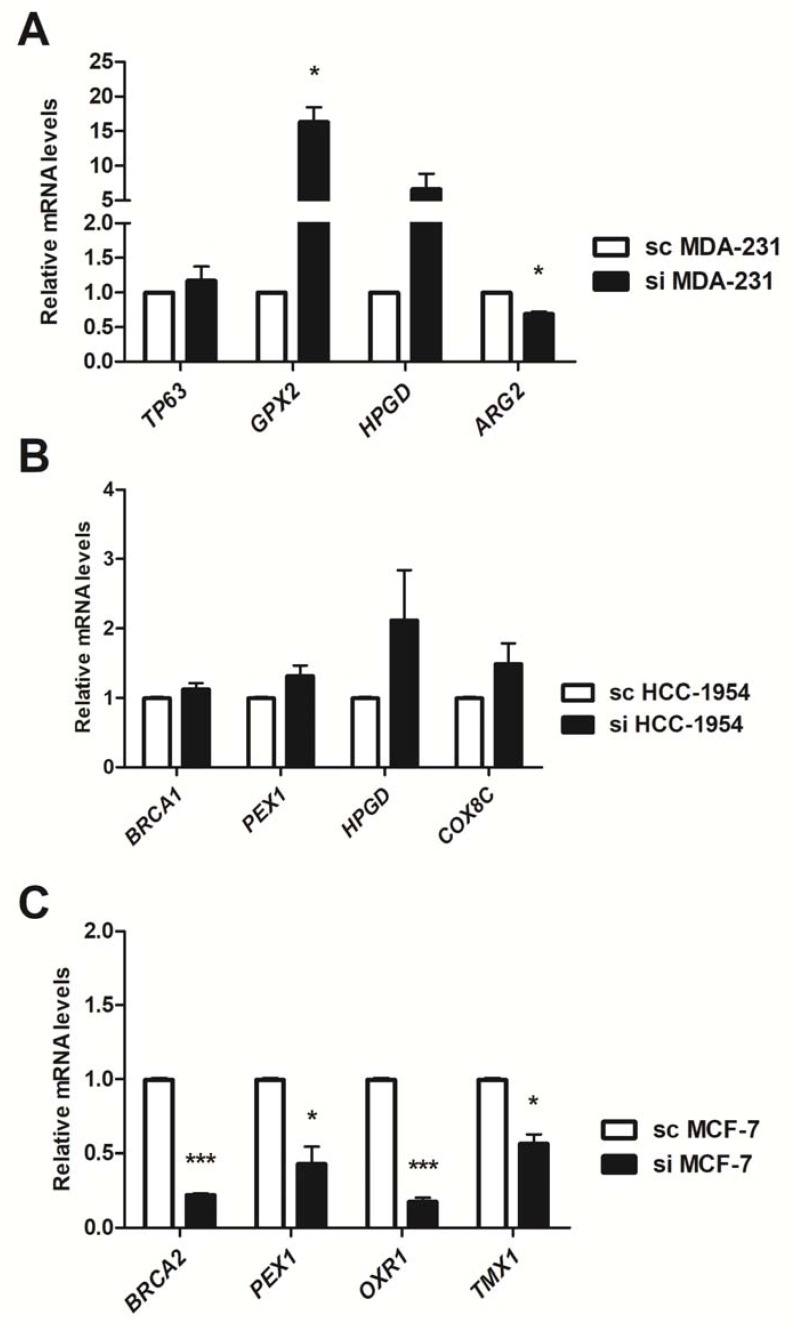
Relative expression by real time PCR (qPCR) of differentially expressed genes in the microarray analysis after NF-κB genetic silencing. The mRNA levels were assessed in MDA-MB-231 (A); HCC-1954 (B) and MCF-7 (C) cells, comparing the NF-κB-silenced condition (si) with the Scramble (sc) counterpart. Data are expressed as the means and standard errors of the means. *: p-value < 0.05; **: p < 0.01; ***: p < 0.001.
Figure 4
Figure 4
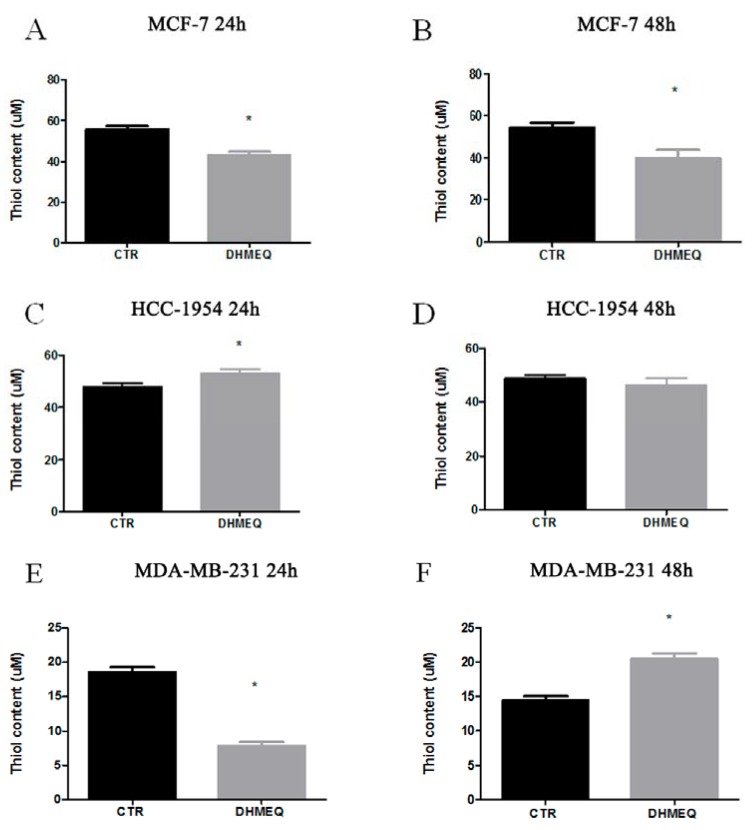
Thiol content. MCF-7 (A,B), HCC (C,D) and MDA-MB231 (E,F) cells treated (DHMEQ column) or not (CTR column) with NF-κB inhibitor for 24 or 48 h. Data are expressed as the means and standard errors of the means. * indicates statistical significance (p < 0.05).
Figure 5
Figure 5
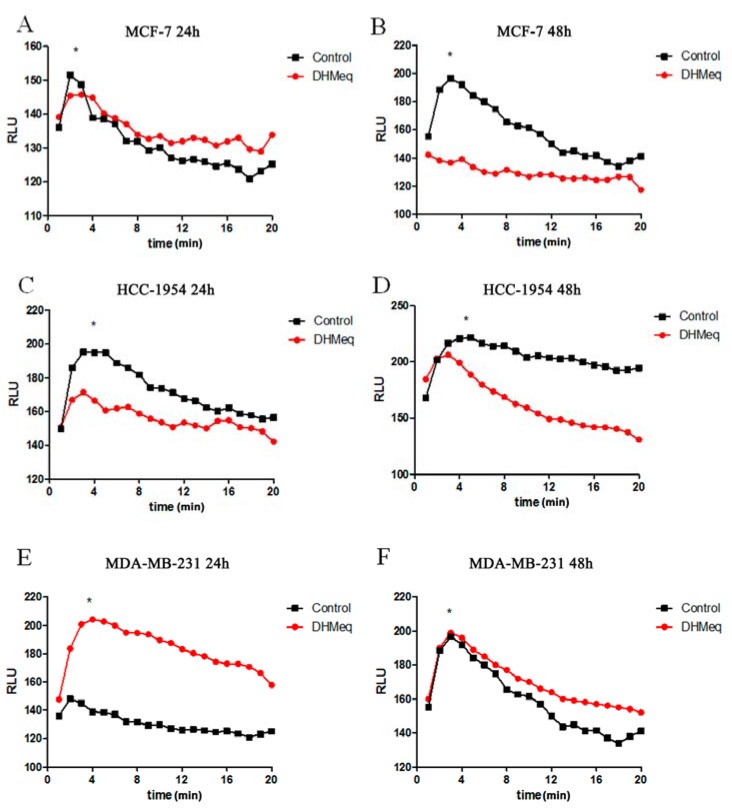
Lipid peroxidation profile. MCF-7 (A,B), HCC-1954 (C,D) and MDA-MB231 (E,F) cells treated or not with NF-κB inhibitor for 24 or 48 h. Data are expressed as the means. * indicates statistical significance (p < 0.05). Time (min).
Figure 6
Figure 6
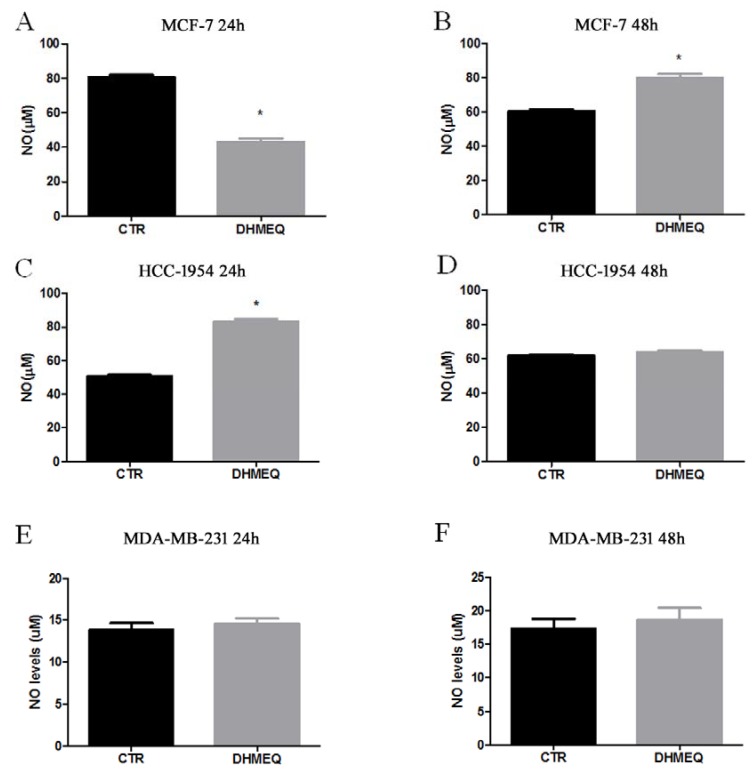
Nitrite as an estimate of NO levels. MCF-7 (A,B), HCC (C,D) and MDA-MB231 (E,F) cells treated (DHMEQ column) or not (CTR column) with NF-κB inhibitor for 24 or 48 h. Data are expressed as the means and standard errors of the means. * indicates statistical significance (p < 0.05).

References

    1. Siegel R.L., Miller K.D., Jemal A. Cancer statistics, 2018. CA Cancer J. Clin. 2018;68:7–30. doi: 10.3322/caac.21442. - DOI - PubMed
    1. Polyak K., Metzger Filho O. Snapshot: Breast cancer. Cancer Cell. 2012;22:562. doi: 10.1016/j.ccr.2012.06.021. - DOI - PubMed
    1. Voduc K.D., Cheang M.C., Tyldesley S., Gelmon K., Nielsen T.O., Kennecke H. Breast cancer subtypes and the risk of local and regional relapse. J. Clin. Oncol. 2010;28:1684–1691. doi: 10.1200/JCO.2009.24.9284. - DOI - PubMed
    1. Pires B.R.B., Silva R., Ferreira G.M., Abdelhay E. NF-kappaB: Two sides of the same coin. Genes. 2018;9:24. doi: 10.3390/genes9010024. - DOI - PMC - PubMed
    1. Gupta S.C., Sundaram C., Reuter S., Aggarwal B.B. Inhibiting NF-κβ activation by small molecules as a therapeutic strategy. Biochim. Biophys. Acta. 2010;1799:775–787. doi: 10.1016/j.bbagrm.2010.05.004. - DOI - PMC - PubMed

LinkOut - more resources