


An attempt at modeling COPD epidemiological trends in France
- PMID: 29950169
- PMCID: PMC6022451
- DOI: 10.1186/s12931-018-0827-7
An attempt at modeling COPD epidemiological trends in France
Abstract
Background: Anticipating the future burden of chronic obstructive pulmonary disease (COPD) is required to develop adequate public health policies.
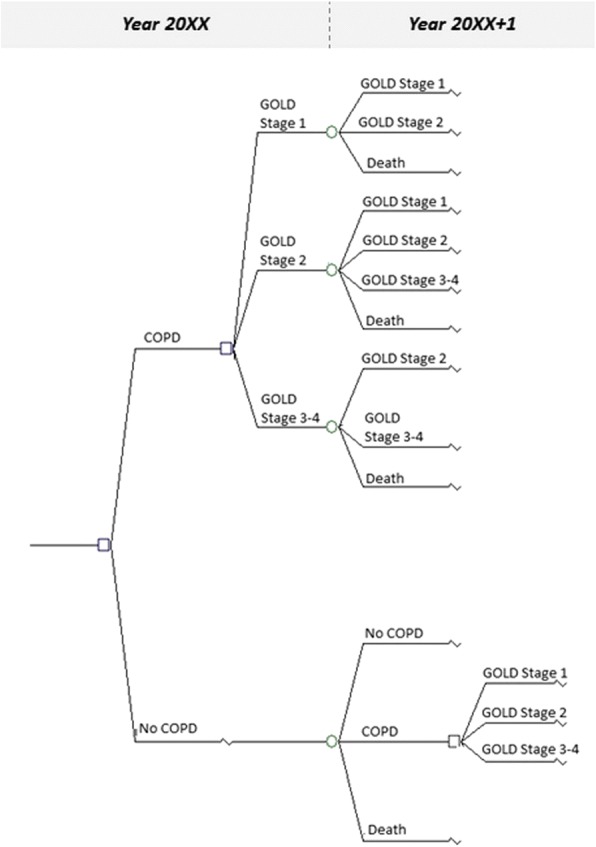
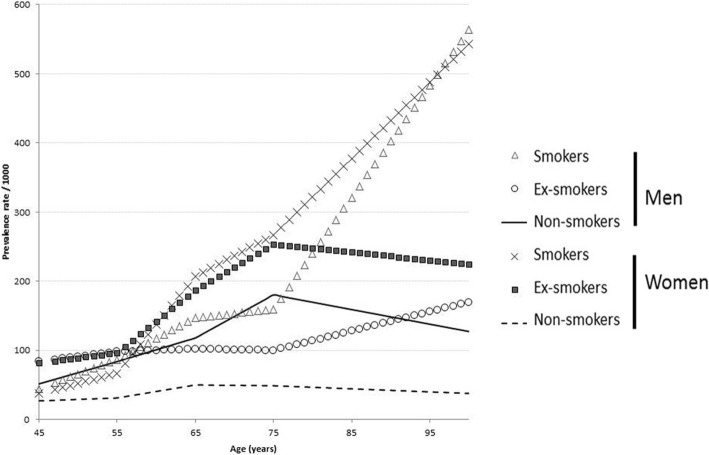
Methods: A dynamic population model was built to estimate COPD prevalence by 2025 using data collected during the most recent large general population study on COPD prevalence in France (2005) as baseline values. Sensitivity analyses were performed to test the effect of variations in key input variables.
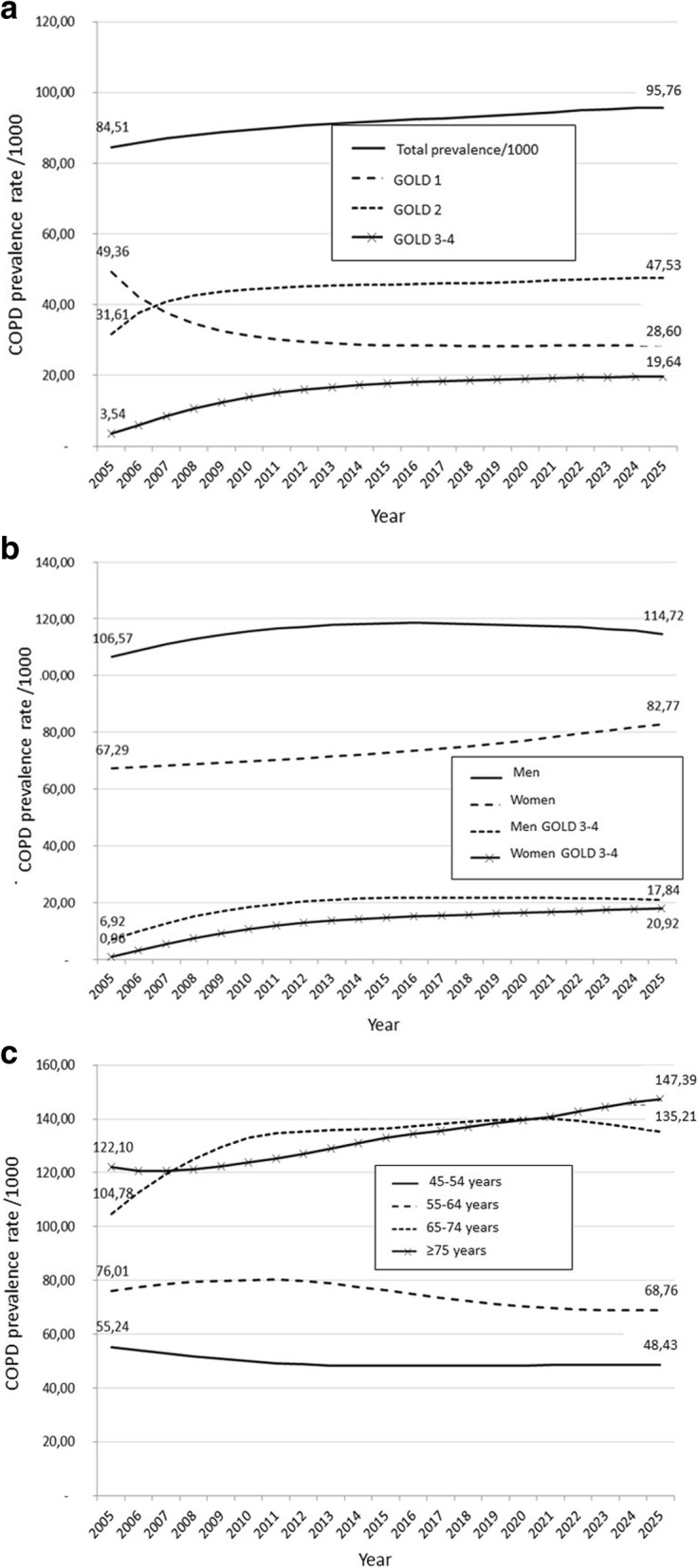
Results: The model predicted a steady increase in crude COPD prevalence among subjects aged≥45 years from 2005 (prevalence estimate: 84.51‰) to 2025 (projected prevalence: 95.76‰, + 0.56‰/yr). There was a 4-fold increase in the prevalence of GOLD grade 3-4 cases, a 23% relative increase in women and a 21% relative increase in subjects ≥75 years. In sensitivity analyses, these temporal trends were robust. Factors associated with > 5% relative variations in projected 2025 prevalence estimates were baseline prevalence and severity distribution, incidence in women and severity of incident cases, transition rates between severity grades, and mortality.
Conclusions: Projections of future COPD epidemiology consistently predict an increase in the prevalence of moderate-to-very severe COPD, especially due to increases among women and subjects aged ≥75 years. Developing robust prediction models requires collecting reliable data on current COPD epidemiology.
Keywords: COPD; Epidemiological model; Prevalence; Projection; Severity distribution.
Conflict of interest statement
Ethics approval and consent to participate
Not applicable.
Consent for publication
Not applicable.
Competing interest
PRB reports personal fees from Astra-Zeneca, personal fees from Boehringer Ingelheim, personal fees from Chiesi, personal fees from GSK, personal fees from Novartis, personal fees from Pfizer, personal fees from TEVA/Aptalis, personal fees from Vertex, personal fees from Zambon outside the submitted work. CL reports grants from AERE during the conduct of the study; grants from GSK, grants from Boehringer Ingelheim outside the submitted work. CR reports personal fees from Astra Zeneca, personal fees from Boeringher Ingelheim, personal fees from Chiesi, personal fees from GSK, personal fees from Novartis, personal fees from ALK, personal fees from Mundipharma, from TEVA outside the submitted work. CF has no competing interest. NR reports personal fees from Chiesi, during the conduct of the study; grants and personal fees from Boehringer Ingelheim, grants and personal fees from Novartis, personal fees from Teva, personal fees from GSK, personal fees from AstraZeneca, personal fees from Chiesi, personal fees from Mundipharma, personal fees from Cipla, grants and personal fees from Pfizer, personal fees from Sanofi, personal fees from Sandoz, personal fees from 3 M, personal fees from Zambon, outside the submitted work.
Publisher’s Note
Springer Nature remains neutral with regard to jurisdictional claims in published maps and institutional affiliations.
Figures
References
-
- Tabberer M, Gonzalez-McQuire S, Muellerova H, Briggs AH, Rutten-van Molken M, Chambers M, Lomas DA. Development of a conceptual model of disease progression for use in economic modeling of chronic obstructive pulmonary disease. Med Decis Mak. 2017;37:440–452. doi: 10.1177/0272989X16662009. - DOI - PubMed
Publication types
MeSH terms
LinkOut - more resources
Full Text Sources
Other Literature Sources
Medical
