


Molecular Epidemiology of mcr-Encoded Colistin Resistance in Enterobacteriaceae From Food-Producing Animals in Italy Revealed Through the EU Harmonized Antimicrobial Resistance Monitoring
- PMID: 29951045
- PMCID: PMC6008537
- DOI: 10.3389/fmicb.2018.01217
Molecular Epidemiology of mcr-Encoded Colistin Resistance in Enterobacteriaceae From Food-Producing Animals in Italy Revealed Through the EU Harmonized Antimicrobial Resistance Monitoring
Abstract
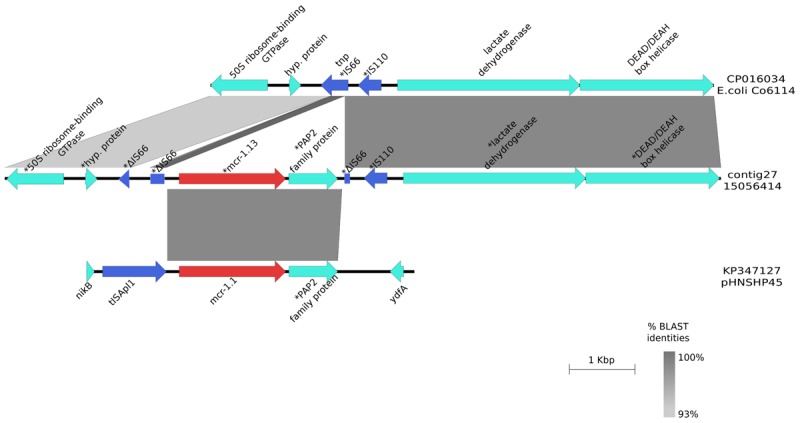
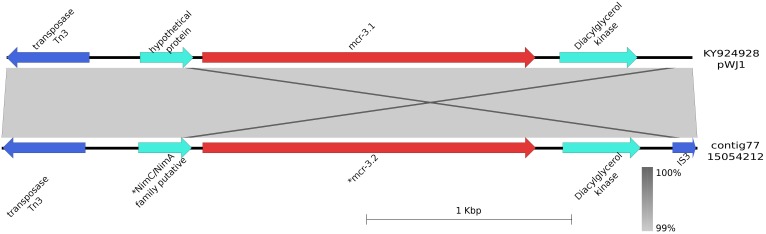
Colistin resistance by mobilisable mcr genes has been described in bacteria of food-animal origin worldwide, which has raised public health concerns about its potential foodborne transmission to human pathogenic bacteria. Here we provide baseline information on the molecular epidemiology of colistin-resistant, mcr-positive Escherichia coli and Salmonella isolates in food-producing animals in Italy in 2014-2015. A total 678, 861 and 236 indicator E. coli, Extended Spectrum Beta-Lactamase (ESBL)/AmpC-producing E. coli, and Salmonella isolates, respectively, were tested for colistin susceptibility. These isolates were collected according to the EU harmonized antimicrobial resistance monitoring program and are representative of at least 90 and 80% of the Italian poultry (broiler chickens and turkeys) and livestock (pigs and bovines < 12 months) production, respectively. Whole genome sequencing by Illumina technology and bioinformatics (Center for Genomic Epidemiology pipeline) were used to type 42 mcr-positive isolates by PCR. Colistin resistance was mainly observed in the ESBL/AmpC E. coli population, and was present in 25.9, 5.3, 6.5, and 3.9% of such isolates in turkeys, broilers, pigs, and bovines, respectively. Most colistin-resistant isolates (141/161, 87.5%) harbored genes of the mcr-1 group. mcr-1 was also detected in a small proportion of Salmonella isolates (3/146, 2.0%) in turkeys. Additional mcr types were mcr-3 in four ESBL-producing E. coli from bovines, and two mcr-4 in ESBL (n = 1) and indicator E. coli (n = 1) from pigs and bovines. We describe notable diversity of mcr variants with predominance of mcr-1.1 and mcr-1.2 on conjugative IncX4 plasmids in E. coli and in Salmonella serovars Typhimurium, Newport, Blockley from turkey. A new variant, mcr-1.13 was detected in the chromosome in E. coli in turkey and pig isolates. Additionally, we describe mcr-3.2 and mcr-4.3 in E. coli from bovines, and mcr-4.2 in E. coli from pigs. These findings elucidate the epidemiology of colistin resistance in food-producing animals in Italy along with its genetic background, and highlight the likelihood of mcr horizontal transfer between commensal bacteria and major food-borne pathogens (Salmonella) within the same type of productions. Thorough action and strategies are needed in order to mitigate the risk of mcr transfer to humans, in a "One Health" perspective.
Keywords: E. coli; Italy; Salmonella; colistin resistance; epidemiology; food-producing animals; mcr genes; whole genome sequencing.
Figures
References
-
- Battisti A. (2016). Antibiotic Resistance - Italy: Colistin, mcr-1 E. coli, Turkeys, 2014. Available at: http://www.promedmail.org/
-
- Borowiak M., Fischer J., Hammerl J. A., Hendriksen R. S., Szabo I., Malorny B. (2017). Identification of a novel transposon-associated phosphoethanolamine transferase gene, mcr-5, conferring colistin resistance in d-tartrate fermenting Salmonella enterica subsp. enterica serovar Paratyphi B. J. Antimicrob. Chemother. 72 3317–3324. 10.1093/jac/dkx327 - DOI - PubMed
LinkOut - more resources
Full Text Sources
Other Literature Sources
