


Effect of educational intervention based on locus of control structure of attribution theory on self-care behavior of patients with type II diabetes
- PMID: 29951417
- PMCID: PMC6014766
- DOI: 10.14196/mjiri.31.116
Effect of educational intervention based on locus of control structure of attribution theory on self-care behavior of patients with type II diabetes
Abstract
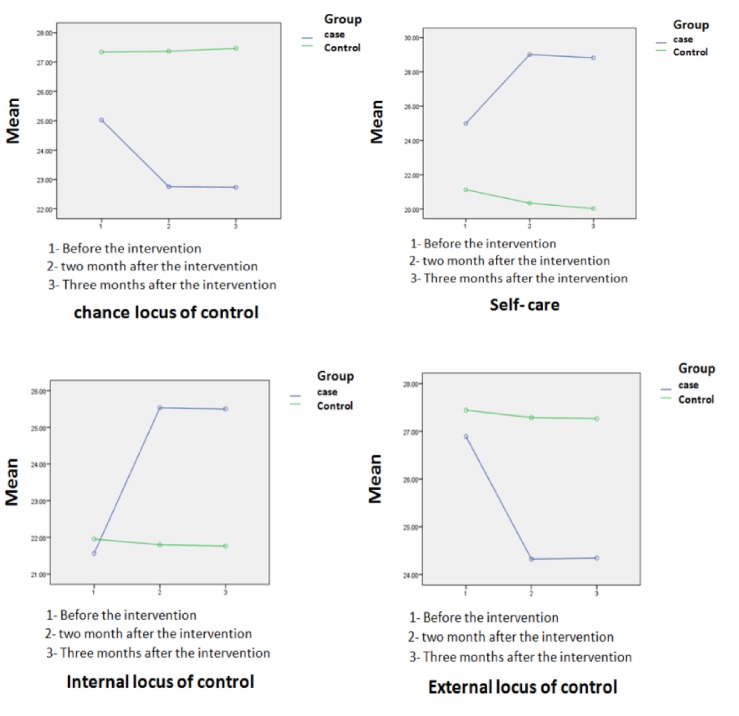
Background: Different factors, such as personality and psychological characteristics, are effective in the self-care and control of diabetes. This study aimed at determining the effect of educational intervention based on locus of control structure of attribution theory on the self-care behavior of patients with type II diabetes. Methods: This was a quasi-experimental controlled study performed on 180 patients in Babol Diabetes Association. The sampling method was simple random sampling. Data collection tool was form C of standard questionnaire in multidimensional health locus of control (MHLC) and summary of diabetes self-care activities (SDSCA). Based on the results obtained from the initial completion of the questionnaires, educational intervention was designed as three 60-minute educational sessions using short lectures, question and answer, group discussions, and consultation methods, as well as educational materials, such as films, posters, and pamphlets. Intervention was only performed for the test group. The questionnaires were filled out again 2 and 3 months after the intervention. Results: Before the intervention, there was no significant difference in the mean scores of self-care, internal, chance, and external locus of control between the 2 groups. However, 2 to 3 months after the intervention, the mean scores of self-care (p<0.001) and locus of control (p<0.001) increased in the test group. Moreover, the mean score of chance (p<0.001) and external (p<0.001) locus of control decreased significantly. Conclusion: Educational intervention decreases the mean scores of chance and external locus of control and increases the mean score of internal locus of control; as a result, it improves self-care in patients with diabetes.
Keywords: Educational intervention; Health locus of control; Self-care; Type II diabetes.
References
-
- Barth JH, Marshall SM, Watson ID. Consensus meeting on reporting glycated haemoglobin (HbA1c) and estimated average glucose (eAG) in the UK: report to the National Director for Diabetes, Department of Health. Diabet Med. 2008;25(4):381–2. - PubMed
-
- Al-Adsani AM, Moussa MA, Al-Jasem LI, Abdella NA, Al-Hamad NM. The level and Determinants of diabetes knowledge in Kuwaiti adult with type 2 diabetes. Diabetes Metab. 2009;35(2):121–128. - PubMed
-
- Shirinzadeh M, Shaker hosseini R, Hoshiyar rad A. [Nutritional value assessment and adequacy of dietary intake in type 2 diabetic patients] Iranian J Endocrin & Metab. 2009;11(1):25–32. (Persian).
-
- Shaw JE, Sicree RA, Zimmet PZ. Global estimates of the prevalence of diabetes for 2010 and 2030. Diabetes Res Clin Pract. 2010;87(1):4–14. - PubMed
LinkOut - more resources
Full Text Sources
Other Literature Sources