


Effects of 8-hour time restricted feeding on body weight and metabolic disease risk factors in obese adults: A pilot study
- PMID: 29951594
- PMCID: PMC6004924
- DOI: 10.3233/NHA-170036
Effects of 8-hour time restricted feeding on body weight and metabolic disease risk factors in obese adults: A pilot study
Abstract
Background: Time restricted feeding decreases energy intake without calorie counting and may be a viable option for weight loss. However, the effect of this diet on body weight in obese subjects has never been examined.
Objective: This study investigated the effects of 8-h time restricted feeding on body weight and metabolic disease risk factors in obese adults.
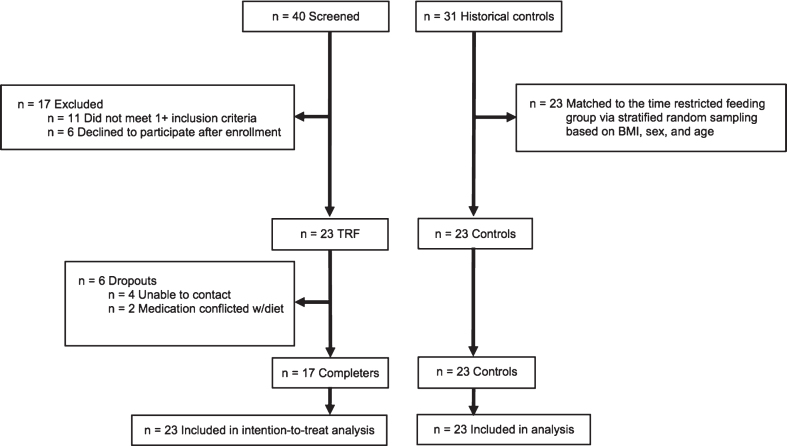
Design: Obese subjects (n = 23) participated in an 8-h time restricted feeding intervention (ad libitum feeding between 10:00 to 18:00 h, water fasting between 18:00 to 10:00 h) for 12 weeks. Weight loss and other outcomes were compared to a matched historical control group (n = 23).
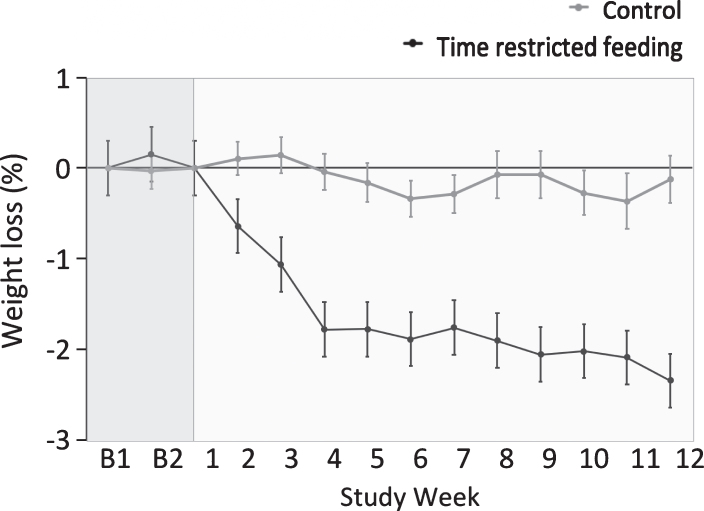
Results: Body weight and energy intake decreased in the time restricted group (-2.6% ± 0.5; -341 ± 53 kcal/d) relative to controls over 12 weeks (P < 0.05). Systolic blood pressure decreased in the time restricted feeding group (-7 ± 2 mm Hg) versus controls (P < 0.05). Fat mass, lean mass, visceral fat mass, diastolic blood pressure, LDL cholesterol, HDL cholesterol, triglycerides, fasting glucose, fasting insulin, HOMA-IR, and homocysteine were not significantly different from controls after 12 weeks (no group×time interaction).
Conclusion: These findings suggest that 8-h time restricted feeding produces mild caloric restriction and weight loss, without calorie counting. It may also offer clinical benefits by reducing blood pressure.
Keywords: Time restricted feeding; body weight; intermittent fasting; metabolic disease risk factors; obese adults.
Figures
References
-
- Bhutani S, et al. Alternate day fasting and endurance exercise combine to reduce body weight and favorably alter plasma lipids in obese humans. Obesity (Silver Spring). 2013;21(7):1370–9. - PubMed
LinkOut - more resources
Full Text Sources
Other Literature Sources
Medical