


Effect of 8-week leucine supplementation and resistance exercise training on muscle hypertrophy and satellite cell activation in rats
- PMID: 29952091
- PMCID: PMC6021278
- DOI: 10.14814/phy2.13725
Effect of 8-week leucine supplementation and resistance exercise training on muscle hypertrophy and satellite cell activation in rats
Abstract
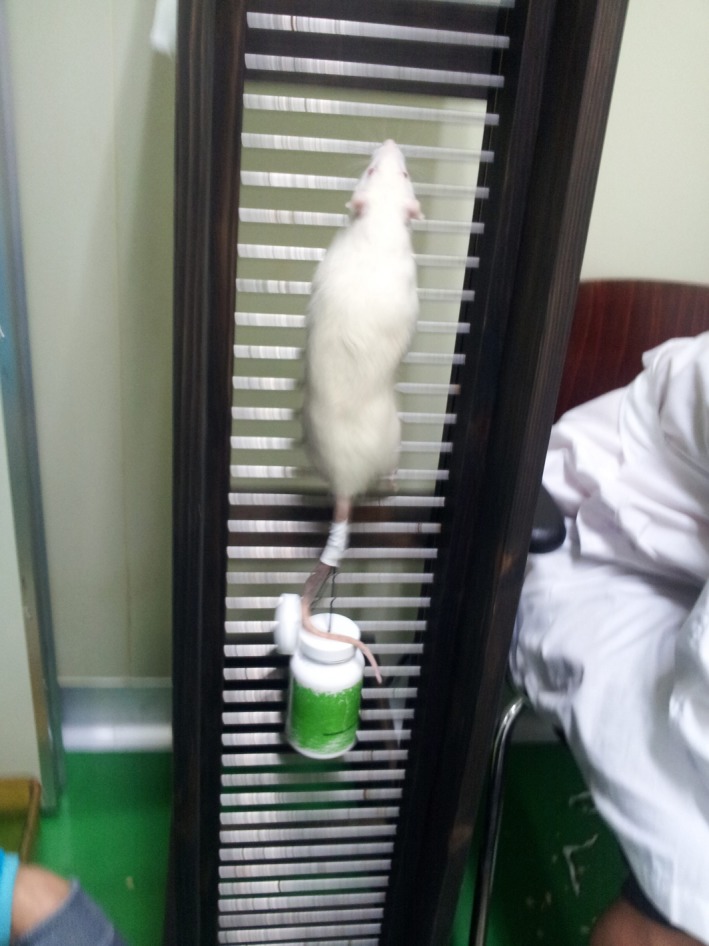
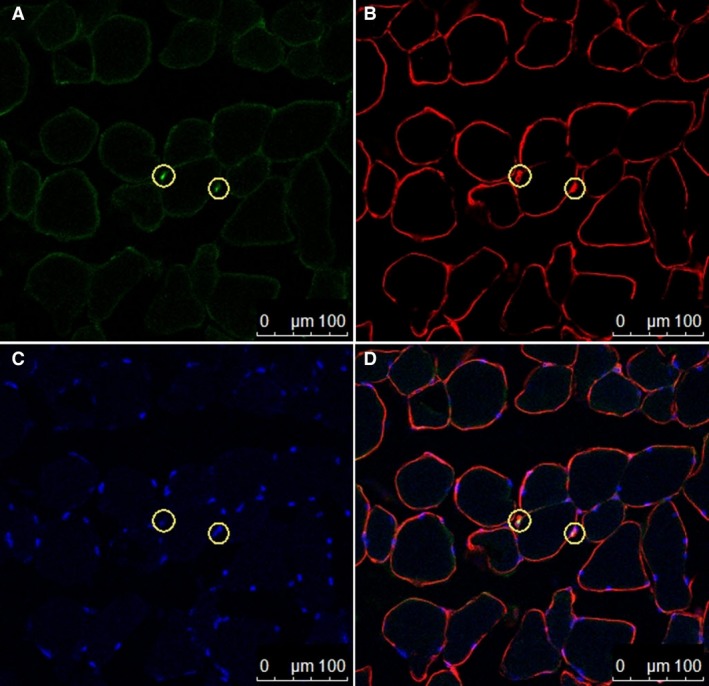
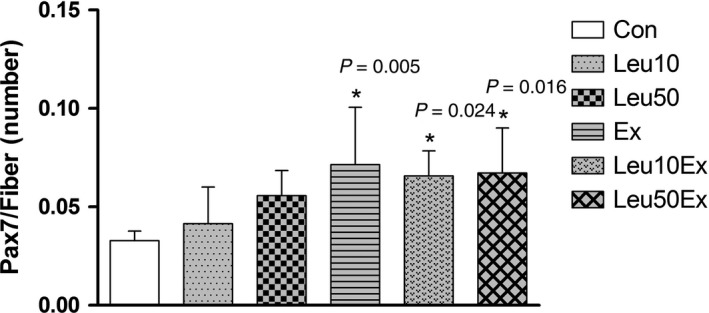
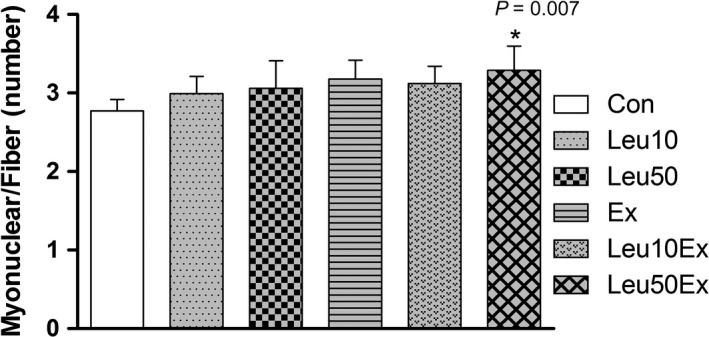
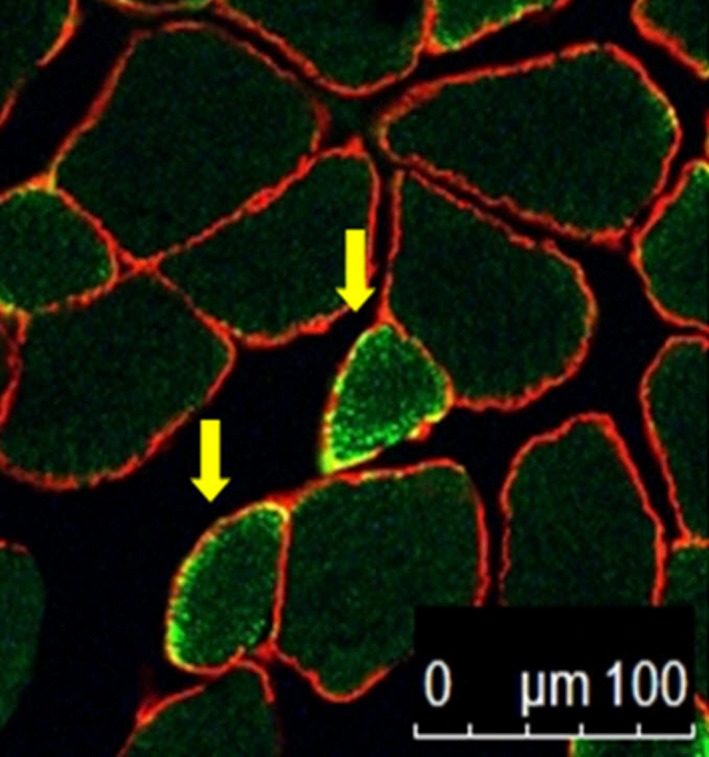
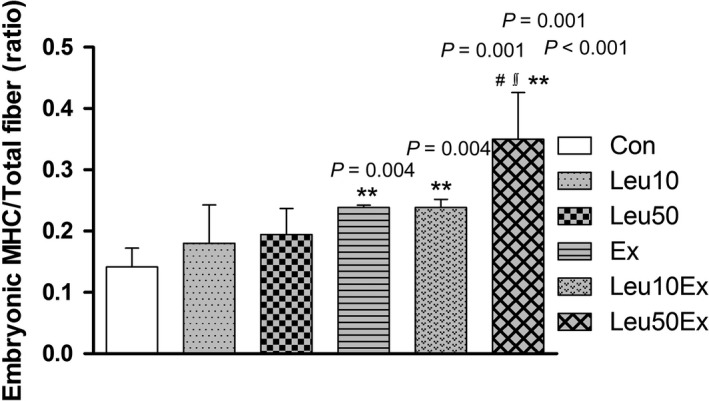
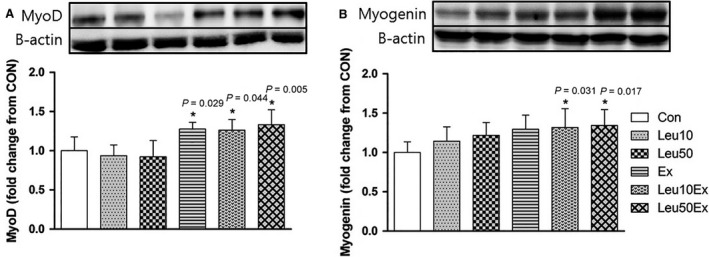
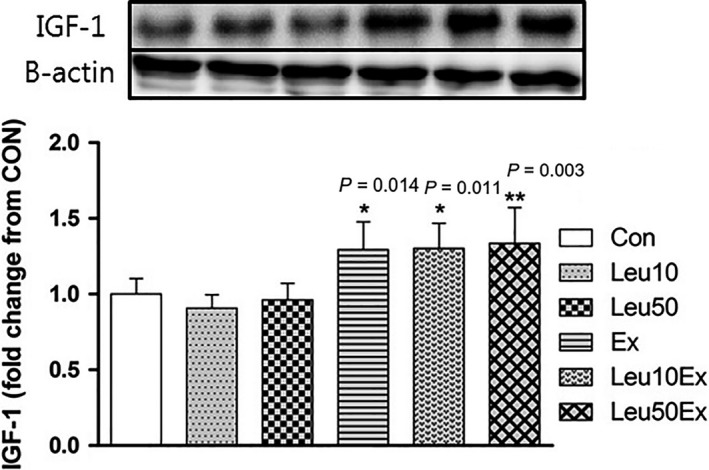
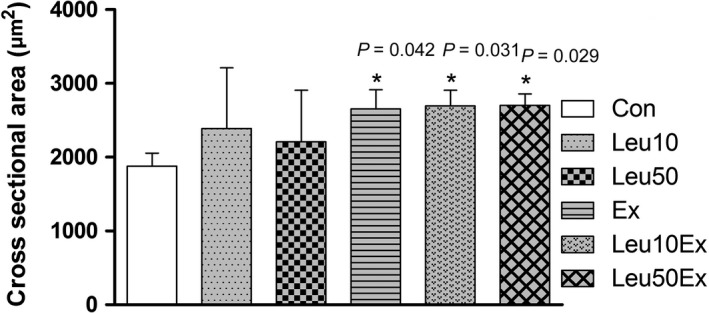
We investigated the effects of regular leucine intake and/or resistance exercise training on skeletal muscle hypertrophy and satellite cell activity after the administration of different doses of leucine. Ten-week-old Sprague-Dawley rats were assigned to six groups (n = 7 per group): a control group (Con), two groups receiving either 10% (0.135 g/kg.wt) (Leu10) or 50% (0.675 g/kg.wt) (Leu50) leucine supplementation, and three exercise groups receiving 0% (Ex), 10% (Leu10Ex), and 50% (Leu50Ex) leucine supplementation. The rats performed ladder climbing exercises thrice per week for 8 weeks, and received leucine supplements at the same time daily. Muscle phenotypes were assessed by immunohistochemistry. MyoD, myogenin, and IGF1 protein levels were determined by western blot. The Leu50Ex group displayed significantly higher numbers of positive embryonic myosin fibers (0.35 ± 0.08, 250%) and myonuclei (3.29 ± 0.3, 118.7%) than all other groups. And exercise training groups increased the cross-sectional area, the number of satellite cells and protein expression of MyoD, myogenin, and IGF1alpha relative to the Control group (P < 0.05). However, Only leucine supplementation group did not increase skeletal muscle hypertrophy and satellite cell activity, regardless of the dose (P > 0.05). Leucine intake accompanied by regular exercise training may increase satellite cell activation in skeletal muscles, and improve muscle quality more effectively than continuous leucine ingestion alone.
Keywords: Embryonic myosin; Leucine; Resistance exercise; Satellite cell.
© 2018 The Authors. Physiological Reports published by Wiley Periodicals, Inc. on behalf of The Physiological Society and the American Physiological Society.
Figures
References
-
- Allen, D. L. , Roy R. R., and Edgerton V. R.. 1999. Myonuclear domains in muscle adaptation and disease. Muscle Nerve 22:1350–1360. - PubMed
-
- Anthony, J. C. , Yoshizawa F., Anthony T. G., Vary T. C., Jefferson L. S., and Kimball S. R.. 2000. Leucine stimulates translation initiation in skeletal muscle of postabsorptive rats via a rapamycin‐sensitive pathway. J. Nutr. 130:2413–2419. - PubMed
-
- Armstrong, R. B. , and Phelps R. O.. 1984. Muscle fiber type composition of the rat hindlimb. Am. J. Anat. 171:259–272. - PubMed
-
- Averous, J. , Gabillard J. C., Seiliez I., and Dardevet D.. 2012. Leucine limitation regulates myf5 and myoD expression and inhibits myoblast differentiation. Exp. Cell Res. 318:217–227. - PubMed
-
- Blaauw, B. , and Reggiani C.. 2014. The role of satellite cells in muscle hypertrophy. J. Muscle Res. Cell Motil. 35:3–10. - PubMed
Publication types
MeSH terms
Substances
LinkOut - more resources
Full Text Sources
Other Literature Sources
Medical
Miscellaneous
