. 2019 Feb;31(2):293-321.
doi: 10.1177/0898264318782096. Epub 2018 Jun 28.

From Snapshots to Movies: The Association Between Retirement Sequences and Aging Trajectories in Limitations to Perform Activities of Daily Living

Affiliations

From Snapshots to Movies: The Association Between Retirement Sequences and Aging Trajectories in Limitations to Perform Activities of Daily Living

Ariel Azar et al. J Aging Health. 2019 Feb.

Abstract

Objective: This study analyzes the dynamic association between retirement sequences and activities of daily living (ADLs) trajectories between ages 60 and 70.

Method: Retirement sequences previously established for 7,880 older Americans from the Health and Retirement Study were used in hierarchical linear and propensity score full matching models, analyzing their association with ADL trajectories.

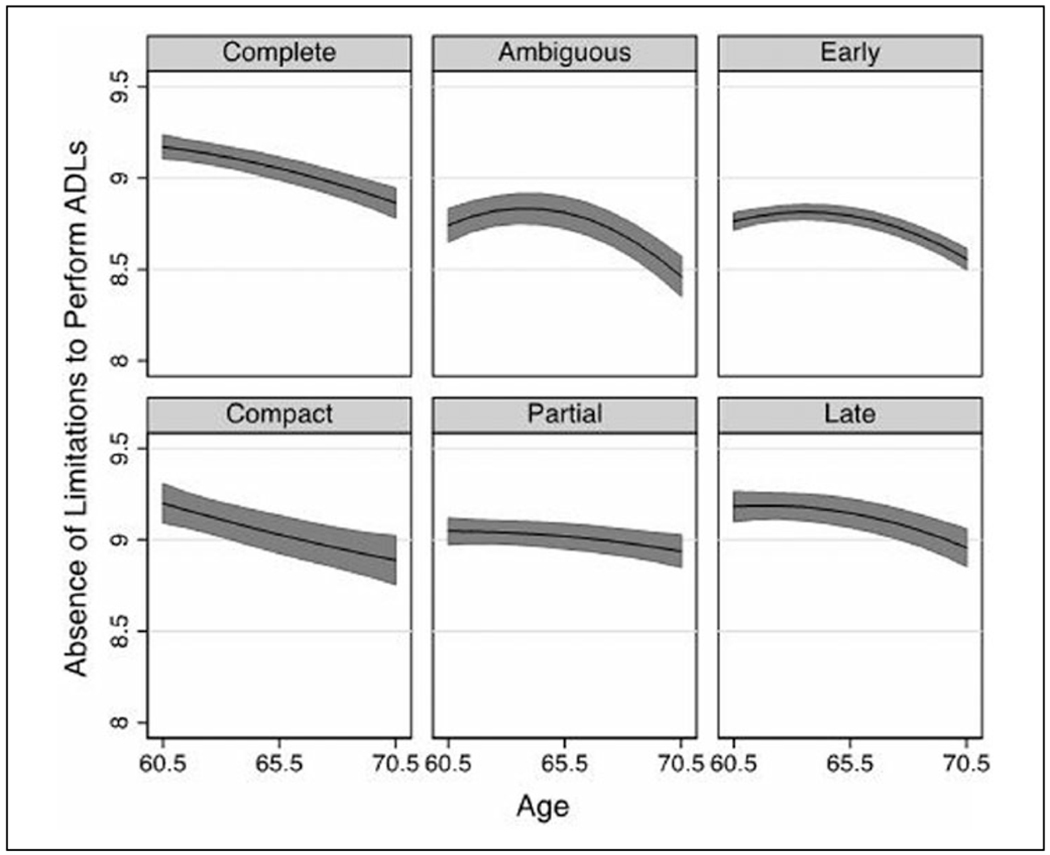
Results: Sequences of partial retirement from full- or part-time jobs showed higher baseline and slower decline in ADL than sequences characterized by early labor force disengagement.

Discussion: The conventional model in which people completely retire from a full-time job at normative ages and the widely promoted new conventional model of late retirement are both associated with better functioning than early labor force disengagement. But unconventional models, where older adults keep partially engaged with the labor force are also significantly associated with better functioning. These findings call attention to more research on potential avenues to simultaneously promote productive engagement and health later in life.

Keywords: ADLs; epidemiology; functioning; policy; retirement.


Conflict of interest statement

Declaration of Conflicting Interests

The authors declared no potential conflicts of interest with respect to the research, authorship, and/or publication of this article.

Figures
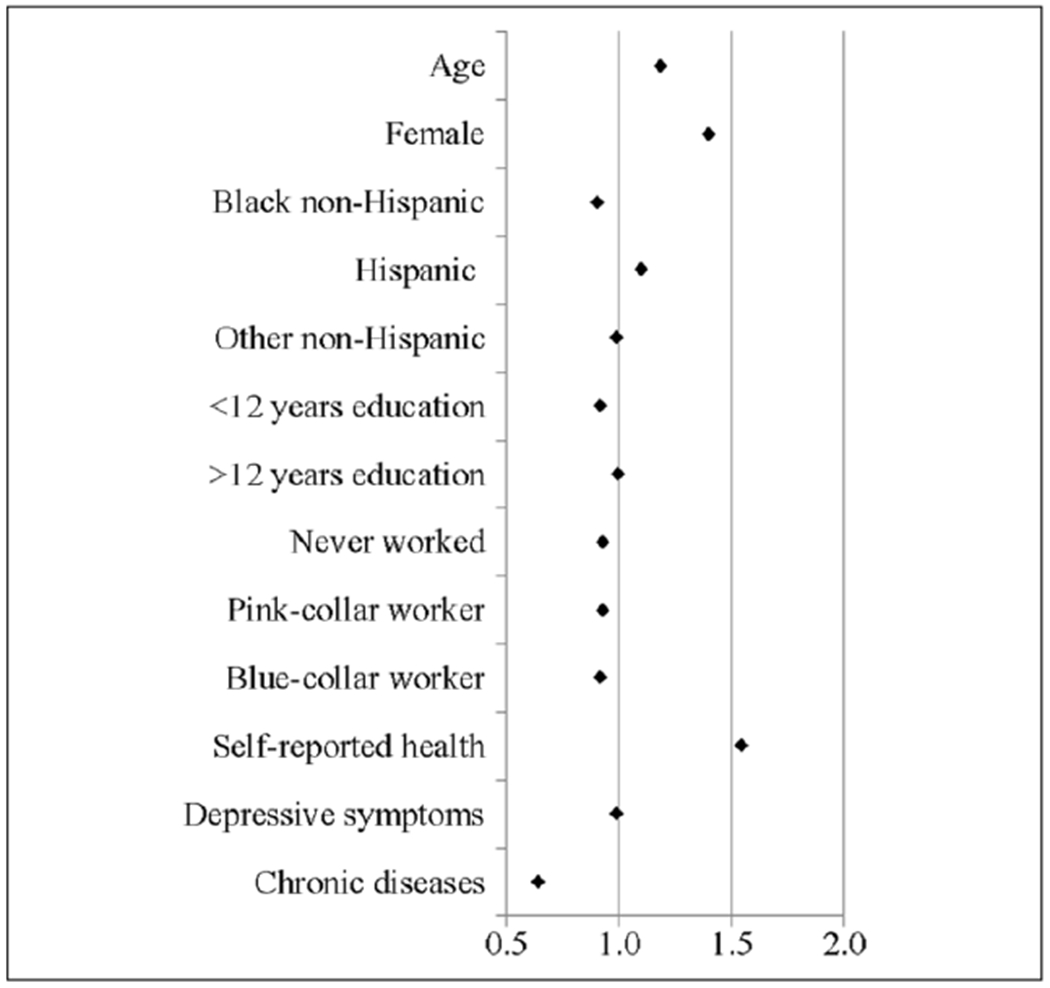
Figure A1.
Figure A1.
Logistic regression results for sample selectivity (N = 9,752). Note. Standardized odds ratios reported. Reference categories are White non-Hispanic, 12 years of education, and white-collar worker.
Figure A2.
Figure A2.
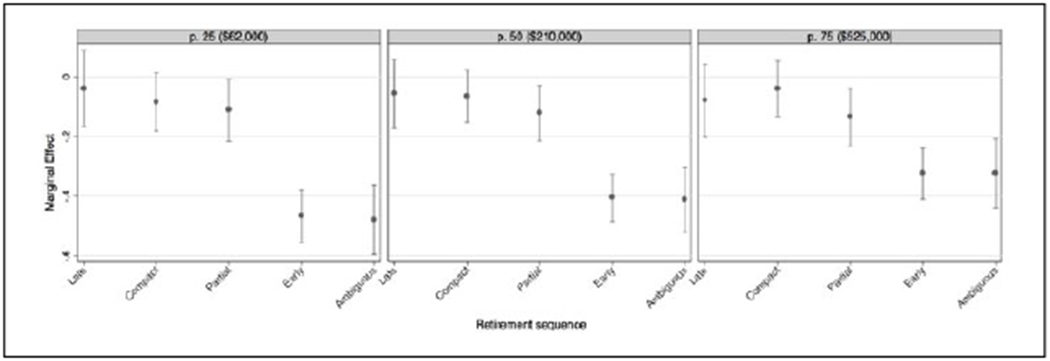
Marginal effects of retirement sequences on functional ability by level of total wealth (percentiles 25, 50, and 75). Note. The 95% confidence intervals are illustrated with brackets. “Complete” is the reference category.
Figure A3.
Figure A3.
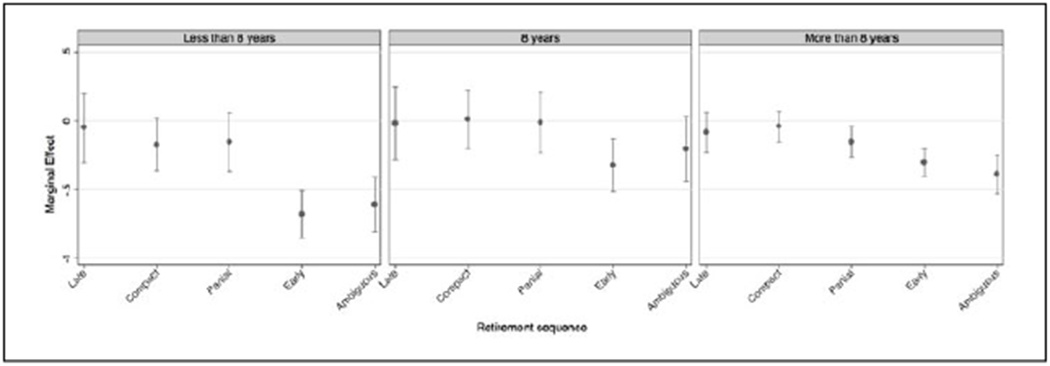
Marginal effects of retirement sequences on functional ability by level of parental education. Note. The 95% confidence intervals are illustrated with brackets. “Complete” is the reference category.
Figure A4.
Figure A4.
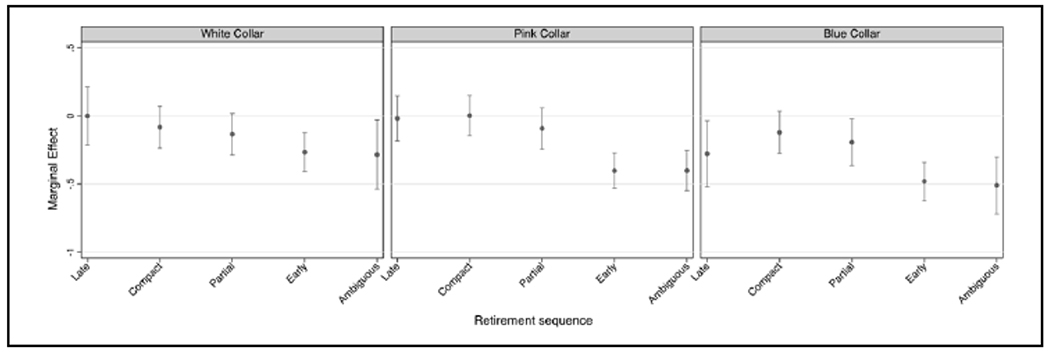
Marginal effects of retirement sequences on functional ability by type of occupation. Note. The 95% confidence intervals are illustrated with brackets. “Complete” is the reference category.
Figure A5.
Figure A5.
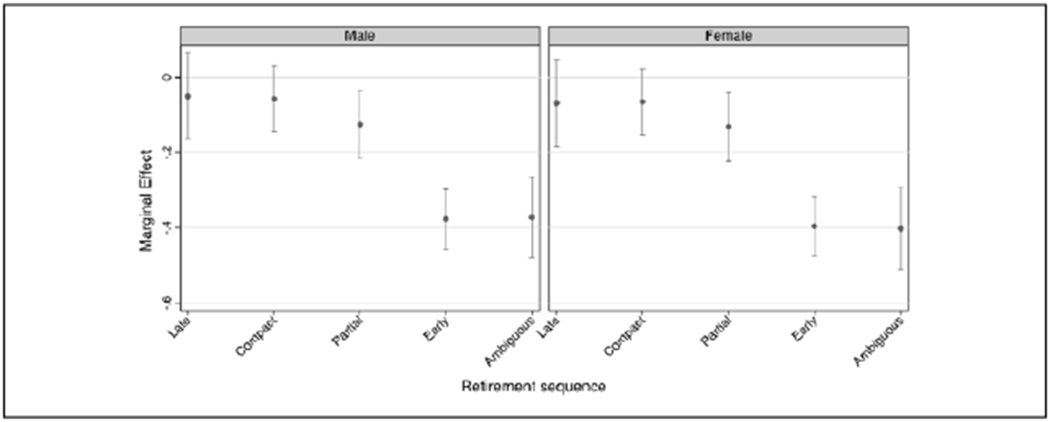
Marginal effects of retirement sequences on functional ability by gender. Note. The 95% confidence intervals are illustrated with brackets. “Complete” is the reference category.
Figure A6.
Figure A6.
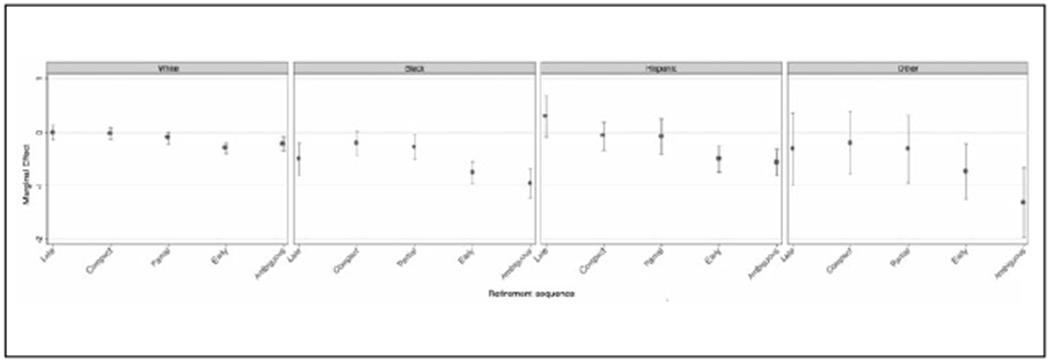
Marginal effects of retirement sequences on functional ability by race/ethnicity. Note. The 95% confidence intervals are illustrated with brackets. “Complete” is the reference category.
Figure 1.
Figure 1.
Adjusted functioning trajectories by type of retirement sequence. Note. Predicted values are calculated using the coefficients in Model 3 and setting all covariates at their mean. Shaded regions represent 95% confidence intervals around predicted values. ADLs = activities of daily living.
Figure 2.
Figure 2.
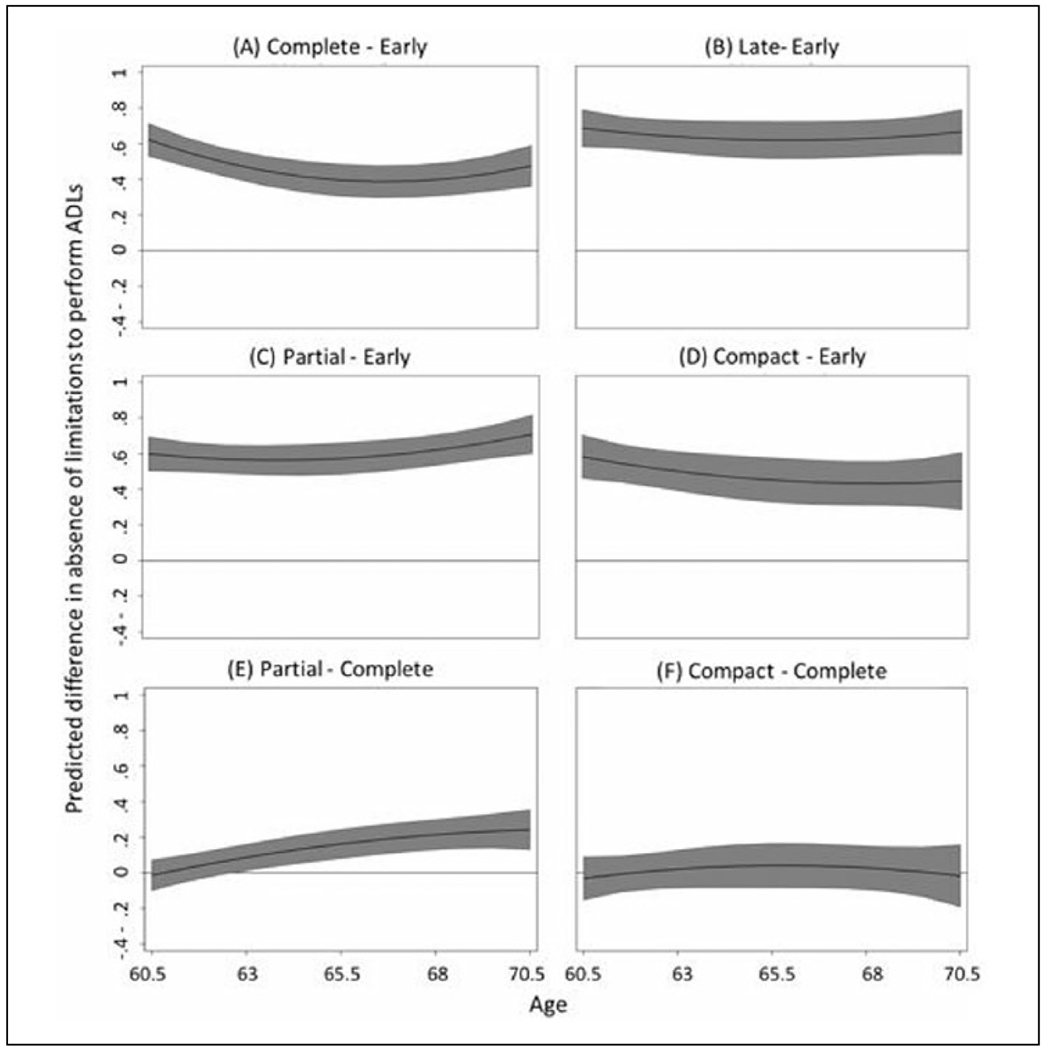
Average treatment effects of retirement sequences on functional ability. Note. Average treatment effects are represented by plotting differences in predicted values of functional ability for treated individuals and controls in each fully matched sample. The heading of each panel indicates the sequence that is modeled as the treatment group, followed by the sequence modeled as control. All estimations were conducted using fully matched balanced samples with individuals grouped in blocks: A = 4,335 individuals and 1,620 blocks, B = 3,809 individuals and 1,130 blocks, C = 4,113 individuals and 1,410 blocks, D = 3,425 individuals and 774 blocks, E = 2,670 individuals and 1,100 blocks, and F = 1,982 individuals and 625 blocks. The 95% confidence intervals (CI) around difference scores are represented with a gray area. ADLs = activities of daily living.

References

    1. Adams KB, Leibbrandt S, & Moon H (2011). A critical review of the literature on social and leisure activity and well-being in later life. Ageing and Society, 31, 683–712. doi: 10.1017/S0144686X10001091 - DOI
    1. Allison PD (2002). Missing data: Quantitative applications in the social sciences. British Journal of Mathematical and Statistical Psychology, 55, 193–196. doi: 10.1348/000711002159653 - DOI
    1. Bloom DE, Chatterji S, Kowal P, Lloyd-Sherlock P, McKee M, Rechel B, & Smith JP (2015). Macroeconomic implications of population ageing and selected policy responses. The Lancet, 385, 649–657. doi: 10.1016/S0140-6736(14)61464-1 - DOI - PMC - PubMed
    1. Bowen CE, Noack CMG, & Staudinger UM (2010). Aging in the work context In Schaie W & Willis S (Eds.), Handbook of the psychology of aging (7th ed., pp. 263–277). San Diego, CA: Elsevier Academic Press.
    1. Cahill KE, Giandrea MD, & Quinn JF (2006). Retirement patterns from career employment. The Gerontologist, 46, 514–523. doi: 10.1093/geront/46.4.514 - DOI - PubMed

Publication types

LinkOut - more resources