


Reasons for nonadherence to the dapivirine vaginal ring: narrative explanations of objective drug-level results
- PMID: 29957723
- PMCID: PMC6230508
- DOI: 10.1097/QAD.0000000000001868
Reasons for nonadherence to the dapivirine vaginal ring: narrative explanations of objective drug-level results
Abstract
Objective(s): MTN-020/ASPIRE trial and IPM-027/Ring Study recently proved the dapivirine vaginal ring was safe and effective with consistent use. To optimize the ring's impact, the barriers and facilitators to ring adherence must be understood and addressed.
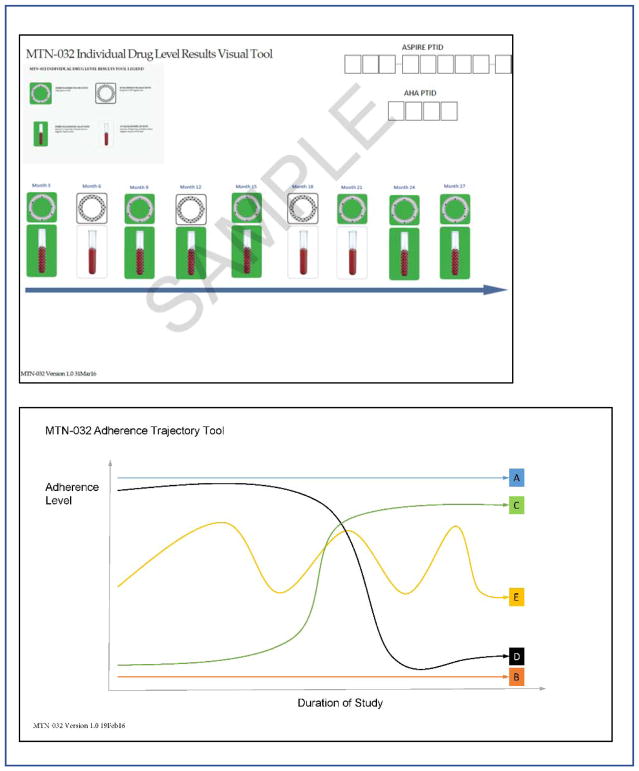
Methods: Former ASPIRE participants were stratified by age group (18-21; 22-45) and randomly selected at seven sites in Malawi, South Africa, Uganda and Zimbabwe, 12-17 months after trial exit. Using in-depth interviews or focus group discussions, ring use barriers were explored using structured guides and visual tools including individual-level depictions of dapivirine levels detected in plasma and returned rings.
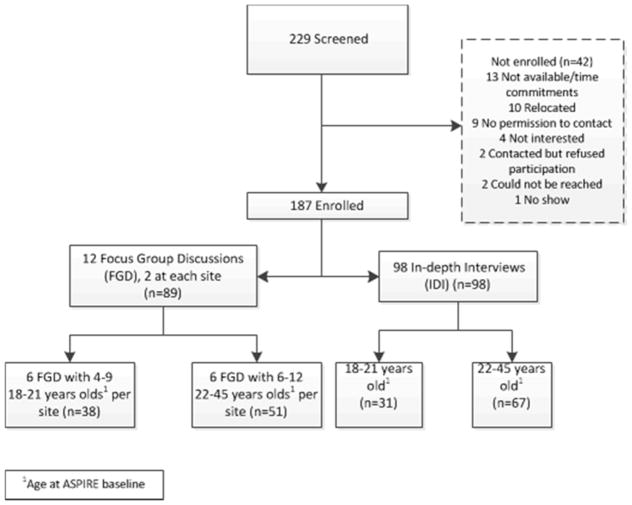
Results: A total of 187 were enrolled; 37% were 18-21 years when they began ASPIRE. Most (75%) had drug-level results, suggesting inconsistent ring use throughout ASPIRE. Participants viewed themselves as adherent, while simultaneously describing regular instances and reasons for ring removal (e.g. for sex or menses). Less adherent women reported fears that partners would oppose the ring or feel it during sex. High adherers expressed altruistic motivations for ring use. Women of all ages attributed young women's nonadherence to their tendency to be less 'serious' about the future, HIV prevention and the study; motivated predominantly by benefits; more fearful of fertility-related consequences; and to having less relationship control.
Conclusion: When presented with objective adherence data, participants provided reasons for intermittent ring use, while simultaneously portraying themselves as consistent ring users. Further research is needed to understand how women could use the ring in a way that fits into the context of their relationships and their lives while still conferring adequate HIV prophylaxis.
Figures
References
-
- Nel A, van Niekerk N, Kapiga S, Bekker L-G, Gama C, Gill K, et al. Safety and Efficacy of a Dapivirine Vaginal Ring for HIV Prevention in Women. New England Journal of Medicine. 2016;375(22):2133–2143. - PubMed
-
- Gollub EL. Choice Is Empowering: Getting Strategic About Preventing HIV Infection in Women. International Family Planning Perspectives. 2006;32(4):209–212. - PubMed
-
- van der Straten A, Cheng H, Agot K, Ahmed K, Weinrib R, Manenzhe K, et al. Preference and choice of multipurpose prevention technologies (MPT) in young African women. Conference on Retroviruses and Opportunistic Infections; Seattle, WA. 2017.
-
- Nel AM, Mitchnick LB, Risha P, Muungo LT, Norick PM. Acceptability of vaginal film, soft-gel capsule, and tablet as potential microbicide delivery methods among African women. J Womens Health. 2011;20(8):1207–1214. - PubMed
Publication types
MeSH terms
Substances
Grants and funding
LinkOut - more resources
Full Text Sources
Other Literature Sources
Medical
