


doi: 10.1097/NAN.0000000000000287.
Peripheral Infiltration and Extravasation Injury Methodology: A Retrospective Study
Affiliations
- PMID: 29958261
- PMCID: PMC6082416
- DOI: 10.1097/NAN.0000000000000287
Item in Clipboard
Peripheral Infiltration and Extravasation Injury Methodology: A Retrospective Study
J Infus Nurs.
2018 Jul/Aug.
Abstract
Peripheral infiltration is defined as the inadvertent delivery of nonvesicant fluid or medication into surrounding tissue that has the potential to harm the patient. Vesicant fluid that has leaked into the tissue space is called extravasation. At present, there is no agreement in the literature on the best practice for managing these injuries in pediatric patients. The purpose of this study was to identify occurrences of peripheral infiltration injuries and examine treatment modalities used to treat pediatric patients who suffered such an injury.
Figures
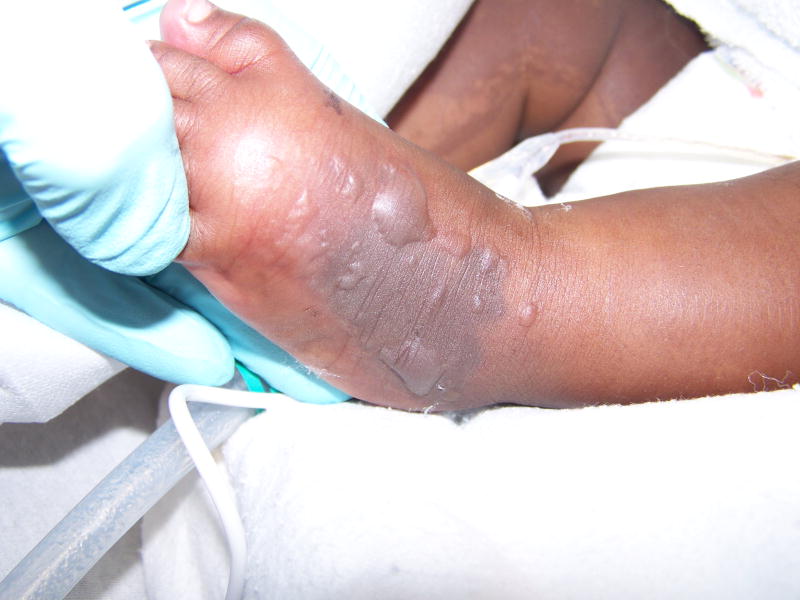
Grade 4 peripheral infiltration injury on the dorsum of an infant’s left foot.
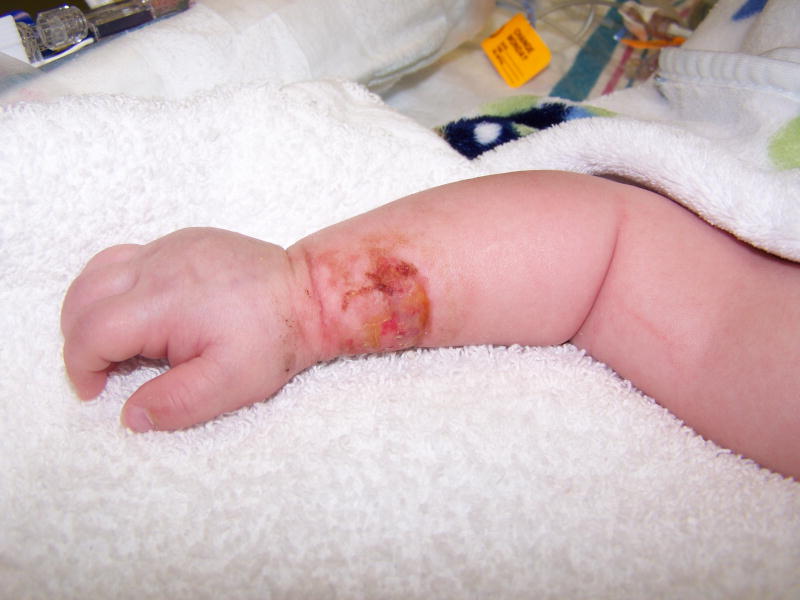
Grade 4 peripheral infiltration injury on the right wrist of an infant.
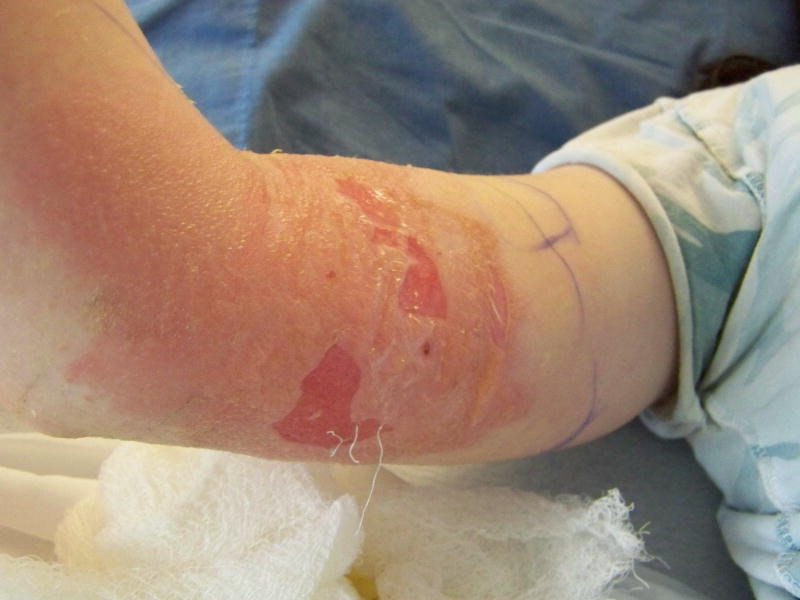
Grade 4 peripheral infiltration injury on the right upper extremity of a child.
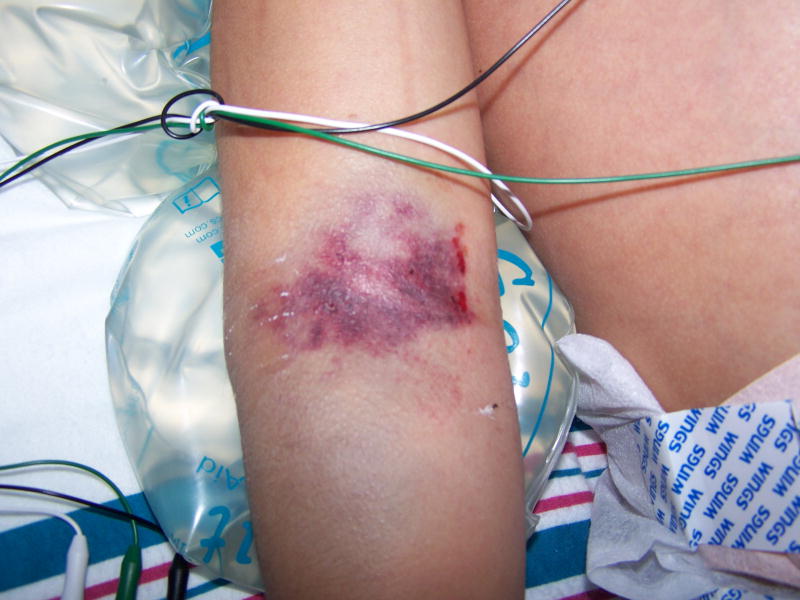
Grade 4 peripheral infiltration injury on a child’s right antecubital region.
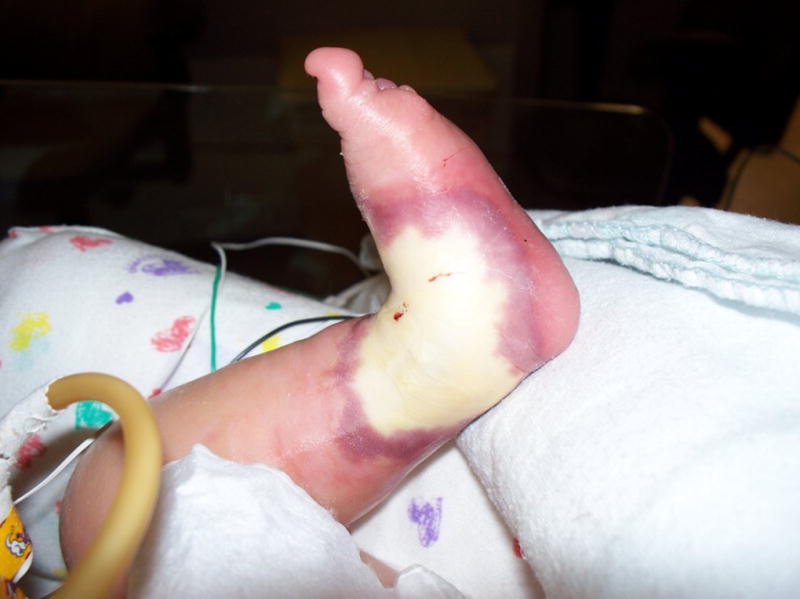
Acute peripheral infiltration injury on the left foot of an infant undergoing an infusion of lipids.
References
-
- Lehr VT, Lulic-Botica M, Lindblad WJ, Kazzi NJ, Aranda JV. Management of infiltration injury in neonates using duoderm hydroactive gel. Am J Perinatol. 2004;21(7):409–414. - PubMed
-
- Thomas S, Rowe HN, Keats J, Morgan RJH. The management of extravasation injury in neonates. [Accessed February 22, 2018];World Wide Wounds. http://www.worldwidewounds.com/1997/october/Neonates/Neonate.html. Published October 23, 1997.
-
- Gorksi L, Hadaway L, Hagle ME, McGoldrick M, Orr M, Doellman D. Infusion therapy standards of practice. J Infus Nurs. 2016;39(suppl 1):S1–S159.
-
- Beall V, Hall B, Mulholland J, Gephart S. Neonatal Extravasation: An Overview and Algorithm for Evidence-based Treatment. Newborn and Infant Nurs Rev. 2013;13(4):189–195.
MeSH terms
Substances
Grants and funding
LinkOut - more resources
Full Text Sources
Other Literature Sources
