


A systematic review of epigenetic biomarkers in progression from non-dysplastic Barrett's oesophagus to oesophageal adenocarcinoma
- PMID: 29961009
- PMCID: PMC6042533
- DOI: 10.1136/bmjopen-2017-020427
A systematic review of epigenetic biomarkers in progression from non-dysplastic Barrett's oesophagus to oesophageal adenocarcinoma
Abstract
Objectives: The objective of this systematic review is to identify and summarise studies which examine epigenetic biomarkers in patients with Barrett's oesophagus (BO) and their association with progression to oesophageal adenocarcinoma (OADC). BO is a precursor lesion for OADC. There is no clinical test to predict patients who are likely to progress to OADC. An epigenetic biomarker could predict patients who are at high risk of progression from BO to OADC which could facilitate earlier diagnosis and spare those unlikely to develop cancer from regular invasive surveillance endoscopy.
Setting: A systematic search was conducted of the following databases: MEDLINE, MEDLINE in Process, EMBASE, Cochrane Central, ISI Conference Proceedings Citation Index and the British Library's ZETOC. Studies were conducted in secondary and tertiary care settings.
Participants: All studies measuring epigenetic change in patients over 18 years old who progressed from non-dysplastic BO to OADC were included. Genetic, in vitro and studies which did not measure progression in the same patient cohort were excluded. Study inclusion and risk of bias of individual eligible studies were assessed in duplicate by two reviewers using a modified Quality in Prognostic Studies tool.
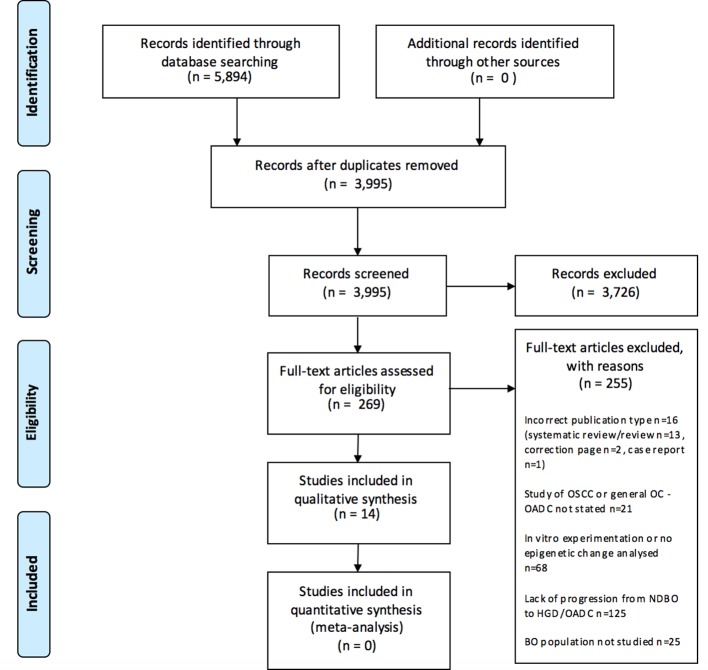
Results: 14 studies met the inclusion criteria. 42 epigenetic markers were identified, and 5 studies developed models aiming to predict progression to OADC.
Conclusions: The evidence from this systematic review is suggestive of a role for p16 as an epigenetic biomarker for the progression of BO to OADC.
Prospero number: CRD42016038654.
Keywords: adult surgery; gastrointestinal tumours; oesophageal disease.
© Article author(s) (or their employer(s) unless otherwise stated in the text of the article) 2018. All rights reserved. No commercial use is permitted unless otherwise expressly granted.
Conflict of interest statement
Competing interests: None declared.
Figures
References
-
- NCI. Surveillance, epidemiology and end results programme database: NC Institute, 2014.
Publication types
MeSH terms
Substances
Grants and funding
LinkOut - more resources
Full Text Sources
Other Literature Sources
Medical
Miscellaneous
