A Prospective Randomized Comparison of a Covered Metallic Ureteral Stent and a Double-J Stent for Malignant Ureteral Obstruction
- PMID: 29962867
- PMCID: PMC6005938
- DOI: 10.3348/kjr.2018.19.4.606
A Prospective Randomized Comparison of a Covered Metallic Ureteral Stent and a Double-J Stent for Malignant Ureteral Obstruction
Abstract
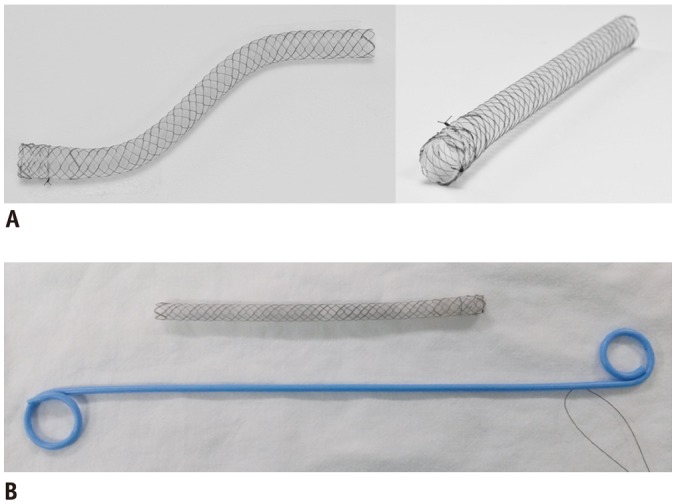
Objective: To compare the safety and efficacy between a covered metallic ureteral stent (CMS) and a double-J ureteral stent (DJS) for the treatment of a malignant ureteral obstruction (MUO).
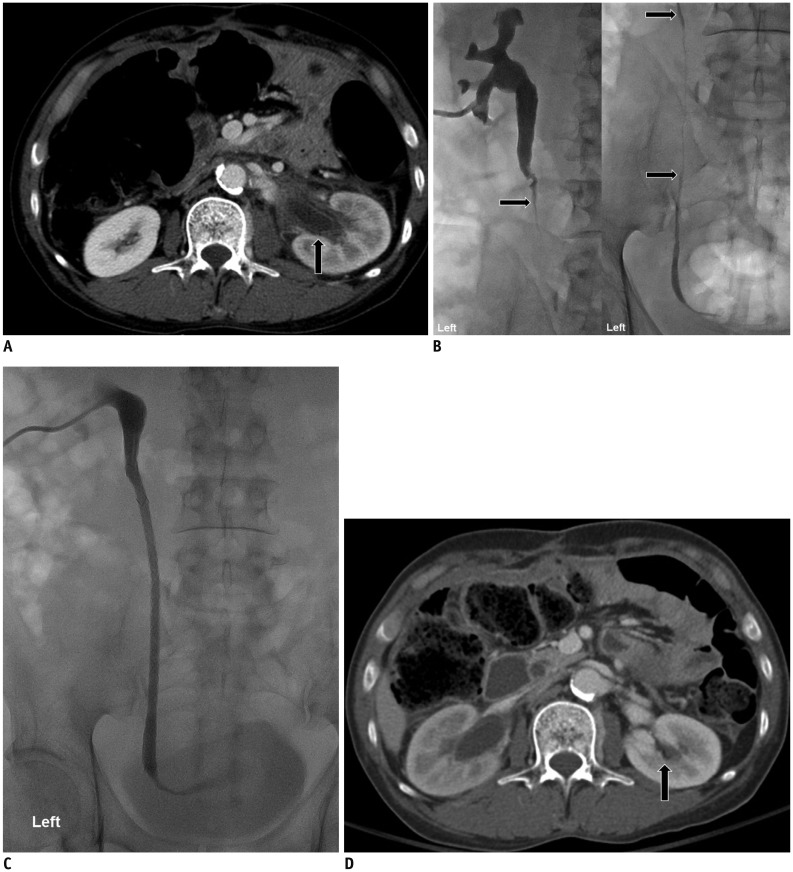
Materials and methods: Nineteen patients (seven men and 12 women; mean age, 53.4 years) were randomly assigned to the CMS (n = 10) or DJS (n = 9) group. The following were compared between the two groups: technical success, i.e., successful stent placement into desired locations; stent malfunction; stent patency, i.e., no obstruction and no additional intervention; complications; and patient survival.
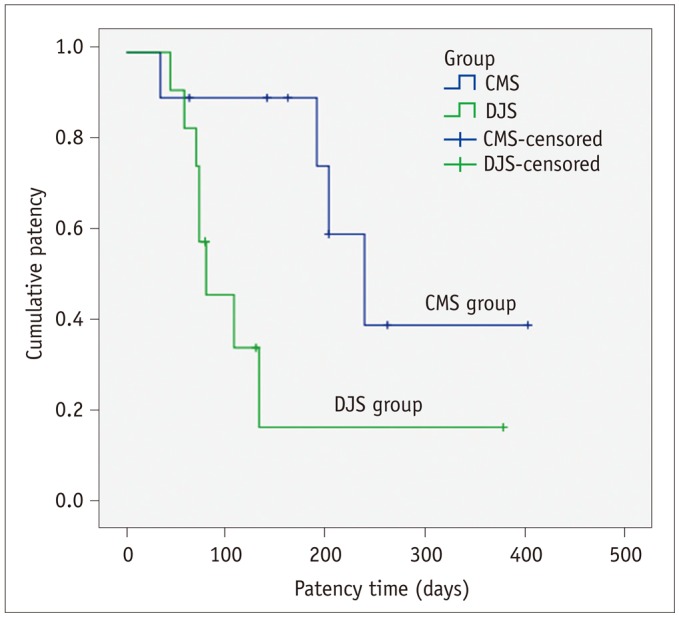
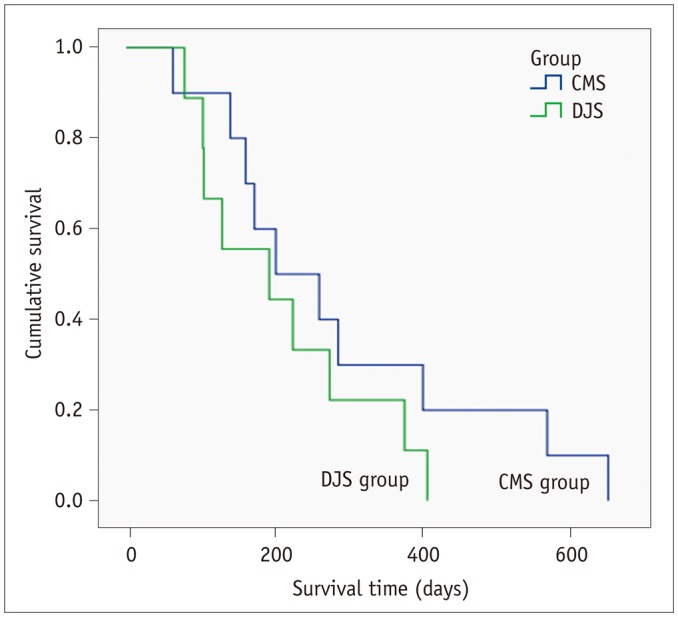
Results: The technical success rate was 100% in all 10 and 12 ureteral units in the CMS and DJS groups, respectively. During the mean follow-up period of 253.9 days (range, 63-655 days), stent malfunction was observed in 40.0% (4/10) and 66.7% (8/12) in the CMS and DJS groups, respectively. In the per-ureteral analysis, the median patency time was 239.0 days and 80.0 days in the CMS and DJS groups, respectively. The CMS group yielded higher patency rates compared with the DJS group at three months (90% vs. 35%) and at six months (57% vs. 21%). The overall patency rates were significantly higher in the CMS group (p = 0.041). Complications included the migration of two metallic stents in one patient in the CMS group, which were removed in a retrograde manner. The two patient groups did not differ significantly regarding their overall survival rates (p = 0.286).
Conclusion: Covered metallic ureteral stent may be effective for MUO.
Keywords: Covered ureter stent; Double-J ureter stent; Metallic ureter stent; Random; Study; Trial; Ureter obstruction; Ureter stent.
Figures
References
-
- Better OS, Arieff AI, Massry SG, Kleeman CR, Maxwell MH. Studies on renal function after relief of complete unilateral ureteral obstruction of three months' duration in man. Am J Med. 1973;54:234–240. - PubMed
-
- Russo P. Urologic emergencies in the cancer patient. Semin Oncol. 2000;27:284–298. - PubMed
-
- Farrell TA, Hicks ME. A review of radiologically guided percutaneous nephrostomies in 303 patients. J Vasc Interv Radiol. 1997;8:769–774. - PubMed
-
- Radecka E, Magnusson A. Complications associated with percutaneous nephrostomies. A retrospective study. Acta Radiol. 2004;45:184–188. - PubMed
-
- Saltzman B. Ureteral stents. Indications, variations, and complications. Urol Clin North Am. 1988;15:481–491. - PubMed
Publication types
MeSH terms
LinkOut - more resources
Full Text Sources
Other Literature Sources