Retrospective Study of Facial Fractures
- PMID: 29963429
- PMCID: PMC6018280
- DOI: 10.4103/ams.ams_73_17
Retrospective Study of Facial Fractures
Abstract
Aim: The aim of this study was to give an insight into the retrospective analysis of a number of maxillofacial trauma cases reported to our institute and research center.
Materials and methods: The data for this study was obtained from the medical records and outpatient prescription slips of cases treated at the Oral and Maxillofacial Surgery Department from 2010 to 2016. Etiology, age, gender, pattern of fracture, and surgical treatment modalities undertaken in these patients were recorded.
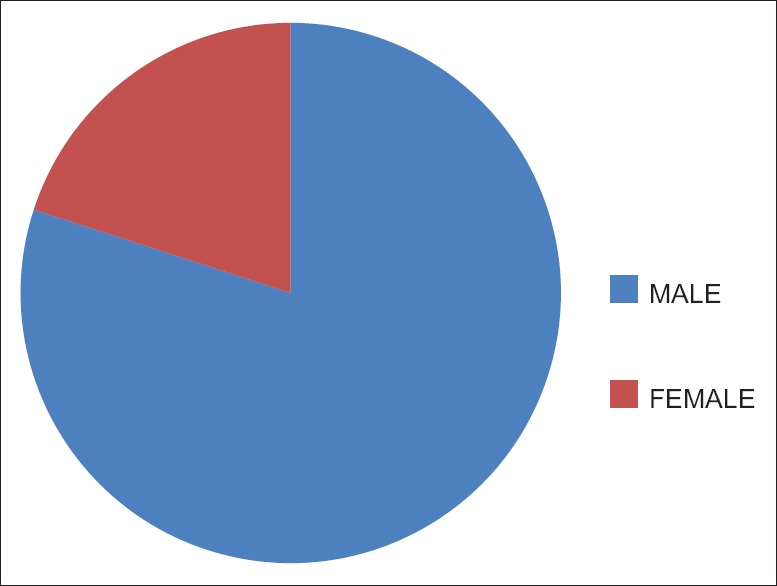
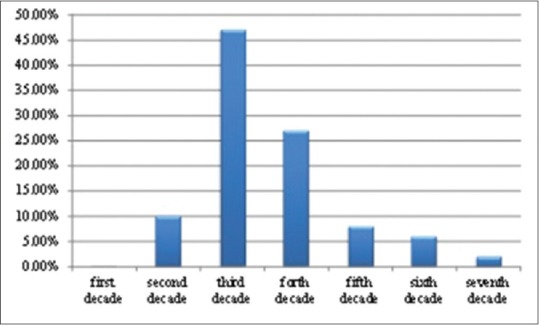
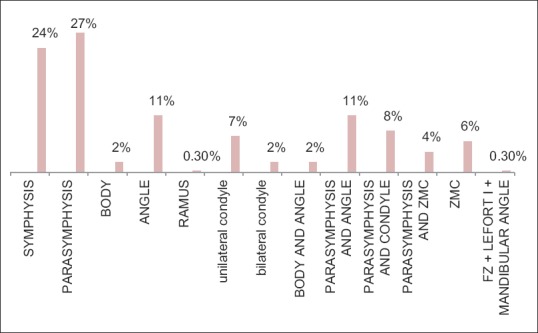
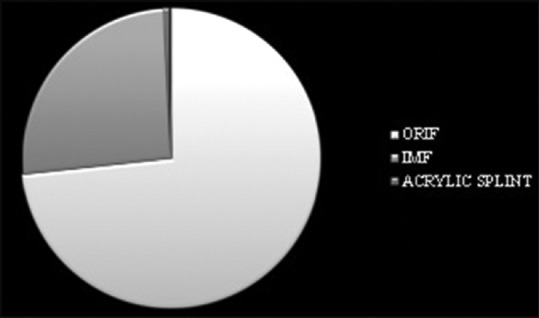
Results: A total of 353 maxillofacial trauma patients with mean age of 40 years, treated at our institute were evaluated from 2010 to 2016. Mandible was the most commonly fractured bone with parasymphysis as the most frequent site. Majority of victims were males (male:female ratio of 4:1) and also in the third decade of life. This study showed that 73% patients were treated by open reduction and internal fixation (ORIF), 25.8% by intermaxillary fixation (IMF) and Stabilization of fracture mandible with acrylic splint and circummandibular wiring was done in 0.8% pediatric patients.
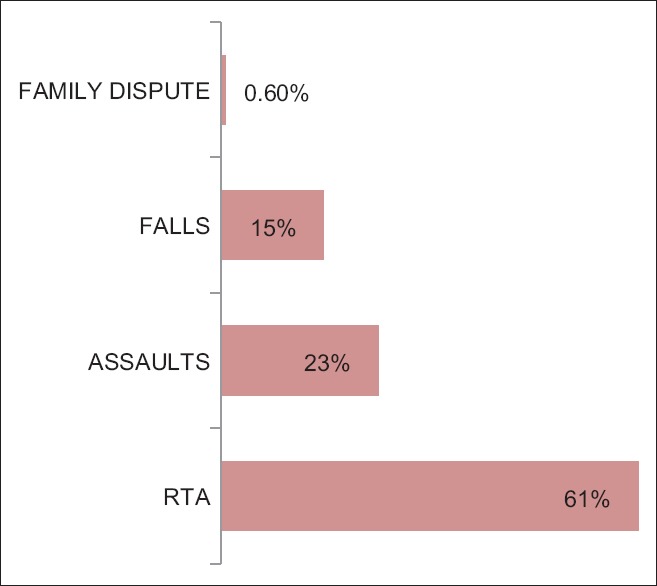
Conclusion: It was concluded that road traffic accidents were reported as the leading cause of maxillofacial fractures followed by assault, falls, and familial dispute. Maxillofacial surgeons as health care providers must continue their 'face it' campaign to decrease the incidence of road traffic accidents. Open reduction and internal fixation remains the gold standard treatment modality.
Keywords: Dental institute; mandibular fractures; maxillofacial trauma; retrospective study; road traffic accidents.
Conflict of interest statement
There are no conflicts of interest.
Figures
References
-
- Ramdas S, Lingam PP, Sateesh S. Review of maxillofacial fractures in a tertiary care center in Puduchery, South East India. Ann Trop Med Public health. 2014;7:100–4.
-
- Dube A, Rao G, Tanwar A. Pattern of Maxillofacial Injury Associated With Head Injury at a Neuro Surgical Centre: An Analysis of 250 Cases. Int J Dent Med Spec. 2014;1:2–6.
-
- Gupta R, Suryanarayanan S, Sharma A, Pandya V, Sathaye S. Traumatic mandibular fractures. A pendulum towards closed reduction. World Artic Ear Nose Throat. 2010;3:1–3.
-
- Hashim H, Iqbal S. Motorcycle accident is the main cause of maxillofacial injuries in the Penang Mainland, Malaysia. Dent Traumatol. 2011;27:19–22. - PubMed
LinkOut - more resources
Full Text Sources
Other Literature Sources
Medical