Medical Education for "Generation Z": Everything online?! - An analysis of Internet-based media use by teachers in medicine
- PMID: 29963611
- PMCID: PMC6022581
- DOI: 10.3205/zma001168
Medical Education for "Generation Z": Everything online?! - An analysis of Internet-based media use by teachers in medicine
Abstract
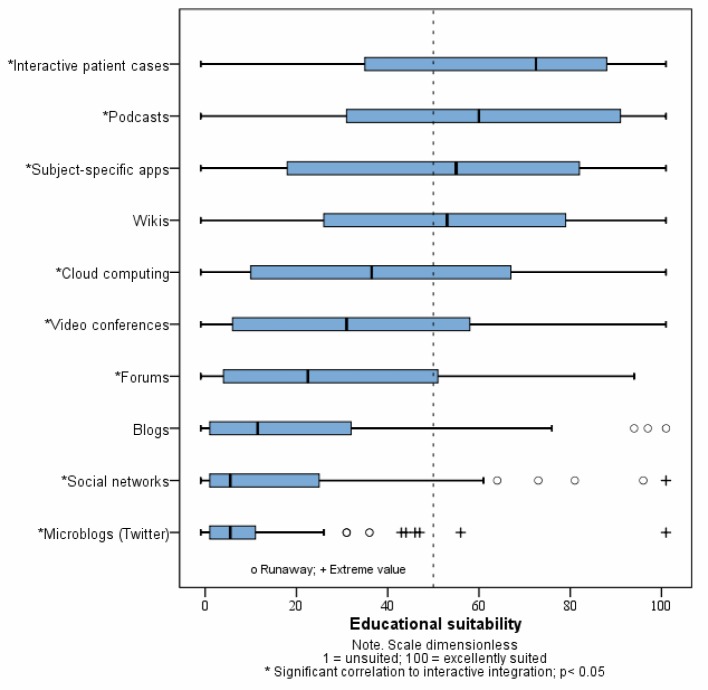
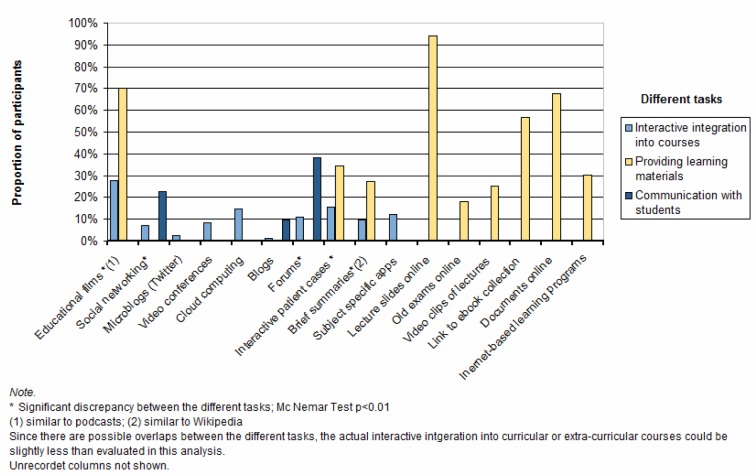
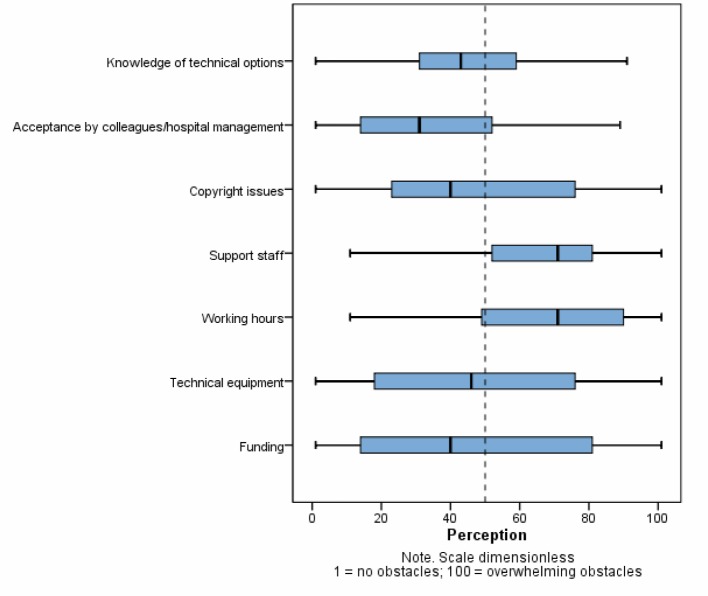
Aim: The aims of this study were to gain an overview of the web-based media used during the clinical phase of medical study at German medical schools and to identify the resources needed for web-based media use. Also examined were the influences on web-based media use, for instance, the assessment of their suitability for use in teaching. Method: An online survey of 264 teacher coordinators in internal medicine, surgery, anesthesiology, gynecology, pediatrics and psychiatry was conducted in March and April, 2016. This survey was carried out in the German-speaking countries using a 181-item questionnaire developed by us. Analysis took place in the form of descriptive and exploratory data analysis. Results: The response rate was 34.8% with 92 responses. Individual web-based media were actively used in the classroom by a maximum of 28% of participants. Reasons cited against using web-based media in teaching included the amount of time required and lack of support staff. The assessment of suitability revealed that interactive patient cases, podcasts and subject-specific apps for teaching medicine were predominantly viewed as constructive teaching tools. Social media such as Facebook and Twitter were considered unsuitable. When using web-based media and assessing their suitability for teaching, no correlations with the personal profiles of the teachers were found in the exploratory analysis, except regarding the use of different sources of information. Conclusion: Despite the Internet's rapid development in the past 15 years, web-based media continue to play only a minor role in teaching medicine. Above all, teacher motivation and sufficient staff resources are necessary for more effective use of Internet-based media in the future.
Zielsetzung: Ziel dieser Untersuchung war es einen Überblick über den Einsatz von Onlinemedien im klinischen Studienabschnitt der humanmedizinischen Lehre deutschsprachiger medizinischer Fakultäten zu bekommen, dafür notwendige Ressourcen zu identifizieren, sowie Einflüsse auf die Nutzung von Onlinemedien, wie die Einschätzung der Lehreignung, zu erfassen. Methodik: Von März bis April 2016 wurde hierfür eine Onlinebefragung unter 264 Lehrverantwortlichen der Fachrichtungen Innere Medizin, Chirurgie, Anästhesiologie, Gynäkologie, Pädiatrie und Psychiatrie im deutschsprachigen Raum durchgeführt. Die Befragung erfolgte mit Hilfe eines selbst erstellten Fragebogens, der 181 Items erfasste. Die Auswertung erfolgte über eine deskriptive und explorative Statistik.Ergebnisse: Die Rücklaufquote lag mit 92 Rückmeldungen bei 34,8%. Die einzelnen Onlinemedien wurden von maximal 28% der Teilnehmenden aktiv im Unterricht eingesetzt. Als Gründe gegen eine Verwendung von Onlinemedien im Unterricht wurden die benötigte Arbeitszeit und mangelnde personelle Unterstützung genannt. Die Bewertung der Lehreignung ergab, dass vor allem interaktive Onlinefallbearbeitungen, Podcasts und fachspezifische Apps für die Lehre in der Humanmedizin als geeignet angesehen wurden. Soziale Medien wie Facebook und Twitter wurden als ungeeignet eingeschätzt. Bei der Verwendung von Onlinemedien und der Bewertung der Lehreignung zeigten sich in der explorativen Statistik, bis auf die Nutzung verschiedener Informationsquellen, keine Zusammenhänge zu persönlichen Merkmalen der Lehrenden.Schlussfolgerung: Trotz der rasanten Entwicklung des Internets in den letzten 15 Jahren spielen Onlinemedien für das Lehrgeschehen in der Humanmedizin weiterhin nur eine untergeordnete Rolle. Um Onlinemedien künftig effektiver zu nutzen werden vor allem eine hohe Motivation der Lehrenden und ausreichende personelle Ressourcen benötigt.
Keywords: Germany; Internet; Internet-based teaching; Medical education; Social media.
Figures
References
-
- Rosenfeld E, Loertscher DV, Geck C. Toward a 21st-Century School Library Media Program: The Generation Z Connection: Teaching Information Literacy to the Newest Net Generation. Lanham, Maryland: The Scarecrow Press Inc.; 2007.
-
- Schulmeister R. Gibt es eine Net Generation? Widerlegung einer Mystifizierung. Hamburg: Zentrum für Hochschul- und Weiterbildung; 2008.
-
- Persike M, Friedrich JD. Lernen mit digitalen Medien aus Studierendenperspektive. Berlin: Hochschulforum Digitalisierung; 2016.
-
- Guraya SY. The Usage of Social Networking Sites by Medical Students for Educational Purposes: A Meta-analysis and Systematic Review. N Am J Med Sci. 2016;8(7):268–278. doi: 10.4103/1947-2714.187131. Available from: http://dx.doi.org/10.4103/1947-2714.187131. - DOI - PMC - PubMed
-
- Krämer NC, Sträfling N, Malzahn N, Ganster T, Hoppe HU, Wodzicki K, Hussenöder F, Opusko M, Cress U. Die Nutzung von Social-Networking-Seiten durch Studierende: Psychosoziale und akademische Auswirkungen. Lernen im Web 2.0. Erfahrungen aus Berufsbildung und Studium. Bielefeld: Bertelsmann; 2014.
Publication types
MeSH terms
LinkOut - more resources
Full Text Sources
Miscellaneous