


Diagnostic and Clinical Utility of the GAD-2 for Screening Anxiety Symptoms in Individuals With Multiple Sclerosis
- PMID: 29964000
- PMCID: PMC6163062
- DOI: 10.1016/j.apmr.2018.05.029
Diagnostic and Clinical Utility of the GAD-2 for Screening Anxiety Symptoms in Individuals With Multiple Sclerosis
Abstract
Objective: To assess the diagnostic and clinical utility of the 2-item Generalized Anxiety Disorder Scale (GAD-2) for screening anxiety symptoms in individuals with multiple sclerosis (MS).
Design: Cross-sectional.
Setting: University-affiliated MS neurology and rehabilitation center.
Participants: The sample comprised adults (N=99) (ages 19-72; mean ± SD=46.2±13.0; 75% women) with a physician-confirmed MS diagnosis who were receiving care in a university-affiliated MS center. Disease durations ranged from 1 to 37 years (mean ± SD=10.7±8.4).
Interventions: Not applicable.
Main outcome measures: Participants completed the 7-item Generalized Anxiety Disorder Scale (GAD-7) and GAD-2. Internal consistency was calculated for both measures. Area under the receiver operating characteristics curve (AUC), the 95% confidence interval for the AUC, and Youden's J were calculated to determine the optimal GAD-2 cutoff score for identifying clinically significant anxiety symptoms, as defined by the previously validated GAD-7 cutoff score of ≥8.
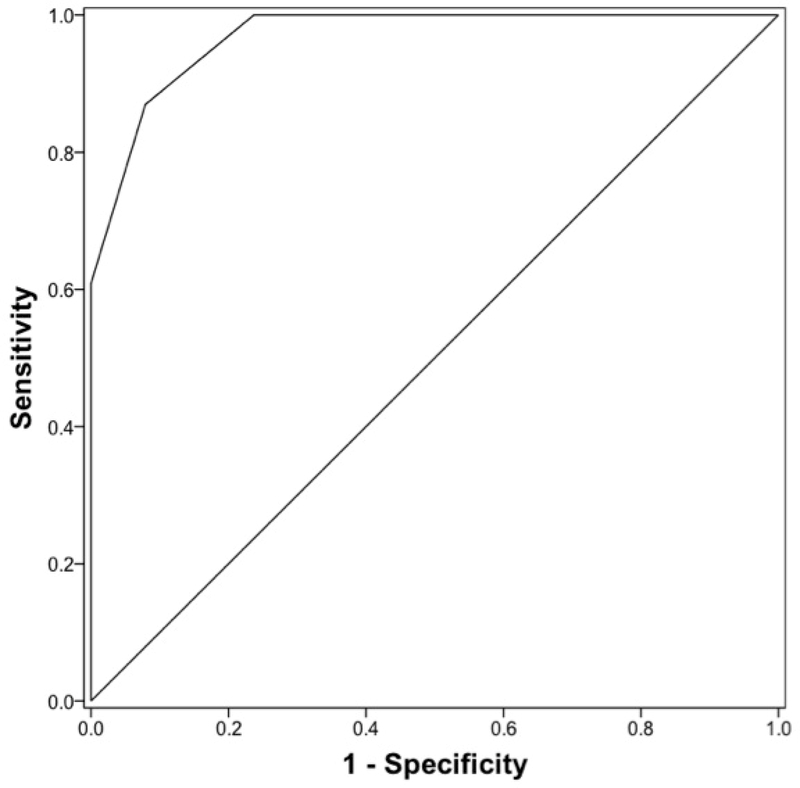
Results: Internal consistency was excellent for the GAD-7 (Cronbach α=.91) and acceptable for the GAD-2 (α=.77), and the measures were highly correlated (r=.94). The GAD-2 had excellent overall accuracy for identifying clinically significant anxiety symptoms (AUC=0.97; 95% confidence interval, 0.94-1.00). A GAD-2 cutoff score of ≥3 provided an optimal balance of good sensitivity (0.87) and excellent specificity (0.92) for detecting clinically significant anxiety symptoms. Alternatively, a cutoff score of ≥2 provided excellent sensitivity (1.00) and fair specificity (0.76).
Conclusions: The GAD-2 is a clinically useful and psychometrically valid tool for screening anxiety symptoms in MS rehabilitation and neurology care settings. Importantly, this tool has the potential to identify individuals with MS who are at risk for anxiety disorders and who may benefit from rehabilitation psychology interventions to ultimately improve functioning and quality of life.
Keywords: Anxiety; Multiple sclerosis; Rehabilitation; Screening.
Copyright © 2018 American Congress of Rehabilitation Medicine. Published by Elsevier Inc. All rights reserved.
Conflict of interest statement
Conflict of Interest
We certify that no party having a direct interest in the results of the research supporting this article has or will confer a benefit on the authors or on any organization with which they are associated and we certify that all financial and material support for this research and work are clearly identified in the title page of the manuscript.
Figures
References
-
- Mitchell AJ, Benito-León J, González J-MM, Rivera-Navarro J. Quality of life and its assessment in multiple sclerosis: integrating physical and psychological components of wellbeing. The Lancet Neurology. 2005;4(9):556–566. - PubMed
-
- Askari F, Ghajarzadeh M, Mohammadifar M, Azimi A, Sahraian MA, Owji M. Anxiety in patients with multiple sclerosis: association with disability, depression, disease type and sex. Acta Med Iran. 2014;52(12):889–892. - PubMed
-
- Theaudin M, Romero K, Feinstein A. In multiple sclerosis anxiety, not depression, is related to gender. Mult Scler. 2016;22(2):239–244. - PubMed
-
- Garfield AC, Lincoln NB. Factors affecting anxiety in multiple sclerosis. Disabil Rehabil. 2012;34(24):2047–2052. - PubMed
-
- Feinstein A, O’Connor P, Gray T, Feinstein K. The effects of anxiety on psychiatric morbidity in patients with multiple sclerosis. Mult Scler. 1999;5(5):323–326. - PubMed
Publication types
MeSH terms
Grants and funding
LinkOut - more resources
Full Text Sources
Other Literature Sources
Medical
