Integrated morbidity mapping of lymphatic filariasis and podoconiosis cases in 20 co-endemic districts of Ethiopia
- PMID: 29965963
- PMCID: PMC6044548
- DOI: 10.1371/journal.pntd.0006491
Integrated morbidity mapping of lymphatic filariasis and podoconiosis cases in 20 co-endemic districts of Ethiopia
Abstract
Background: Lymphatic filariasis (LF) and podoconiosis are neglected tropical diseases (NTDs) that pose a significant physical, social and economic burden to endemic communities. Patients affected by the clinical conditions of LF (lymphoedema and hydrocoele) and podoconiosis (lymphoedema) need access to morbidity management and disability prevention (MMDP) services. Clear estimates of the number and location of these patients are essential to the efficient and equitable implementation of MMDP services for both diseases.
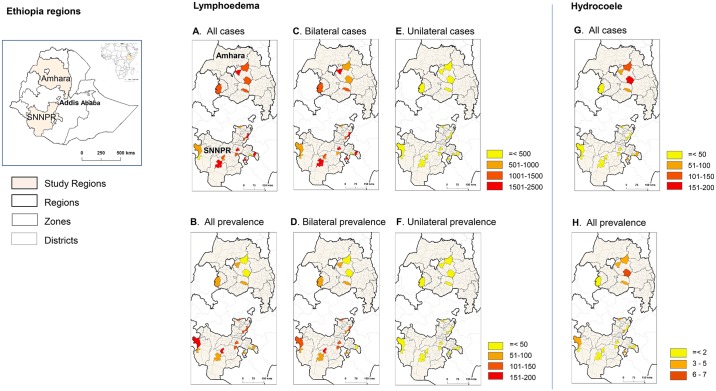
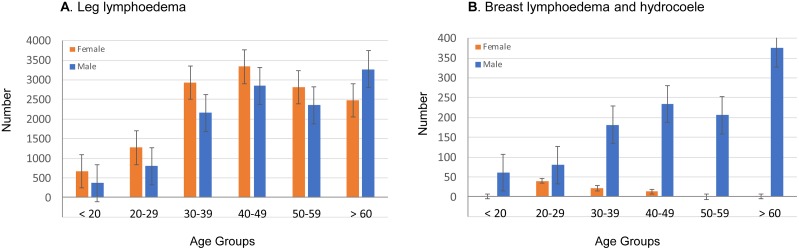
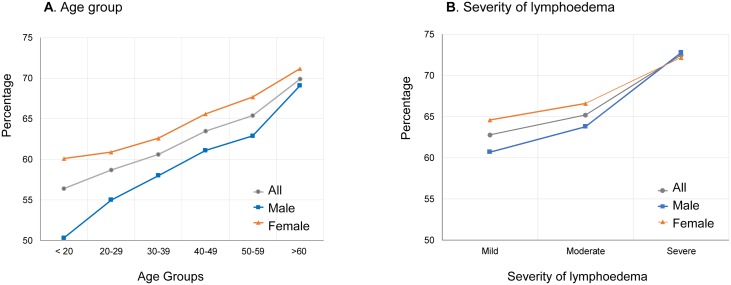
Methodology/principle findings: A community-based cross-sectional study was conducted in Ethiopia using the Health Extension Worker (HEW) network to identify all cases of lymphoedema and hydrocoele in 20 woredas (districts) co-endemic for LF and podoconiosis. A total of 612 trained HEWs and 40 supervisors from 20 districts identified 26,123 cases of clinical morbidity. Of these, 24,908 (95.3%) reported cases had leg lymphoedema only, 751 (2.9%) had hydrocoele, 387 (1.5%) had both leg lymphoedema and hydrocoele, and 77 (0.3%) cases had breast lymphoedema. Of those reporting leg lymphoedema, 89.3% reported bilateral lymphoedema. Older age groups were more likely to have a severe stage of disease, have bilateral lymphoedema and to have experienced an acute attack in the last six months.
Conclusions/significance: This study represents the first community-wide, integrated clinical case mapping of both LF and podoconiosis in Ethiopia. It highlights the high number of cases, particularly of leg lymphoedema that could be attributed to either of these diseases. This key clinical information will assist and guide the allocation of resources to where they are needed most.
Conflict of interest statement
The authors have declared that no competing interests exist.
Figures
References
-
- World Health Organisation. Integrating neglected tropical diseases into global health and development: fourth WHO report on neglected tropical diseases. Geneva: World Health Organisation, 2017.
-
- World Health Organisation. Lymphatic Filariasis: an aide-memoire for national programme managers 2013 [cited 2016 22 November]. http://apps.who.int/iris/bitstream/10665/85347/1/9789241505291_eng.pdf?ua=1.
-
- Price EW, Plant DA. The significance of particle size of soils as a risk factor in the etiology of podoconiosis. Trans R Soc Trop Med Hyg. 1990;84(6):885–6. . - PubMed
Publication types
MeSH terms
LinkOut - more resources
Full Text Sources
Other Literature Sources