


Norovirus RNA in serum associated with increased fecal viral load in children: Detection, quantification and molecular analysis
- PMID: 29965979
- PMCID: PMC6028094
- DOI: 10.1371/journal.pone.0199763
Norovirus RNA in serum associated with increased fecal viral load in children: Detection, quantification and molecular analysis
Abstract
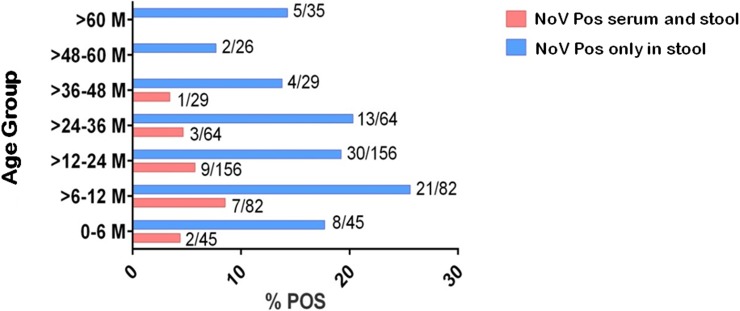
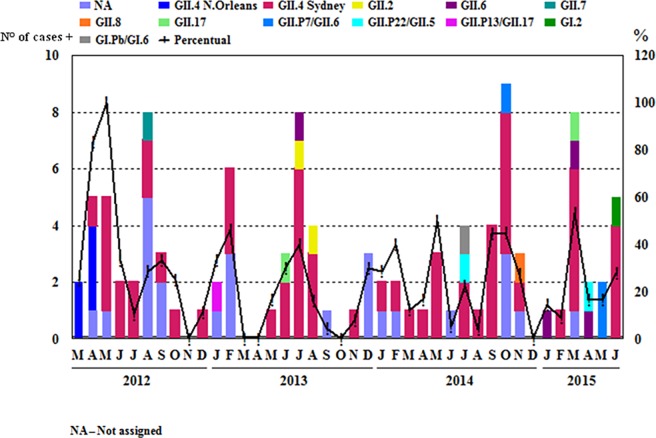
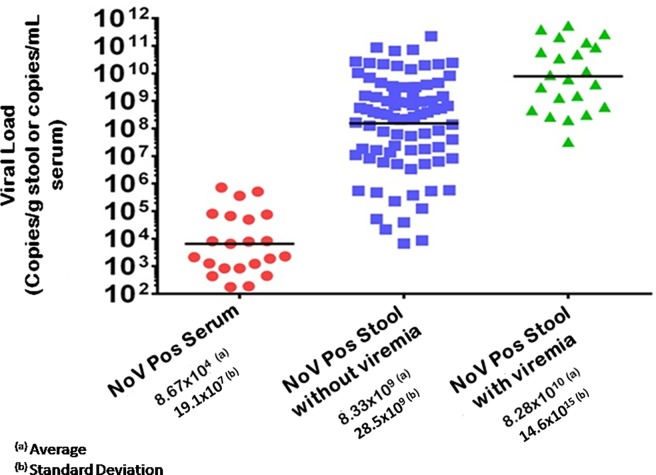
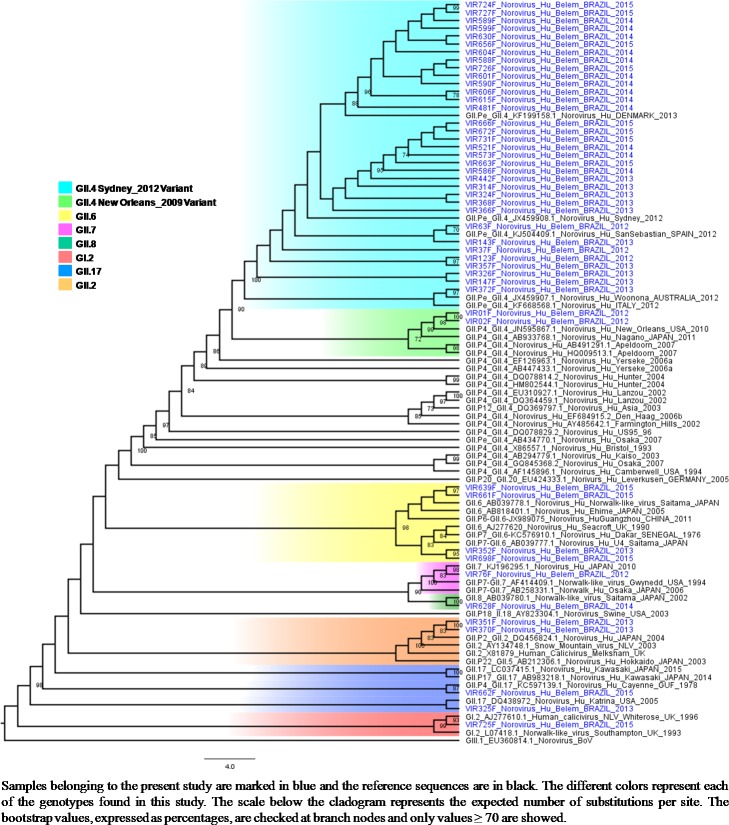
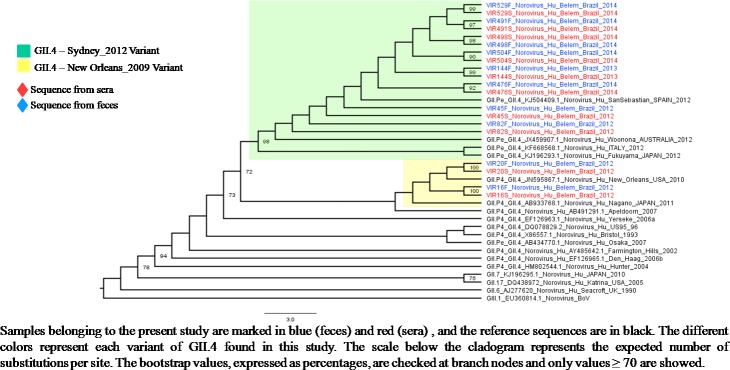
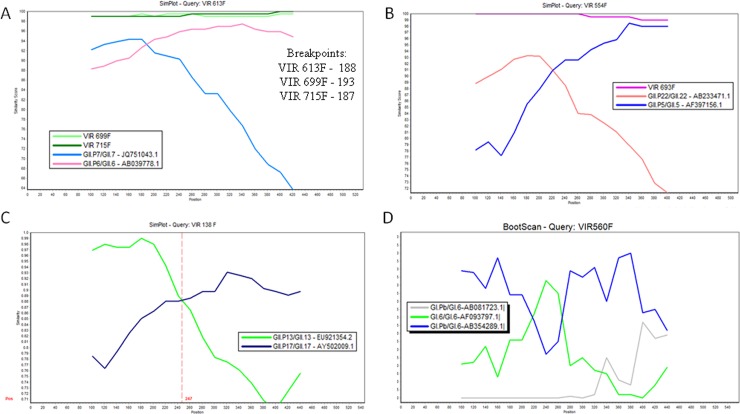
Worldwide, norovirus (NoV) is a major cause of acute gastroenteritis (AGE) responsible for pandemics every ~3 years, and over 200,000 deaths per year, with the majority in children from developing countries. We investigate the incidence of NoV in children hospitalized with AGE from Belém, Pará, Brazil, and also correlated viral RNA levels in their blood and stool with clinical severity. For this purpose, paired stool and serum samples were collected from 445 pediatric patients, ≤9 years between March 2012 and June 2015. Enzyme-linked immunosorbent assay (EIA) was used to detect NoV in stool and reverse transcription quantitative PCR (RT-qPCR) used to quantify NoV RNA levels in sera (RNAemia) and in the positive stool. Positives samples were characterized by the partial ORF1/2 region sequence of viral genome. NoV antigen was detected in 24.3% (108/445) of stool samples, with RNAemia also present in 20.4% (22/108). RNAemia and a high stool viral load (>107 genome copies/gram of faeces) were associated with longer hospitalizations. The prevalent genotypes were GII.4 Sydney_2012 (71.6%-58/81) and New Orleans_2009 (6.2%-5/81) variants. Eight other genotypes belonging to GII were detected and four of them were recombinant strains. All sera were characterized as GII.4 and shared 100% similarity with their stool. The results suggest that the dissemination of NoV to the blood stream is not uncommon and may be related to increased faecal viral loads and disease severity.
Conflict of interest statement
The authors have declared that no competing interests exist.
Figures
References
-
- Walker CL, Rudan I, Liu L, Nair H, Theodoratou E, Bhutta ZA, et al. Global burden of childhood pneumonia and diarrhoea. Lancet. 2013;381(9875):1405–16. doi: 10.1016/S0140-6736(13)60222-6 - DOI - PMC - PubMed
-
- Zheng DP, Widdowson MA, Glass RI, Vinjé J. Molecular epidemiology of genogroup II-genotype 4 noroviruses in the United States between 1994 and 2006. J Clin Microbiol. 2010;48(1):168–77. doi: 10.1128/JCM.01622-09 - DOI - PMC - PubMed
-
- Payne DC, Vinjé J, Szilagyi PG, Edwards KM, Staat MA, Weinberg GA, et al. Norovirus and medically attended gastroenteritis in U.S. children. N Engl J Med. 2013;368(12):1121–30. doi: 10.1056/NEJMsa1206589 - DOI - PMC - PubMed
-
- Lopman BA, Steele D, Kirkwood CD, Parashar UD. The Vast and Varied Global Burden of Norovirus: Prospects for Prevention and Control. PLoS Med. 2016;13(4):e1001999 doi: 10.1371/journal.pmed.1001999 - DOI - PMC - PubMed
-
- Patel MM, Widdowson MA, Glass RI, Akazawa K, Vinjé J, Parashar UD. Systematic literature review of role of noroviruses in sporadic gastroenteritis. Emerg Infect Dis. 2008;14(8):1224–31. doi: 10.3201/eid1408.071114 - DOI - PMC - PubMed
Publication types
MeSH terms
Substances
LinkOut - more resources
Full Text Sources
Other Literature Sources
Medical
