


Familial risks in and between stone diseases: sialolithiasis, urolithiasis and cholelithiasis in the population of Sweden
- PMID: 29970034
- PMCID: PMC6029375
- DOI: 10.1186/s12882-018-0945-y
Familial risks in and between stone diseases: sialolithiasis, urolithiasis and cholelithiasis in the population of Sweden
Abstract
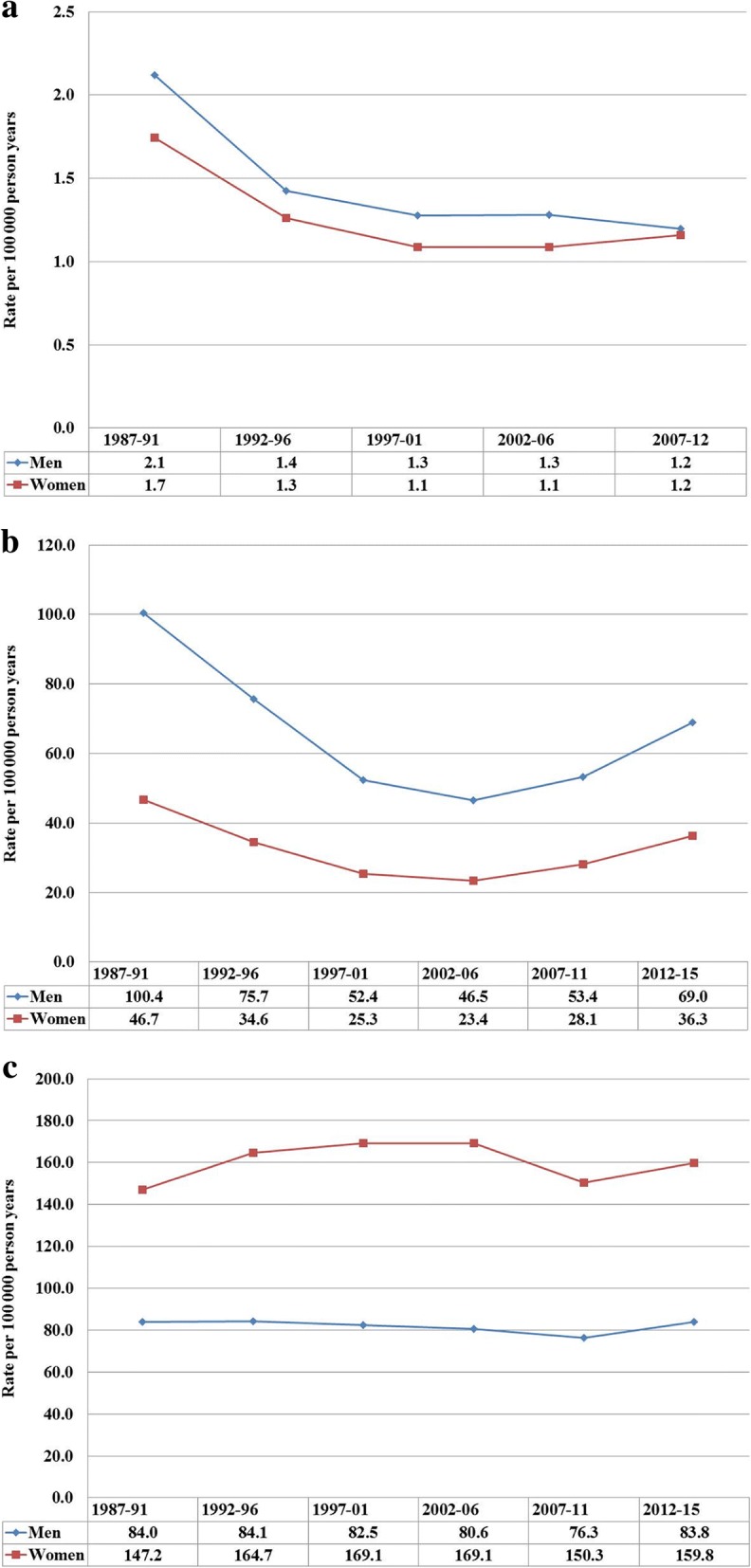
Background: According to the literature the three stone diseases, sialolithiasis (SL), urolithiasis (UL) and cholelithiasis (CL) share comorbidities. We assess familial and spouse risks between these stone disease and compare them to familial risks for concordant (same) stone disease.
Methods: Study population including familiar relationships was obtained from the Swedish Multigeneration Register and stone disease patients were identified from nation-wide medical records. Standardized incidence ratios (SIRs) were calculated for 0-83 year old offspring when their first-degree relatives were diagnosed with stone disease and the rates were compared to individuals without a family history of stone disease. Numbers of offspring with SL were 7906, for UL they were 170,757 and for CL they were 204,369.
Results: SIRs for concordant familial risks were 2.06 for SL, 1.94 for UL and 1.82 for CL. SIRs for SL and UL were slightly higher for women than for men. Familial risks between stone diseases were modest. The highest risk of 1.17 was for UL when family members were diagnosed with CL, or vice versa. The SIR for UL was 1.15 when family members were diagnosed with SL. Familial risks among spouses were increased only for UL-CL pairs (1.10).
Conclusions: Familial risks for concordant SL were 2.06 and marginally lower for the other diseases. Familial risks between stone diseases were low but higher than risks between spouses. The data show that familial clustering is unique to each individual stone disease which would imply distinct disease mechanisms. The results cast doubt on the reported comorbidities between these diseases.
Keywords: Bladder stones; Heritability; Kidney stones; Salivary gland stones; Ureter stones.
Conflict of interest statement
Ethics approval and consent to participate
The study was approved by the Regional Ethical Review Board of Lund University (no. 2012/795). No informed consent was required because the study used anonymous data from national health records over several decades.
Consent for publication
Not relevant.
Competing interests
The authors declare that they have no competing interests.
Publisher’s Note
Springer Nature remains neutral with regard to jurisdictional claims in published maps and institutional affiliations.
Figures
References
-
- Wilson KF, Meier JD, Ward PD. Salivary gland disorders. Am Fam Physician. 2014;89(11):882–888. - PubMed
Publication types
MeSH terms
LinkOut - more resources
Full Text Sources
Other Literature Sources
Medical
Miscellaneous
