


Short linear motifs in intrinsically disordered regions modulate HOG signaling capacity
- PMID: 29970070
- PMCID: PMC6029073
- DOI: 10.1186/s12918-018-0597-3
Short linear motifs in intrinsically disordered regions modulate HOG signaling capacity
Abstract
Background: The effort to characterize intrinsically disordered regions of signaling proteins is rapidly expanding. An important class of disordered interaction modules are ubiquitous and functionally diverse elements known as short linear motifs (SLiMs).
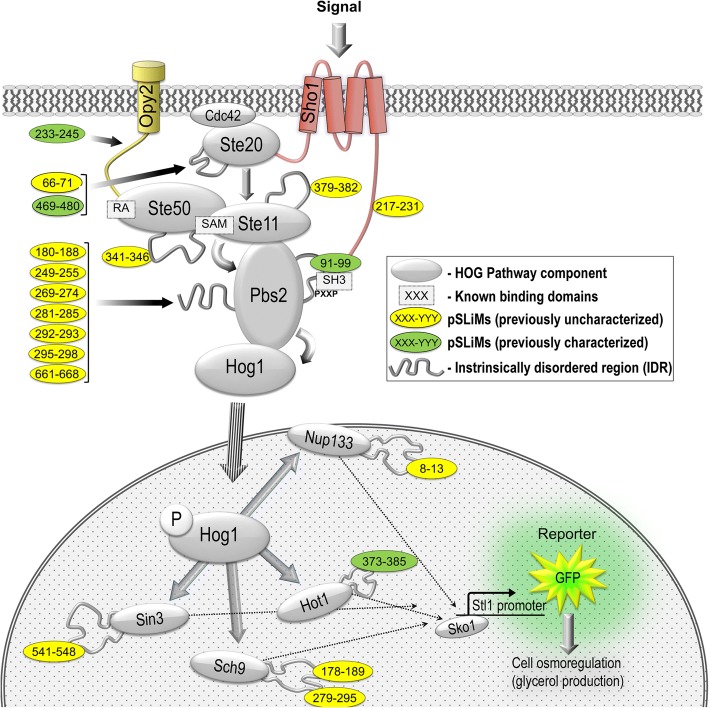
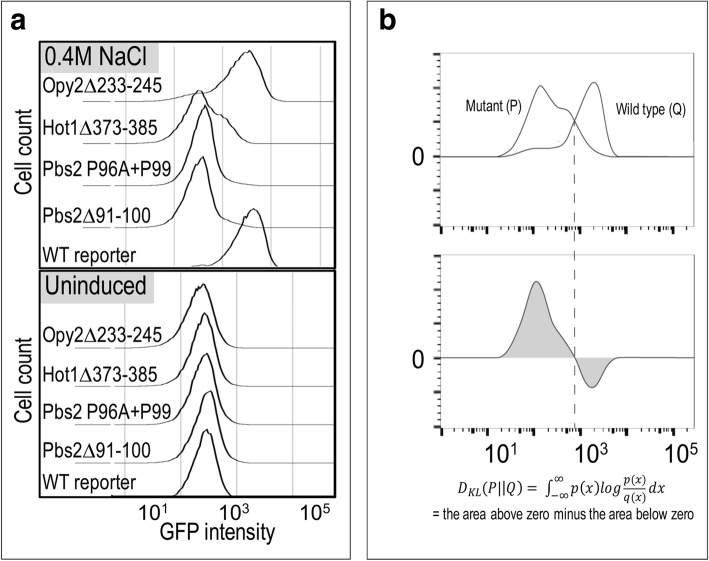
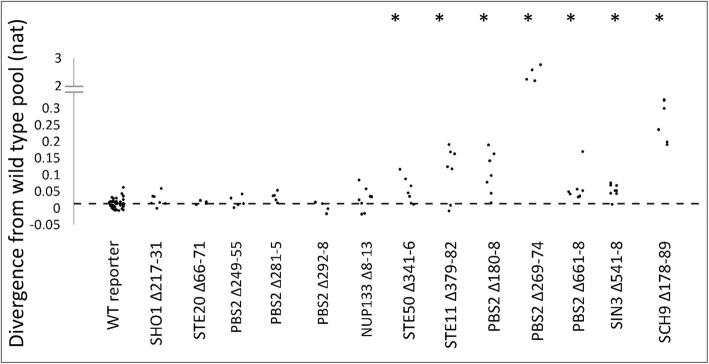
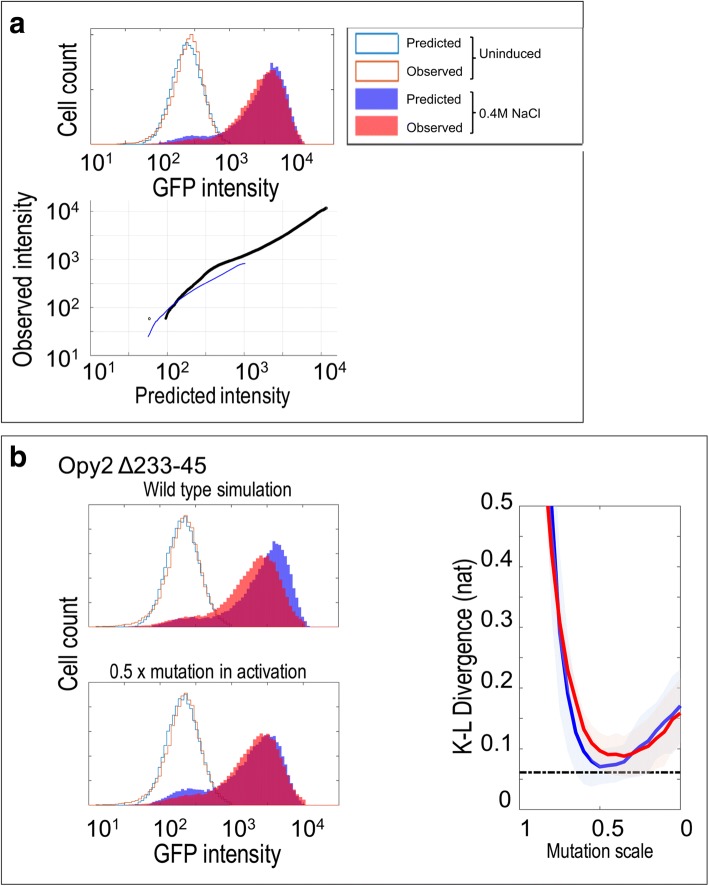
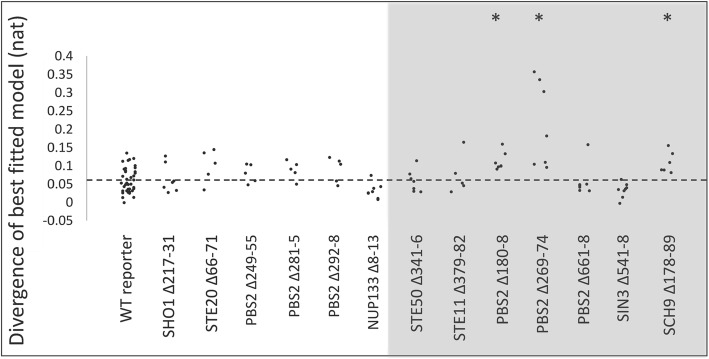
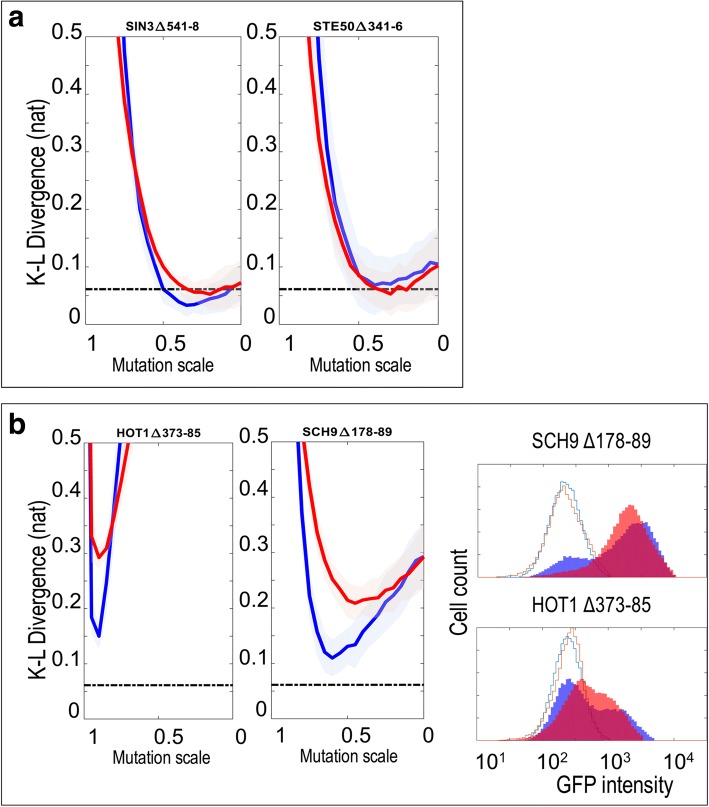
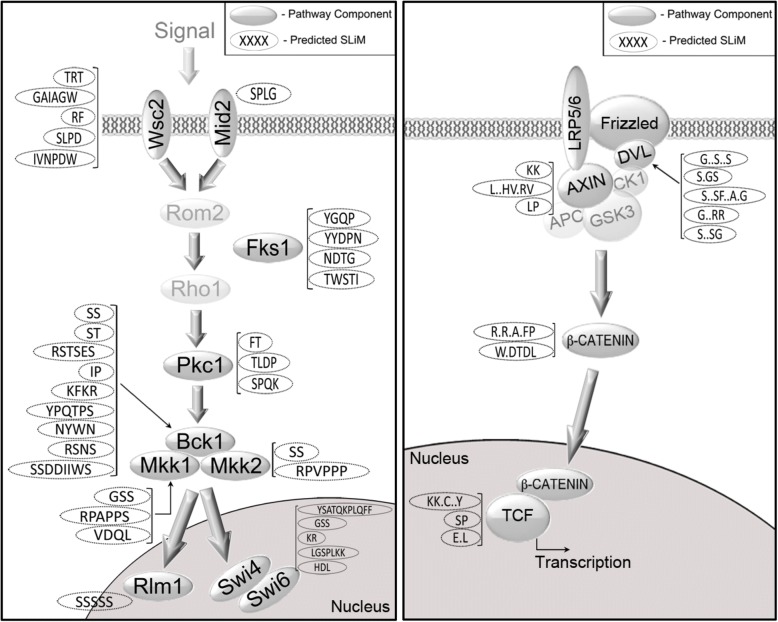
Results: To further examine the role of SLiMs in signal transduction, we used a previously devised bioinformatics method to predict evolutionarily conserved SLiMs within a well-characterized pathway in S. cerevisiae. Using a single cell, reporter-based flow cytometry assay in conjunction with a fluorescent reporter driven by a pathway-specific promoter, we quantitatively assessed pathway output via systematic deletions of individual motifs. We found that, when deleted, 34% (10/29) of predicted SLiMs displayed a significant decrease in pathway output, providing evidence that these motifs play a role in signal transduction. Assuming that mutations in SLiMs have quantitative effects on mechanisms of signaling, we show that perturbations of parameters in a previously published stochastic model of HOG signaling could reproduce the quantitative effects of 4 out of 7 mutations in previously unknown SLiMs.
Conclusions: Our study suggests that, even in well-characterized pathways, large numbers of functional elements remain undiscovered, and that challenges remain for application of systems biology models to interpret the effects of mutations in signaling pathways.
Keywords: Cell signaling; High osmotic glycerol pathway; Intrinsically disordered regions; Mitogen-activated kinases; Saccharomyces cerevisiae; Short linear motifs.
Conflict of interest statement
Ethics approval and consent to participate
Not applicable
Consent for publication
Not applicable
Competing interests
The authors declare that they have no competing interests.
Publisher’s Note
Springer Nature remains neutral with regard to jurisdictional claims in published maps and institutional affiliations.
Figures
References
Publication types
MeSH terms
Substances
Grants and funding
LinkOut - more resources
Full Text Sources
Other Literature Sources
Molecular Biology Databases
