


Interactions between life expectancy and the incidence and mortality rates of cancer in China: a population-based cluster analysis
- PMID: 29970165
- PMCID: PMC6029078
- DOI: 10.1186/s40880-018-0308-x
Interactions between life expectancy and the incidence and mortality rates of cancer in China: a population-based cluster analysis
Abstract
Background: The relationship between cancer and life expectancy is well established in both developed and developing countries. China is a vast country with significant geographical differences in population structure and healthcare, and thus provides a unique opportunity to analyze the complex relationship between life expectancy and cancer incidence and mortality rates.
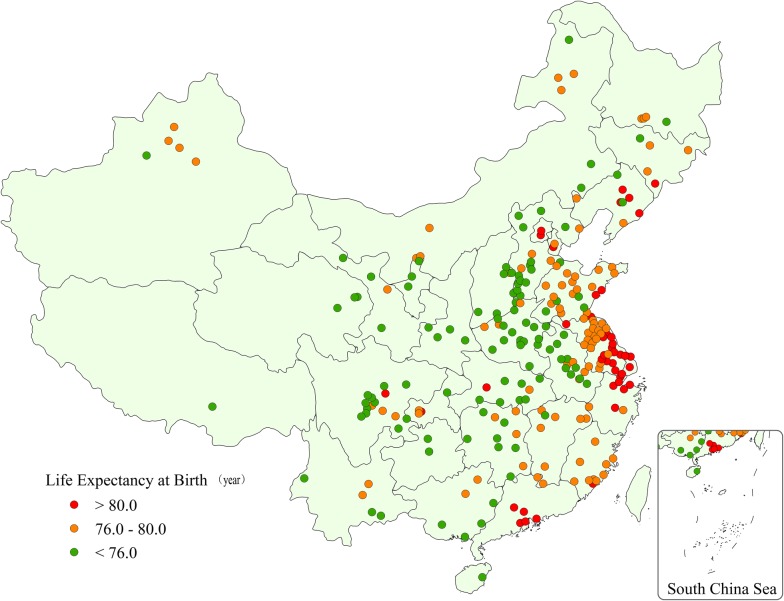
Methods: Cancer data were extracted for a total of 255 units (cities or counties) from the 2013 National Central Cancer Registry. Life expectancy data at the unit level were obtained from the National Centers for Disease Control and Prevention. Linear regression analysis was used to analyze the relationship between life expectancy and crude incidence and mortality rates of cancer. In a separate analysis, life expectancy was rated as low (< 76.0 years), middle (76-80 years), or high (> 80 years).
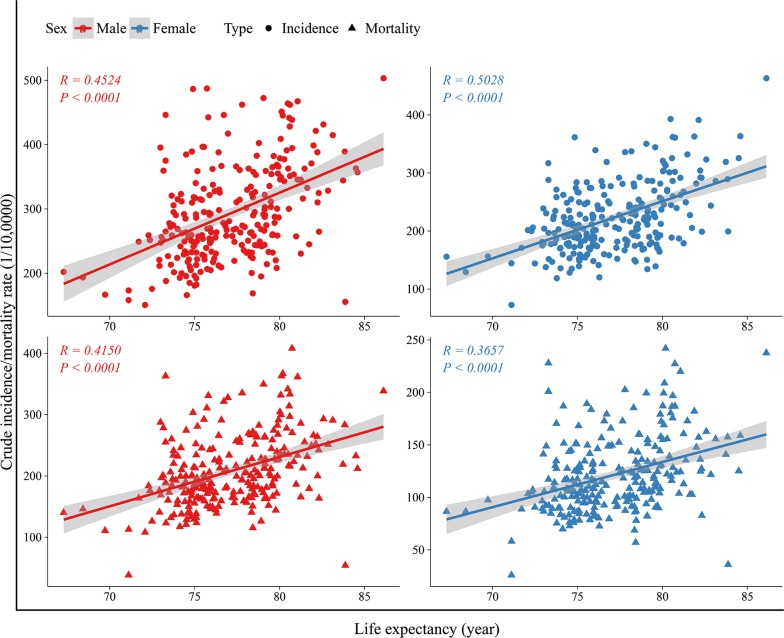
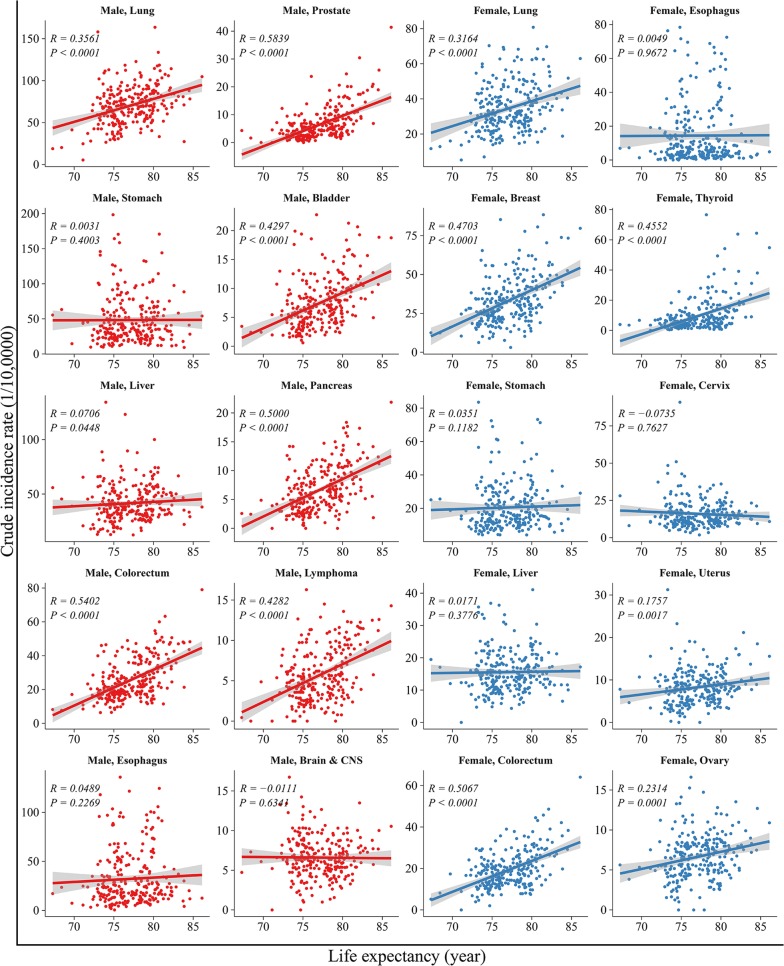
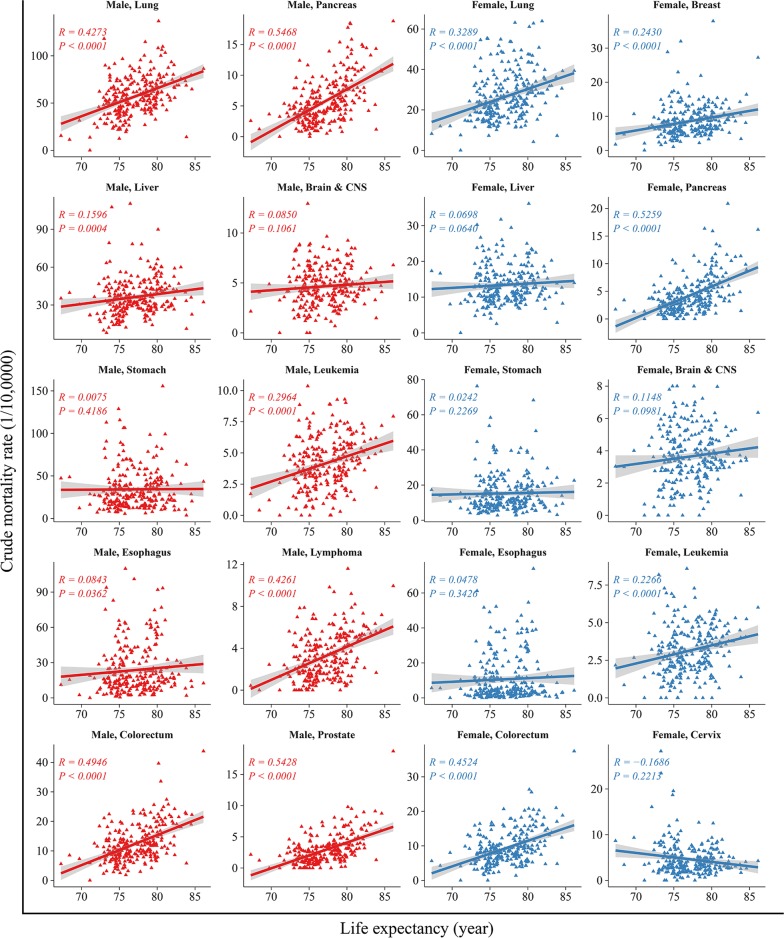
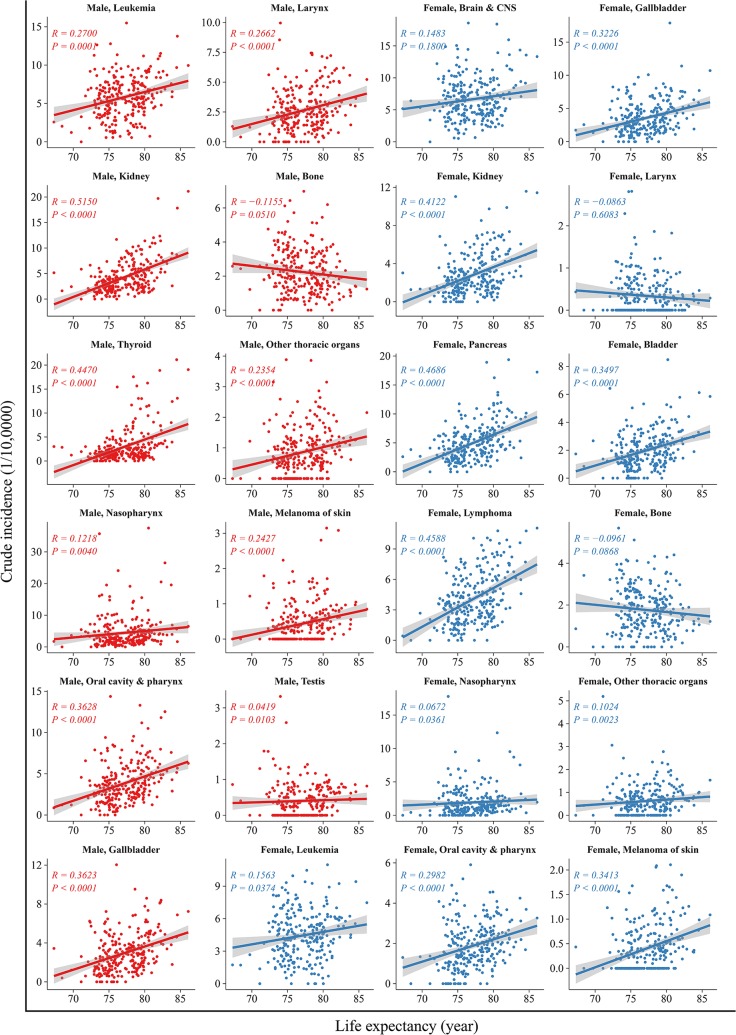
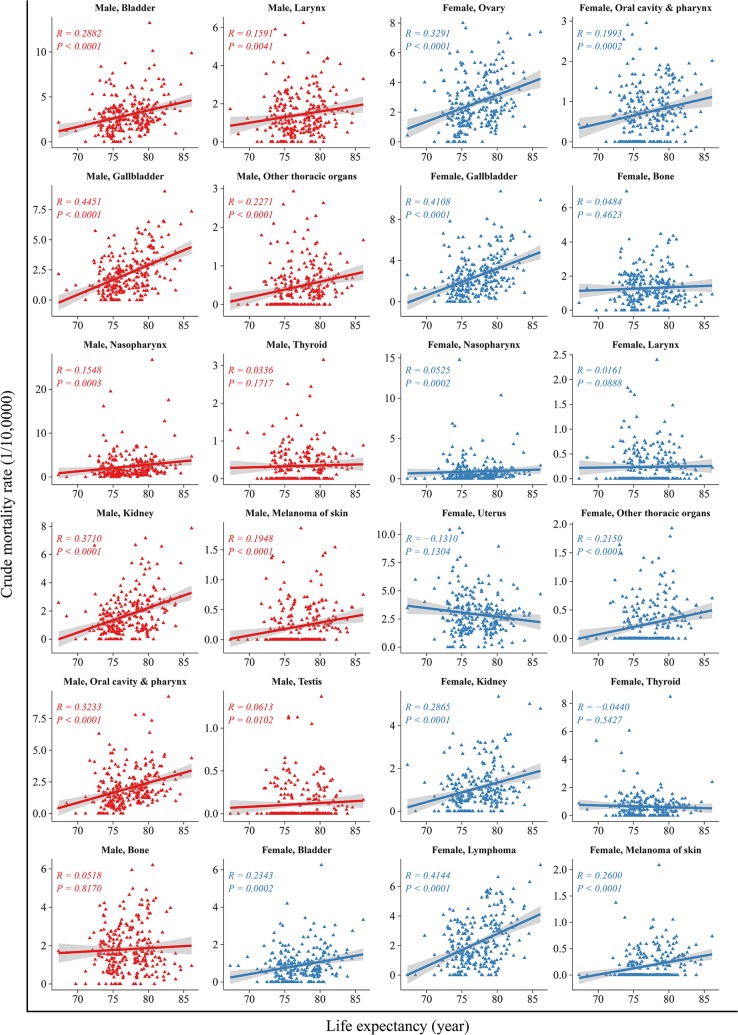
Results: Overall, the cancer incidence and mortality rates positively correlated with life expectancy in both sexes (R at 0.37 and 0.50, P < 0.001). The correlation was significant for the following cancers: lung, colorectal, prostate, bladder and pancreas, as well as for lymphoma in men (R 0.36-0.58, P < 0.001), lung, breast, colorectal, thyroid, uterus, and ovary in women (R 0.18-0.51, P < 0.001). We failed to observe an association between upper gastrointestinal cancer and life expectancy. The number of cities/counties with low, middle and high life expectancy levels were 110, 101 and 44, respectively. The highest age-standardized cancer incidence rate was observed in areas with a high life expectancy level (192.83/100,000). The highest age-standardized mortality rate was in areas with the lowest life expectancy (118.44/100,000). Cancers of the stomach, liver and esophagus are major cancer types in areas with low and middle life expectancy. In contrast, areas with high life expectancy had high incidence and mortality rates of colorectal cancer, breast cancer in women and prostate cancer in men.
Conclusions: Longer life expectancy is associated with higher overall cancer incidence and mortality in China. The cancer pattern also varies substantially across areas with different life expectancy levels. Life expectancy levels must be considered when developing strategies to prevent and treat cancers.
Keywords: Cancer; China; Incidence; Life expectancy; Mortality.
Figures
References
Publication types
MeSH terms
LinkOut - more resources
Full Text Sources
Other Literature Sources
