


Genetic selection of athletic success in sport-hunting dogs
- PMID: 29970415
- PMCID: PMC6065024
- DOI: 10.1073/pnas.1800455115
Genetic selection of athletic success in sport-hunting dogs
Abstract
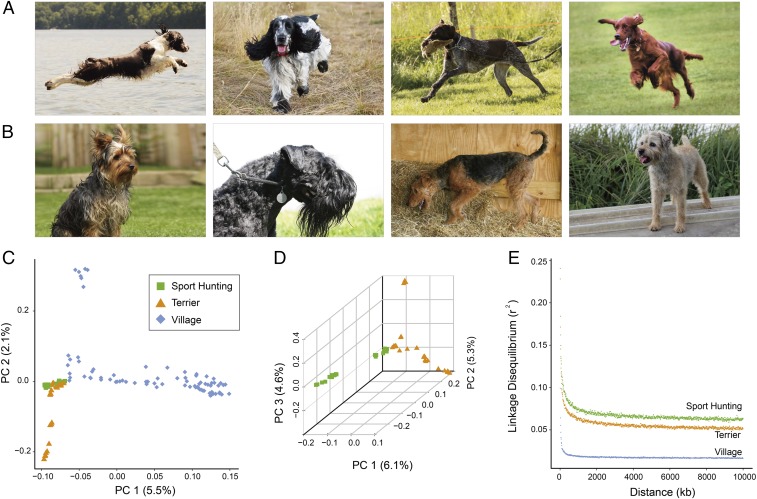
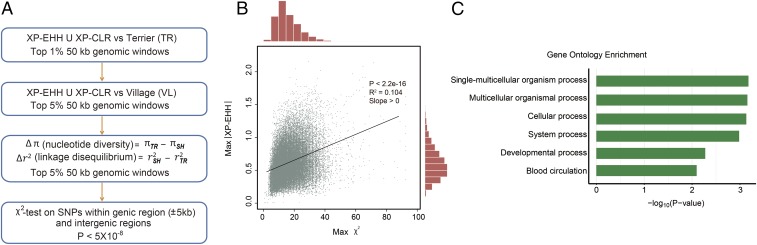
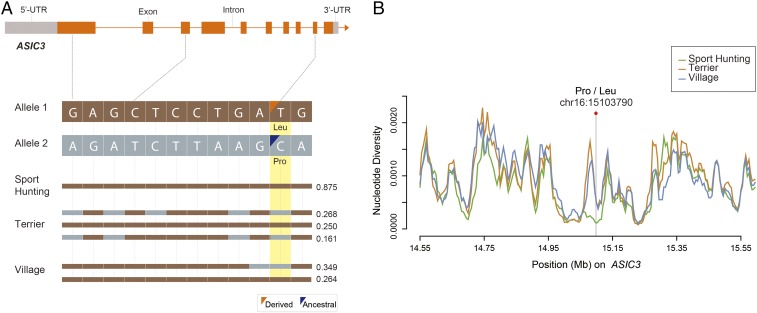
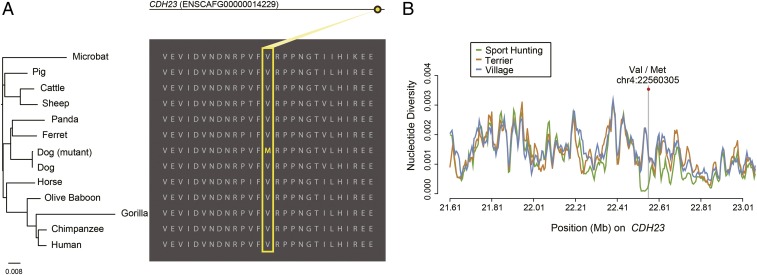
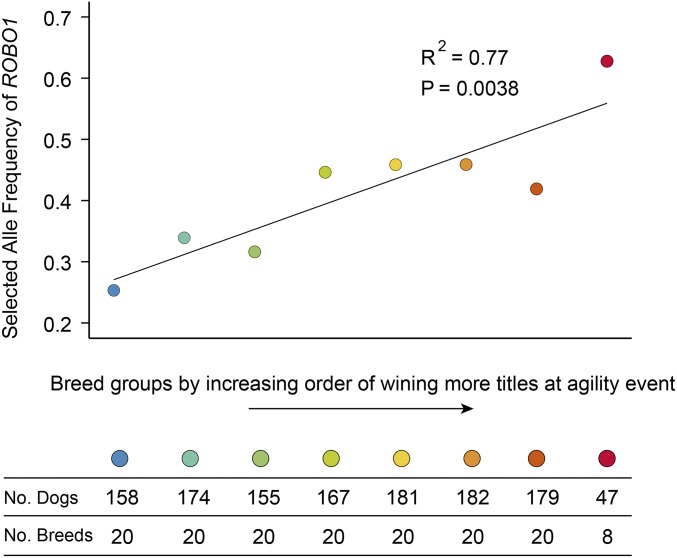
Modern dogs are distinguished among domesticated species by the vast breadth of phenotypic variation produced by strong and consistent human-driven selective pressure. The resulting breeds reflect the development of closed populations with well-defined physical and behavioral attributes. The sport-hunting dog group has long been employed in assistance to hunters, reflecting strong behavioral pressures to locate and pursue quarry over great distances and variable terrain. Comparison of whole-genome sequence data between sport-hunting and terrier breeds, groups at the ends of a continuum in both form and function, reveals that genes underlying cardiovascular, muscular, and neuronal functions are under strong selection in sport-hunting breeds, including ADRB1, TRPM3, RYR3, UTRN, ASIC3, and ROBO1 We also identified an allele of TRPM3 that was significantly associated with increased racing speed in Whippets, accounting for 11.6% of the total variance in racing performance. Finally, we observed a significant association of ROBO1 with breed-specific accomplishments in competitive obstacle course events. These results provide strong evidence that sport-hunting breeds have been adapted to their occupations by improved endurance, cardiac function, blood flow, and cognitive performance, demonstrating how strong behavioral selection alters physiology to create breeds with distinct capabilities.
Keywords: athletic ability; positive selection; sport-hunting dogs; whole-genome sequencing.
Copyright © 2018 the Author(s). Published by PNAS.
Conflict of interest statement
The authors declare no conflict of interest.
Figures
References
-
- Ostrander EA, Huson HJ, Ostrander GK. Genetics of athletic performance. Annu Rev Genomics Hum Genet. 2009;10:407–429. - PubMed
-
- Macarthur DG, North KN. Genes and human elite athletic performance. Hum Genet. 2005;116:331–339. - PubMed
-
- Rankinen T, et al. The human gene map for performance and health-related fitness phenotypes: The 2005 update. Med Sci Sports Exerc. 2006;38:1863–1888. - PubMed
-
- Rankinen T, et al. Effect of endothelin 1 genotype on blood pressure is dependent on physical activity or fitness levels. Hypertension. 2007;50:1120–1125. - PubMed
-
- Saunders PU, Pyne DB, Telford RD, Hawley JA. Factors affecting running economy in trained distance runners. Sports Med. 2004;34:465–485. - PubMed
Publication types
MeSH terms
Substances
Associated data
- Actions
LinkOut - more resources
Full Text Sources
Other Literature Sources
