


Risk Factors for the Progression of Mild Cognitive Impairment in Different Types of Neurodegenerative Disorders
- PMID: 29971138
- PMCID: PMC6008817
- DOI: 10.1155/2018/6929732
Risk Factors for the Progression of Mild Cognitive Impairment in Different Types of Neurodegenerative Disorders
Abstract
Objective: Mild cognitive impairment (MCI) is a transitional state between normal aging and early dementia. It has a heterogeneous etiology and clinical course. This study aimed to examine the factors associated with the progression of MCI in different types of dementia disorders.
Method: A retrospective, longitudinal, observational study of outpatients with MCI was conducted at a medical center in northern Taiwan. Patient medical records were reviewed, and risk factors were analyzed by multivariate analysis.
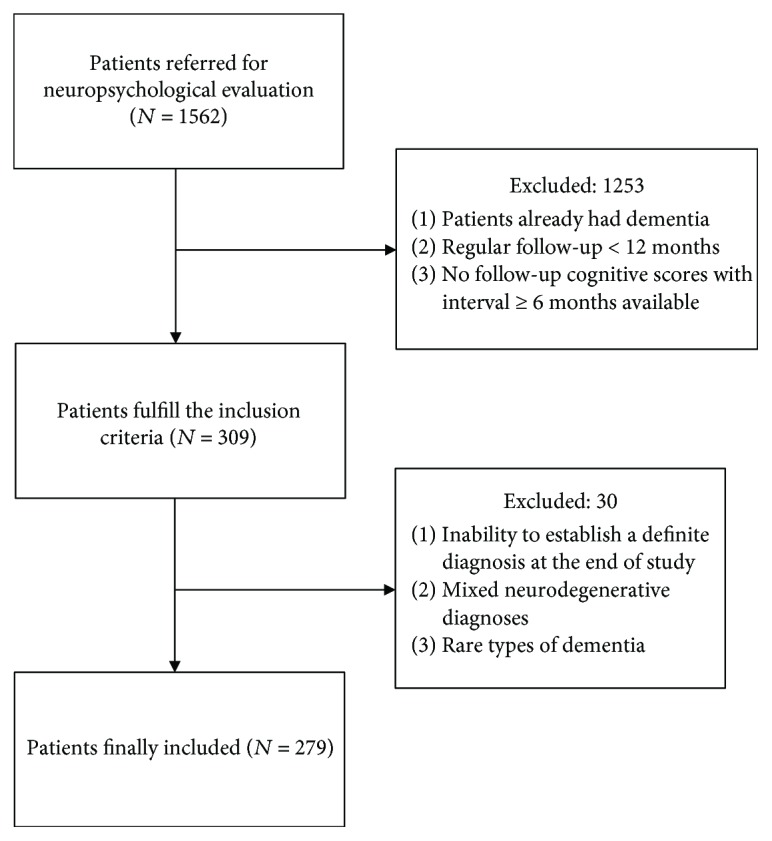
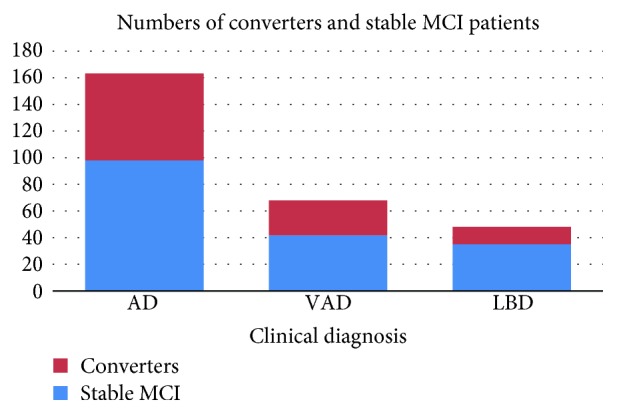
Results: Among 279 patients with MCI, 163 (58.4%), 68 (24.4%), and 48 (17.2%) were diagnosed with Alzheimer's disease, vascular cognitive impairment, and Lewy body diseases, respectively. During the observation period, 37.2% of patients progressed to dementia. Older age and a higher Clinical Dementia Rating Scale-Sum of Boxes were associated with the risk of progression. Hyperlipidemia was associated with a decreased risk. Converters were more likely to receive an antidementia prescription.
Conclusion: Our study suggests the importance of comprehensive clinical profiling, risk factor assessment, and detailed drug history evaluations in improving our understanding and management of dementia subtypes.
Figures
References
-
- Petersen R. C., Lopez O., Armstrong M. J., et al. Practice guideline update summary: mild cognitive impairment: report of the guideline development, dissemination, and implementation subcommittee of the American Academy of Neurology. Neurology. 2018;90(3):126–135. doi: 10.1212/WNL.0000000000004826. - DOI - PMC - PubMed
-
- Hu G.-C., Chen Y.-M. Post-stroke dementia: epidemiology, mechanisms and management. International Journal of Gerontology. 2017;11(4):210–214. doi: 10.1016/j.ijge.2017.07.004. - DOI
-
- Dugger B. N., Malek-Ahmadi M., Monsell S. E., et al. A cross-sectional analysis of late-life cardiovascular factors and their relation to clinically defined neurodegenerative diseases. Alzheimer Disease & Associated Disorders. 2016;30(3):223–229. doi: 10.1097/WAD.0000000000000138. - DOI - PMC - PubMed
Publication types
MeSH terms
LinkOut - more resources
Full Text Sources
Other Literature Sources
Medical
Molecular Biology Databases
