


Do Cellular Condensates Accelerate Biochemical Reactions? Lessons from Microdroplet Chemistry
- PMID: 29972809
- PMCID: PMC6035290
- DOI: 10.1016/j.bpj.2018.05.023
Do Cellular Condensates Accelerate Biochemical Reactions? Lessons from Microdroplet Chemistry
Abstract
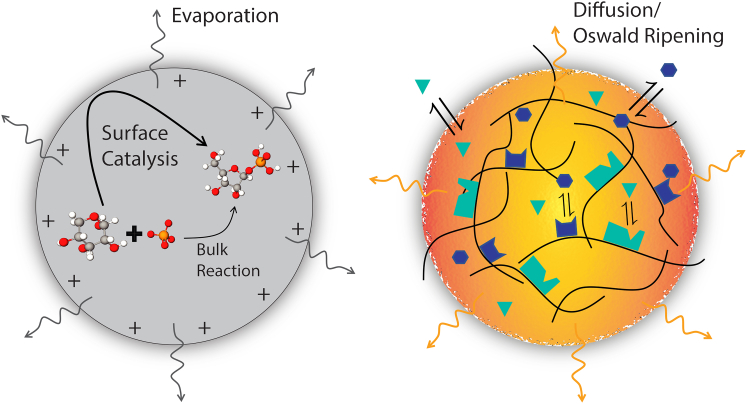
Cellular condensates-phase-separated concentrates of proteins and nucleic acids-provide organizational structure for biochemistry that is distinct from membrane-bound compartments. It has been suggested that one major function of cellular condensates is to accelerate biochemical processes that are normally slow or thermodynamically unfavorable. Yet, the mechanisms leading to increased reaction rates within cellular condensates remain poorly understood. In this article, we highlight recent advances in microdroplet chemistry that accelerate reaction rates by many orders of magnitude as compared to bulk and suggest that similar mechanisms may also affect reaction kinetics in cellular condensates.
Copyright © 2018 Biophysical Society. Published by Elsevier Inc. All rights reserved.
Figures
References
Publication types
MeSH terms
Grants and funding
LinkOut - more resources
Full Text Sources
Other Literature Sources
